Être un normalien, fils de normalien | ENS-PSL
Keywords
Summary
161 words
Critical Evaluation
The lecture provides a nuanced and well-researched analysis of Marc Bloch’s formative years, situating him within the broader context of social reproduction in the French academic elite. Theis effectively uses the concept of ‘héritocratie’ to challenge simplistic meritocratic narratives, drawing on the work of Bourdieu, Passeron, and Pasquali. She supports her arguments with archival evidence, such as the personal notebooks of Gustave Bloch and administrative correspondence, which adds a layer of empirical rigor. The discussion of the 1903 reform of ENS is particularly insightful, as it contextualizes the institutional changes that shaped Marc Bloch’s experience. Theis also highlights the specificity of the Jewish bourgeoisie’s valorization of education, which enriches the analysis of social mobility. However, the talk is primarily an expert opinion rather than a systematic study, and some claims could benefit from more extensive citation of primary sources. The title accurately reflects the content, and the lecture maintains a high level of scholarly rigor throughout. The speaker’s expertise is evident, and the argumentation is solid, though it may assume some prior knowledge of French academic history. Overall, the lecture offers valuable insights into the interplay between family heritage and institutional reproduction, and it successfully humanizes a historical figure often seen as monumental.
203 words
Title / Content Match
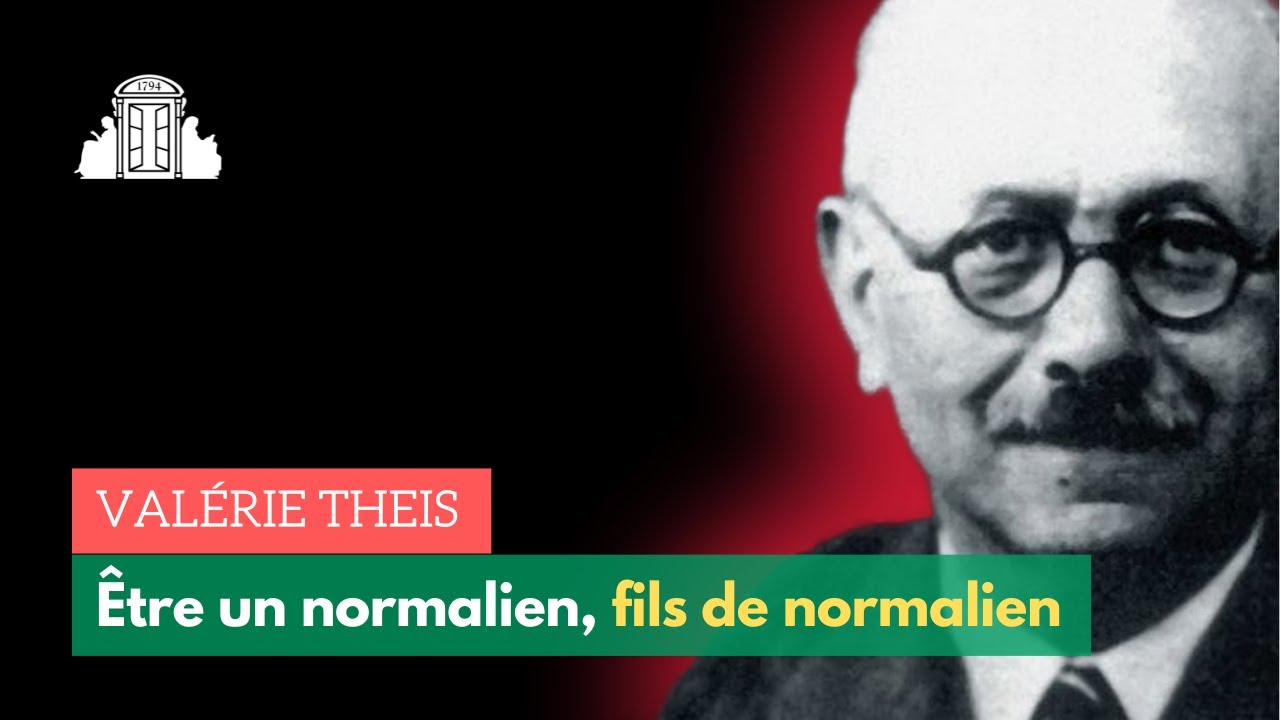
The title accurately reflects the content, which focuses on the biographical and educational trajectory of Marc Bloch as a normalien and son of a normalien.
Quality & Reliability
8/10
The talk is given by a professor of medieval history and deputy director of ENS-PSL, based on archival research and references to established scholars (Bourdieu, Passeron, Pasquali, Baudelot, Matonti, etc.). The content is well-structured and grounded in historical sources, though it is an expert opinion rather than a peer-reviewed publication.
Key Moments
Markers derived by PSI from the transcript: the creator did not define chapters.
- Introduction by Florian, presenting the day's theme and Valérie Theis.
- Valérie Theis begins her talk on Marc Bloch as a normalien and son of a normalien.
- Discussion of the concept of 'héritocratie' and social reproduction.
- Contextualization of the ENS between 1868 and 1904, including the 1903 reform.
- Biographical details of Gustave Bloch, Marc's father, and his career.
- Analysis of the influence of Fustel de Coulanges on Gustave Bloch.
- Examination of the educational environment at ENS during Marc Bloch's time.
- Discussion of the nickname 'Mégathère' and its implications for Marc Bloch.
- Conclusion and transition to the next speaker.
Cited Sources
- Savoirs ENS — Plateforme de vidéos et podcasts de l'ENS-PSL, mentionnée dans la description.
- ENS-PSL official website — Site officiel de l'École normale supérieure - PSL, mentionné dans la description.
- ENS-PSL LinkedIn — Page LinkedIn de l'ENS-PSL, mentionnée dans la description.
- ENS-PSL YouTube channel — Chaîne YouTube officielle de l'ENS-PSL, mentionnée dans la description.
Concurring Sources
- Savoirs ENS — Plateforme officielle de l'ENS-PSL pour les conférences et cours.
Contribution & Novelties
The lecture provides a micro-historical analysis of Marc Bloch’s formative years, using archival sources to illustrate the interplay between family heritage and institutional reproduction. It offers a nuanced perspective on the concept of ‘héritocratie’ and challenges deterministic views of social reproduction.
Pour aller plus loin :
- Héritocratie — Concept central de la conférence, défini par Paul Pasquali.
- Marc Bloch — Biographie et œuvre de l’historien.
- École normale supérieure (Paris) — Histoire et fonctionnement de l’institution.
75 words
Radar Profile
The radar profile shows high scores in information quantity, quality, and reliability, with a slightly lower technical level, indicating a well-researched and accessible expert presentation.