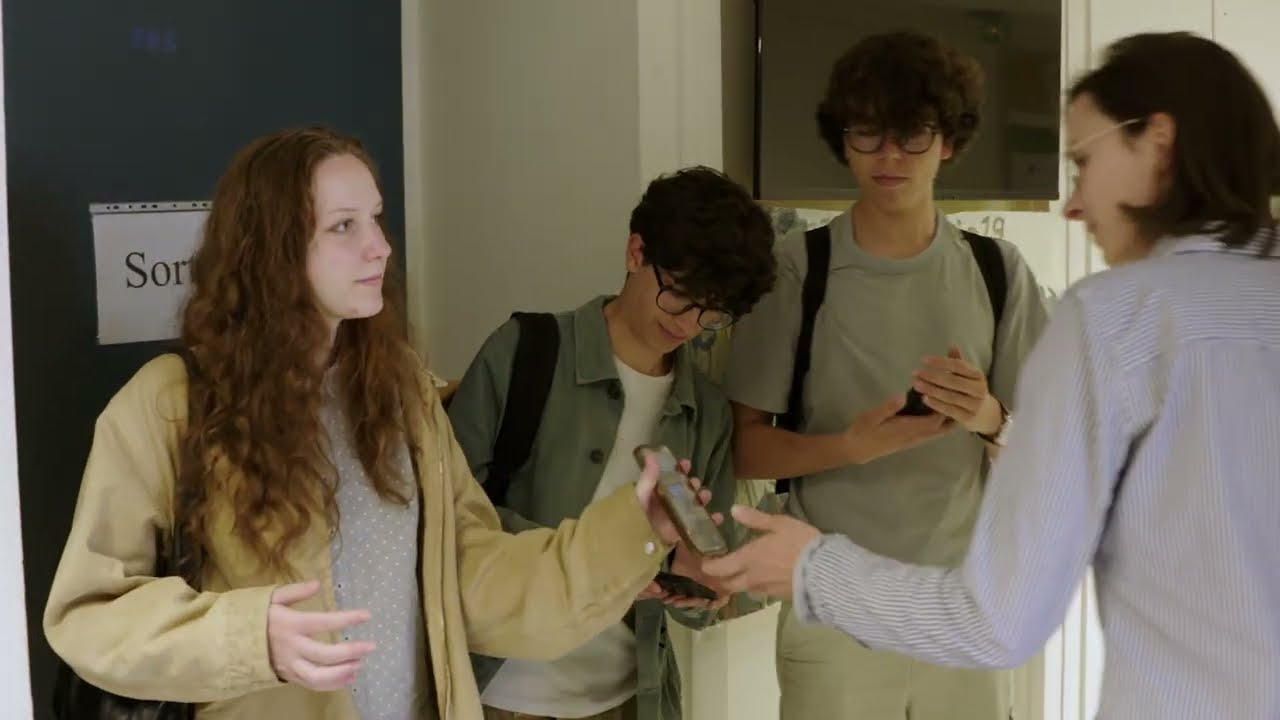
Reconstitution d’oral ENS : Concours BCPST - Oral commun de TIPE
Keywords
Summary
156 words
Critical Evaluation
The video provides an authentic and valuable insight into the oral examination process for the BCPST concours, specifically the TIPE component. The content is highly relevant for prospective candidates, as it demonstrates the level of scientific rigor and critical thinking expected. The examiners’ questions are probing and realistic, covering aspects such as the choice of research question, literature review, experimental design, handling of uncertainties, and interpretation of results. The candidate’s responses illustrate common pitfalls and acceptable practices, such as using subjective criteria for horizon delineation but mitigating bias through multiple observers. The video also highlights the importance of justifying methodological choices and acknowledging limitations. The institutional source (ENS) ensures high credibility and reliability. The production quality is good, with clear audio and visual aids. The main limitation is that it is a reconstitution, not a real exam, so the dynamics may differ slightly. However, it serves its purpose of demystifying the oral and providing a realistic preview. The title accurately reflects the content, and the video is well-structured, with a natural flow from presentation to questioning. Overall, it is an excellent resource for candidates, offering both practical and psychological preparation.
190 words
Title / Content Match
The title accurately describes the content: a reconstitution of the ENS oral exam for the BCPST concours, specifically the TIPE oral.
Quality & Reliability
8/10
The video is an official reconstitution of an oral examination by the ENS, featuring real examiners and a candidate. It provides an authentic view of the examination process, with high institutional credibility. The content is pedagogical and transparent about the evaluation criteria, though it is a simulation and not a real exam.
Key Moments
Markers derived by PSI from the transcript: the creator did not define chapters.
- Introduction and check-in process for the oral exam.
- Candidate explains the choice of subject: impact of forest fires on soil.
- Discussion on the novelty of the research question and literature review.
- Candidate describes the experimental design: comparing burned and unburned plots.
- Examiners question the subjectivity of horizon delineation and how it was handled.
- Discussion on other sources of uncertainty and the precision of measurements.
- Examiners challenge the small error bars and the representativeness of the data.
- Candidate explains the variability in litter mass and the interpretation of results.
Cited Sources
- ENS-PSL official website — Official website of the École normale supérieure - PSL, providing general information about the institution.
- ENS-PSL news article on oral reconstitutions — News article announcing the launch of oral reconstitution videos for concours preparation.
- ENS-PSL LinkedIn page — LinkedIn page of ENS-PSL, providing professional updates and institutional information.
- ENS-PSL YouTube channel — Official YouTube channel of ENS-PSL, hosting educational and institutional videos.
- Playlist of oral reconstitution videos — Playlist containing all reconstitution videos of oral exams for various concours.
Concurring Sources
- ENS-PSL news article on oral reconstitutions — The article explains the initiative to provide reconstitution videos, aligning with the video's purpose.
Dissenting Sources
- No discordant sources found — No sources contradicting the video's content were identified.
Contribution & Novelties
The video provides an unprecedented look into the oral examination process of the ENS concours, specifically the TIPE component. It demystifies the expectations and format, offering candidates a realistic preview. The novelty lies in the institutional initiative to democratize access to preparation, especially for candidates from remote areas. The video also illustrates the scientific rigor required in TIPE, from literature review to experimental design and handling of uncertainties.
Pour aller plus loin :
- TIPE official guidelines — Official information on the TIPE requirements and evaluation criteria.
- Soil science basics — Overview of soil horizons and properties, relevant to the candidate’s project.
- Forest fire ecology — Background on the ecological impacts of fires, including soil effects.
115 words
Radar Profile
The radar profile shows high scores in quality of information and reliability, reflecting the institutional source and authentic content. The quantity of information is moderate, as the video focuses on a single oral exam. The technical level is moderate, suitable for a broad audience of concours candidates.
💬 Sur les 0 commentaires analysés, aucune tendance n'est disponible.