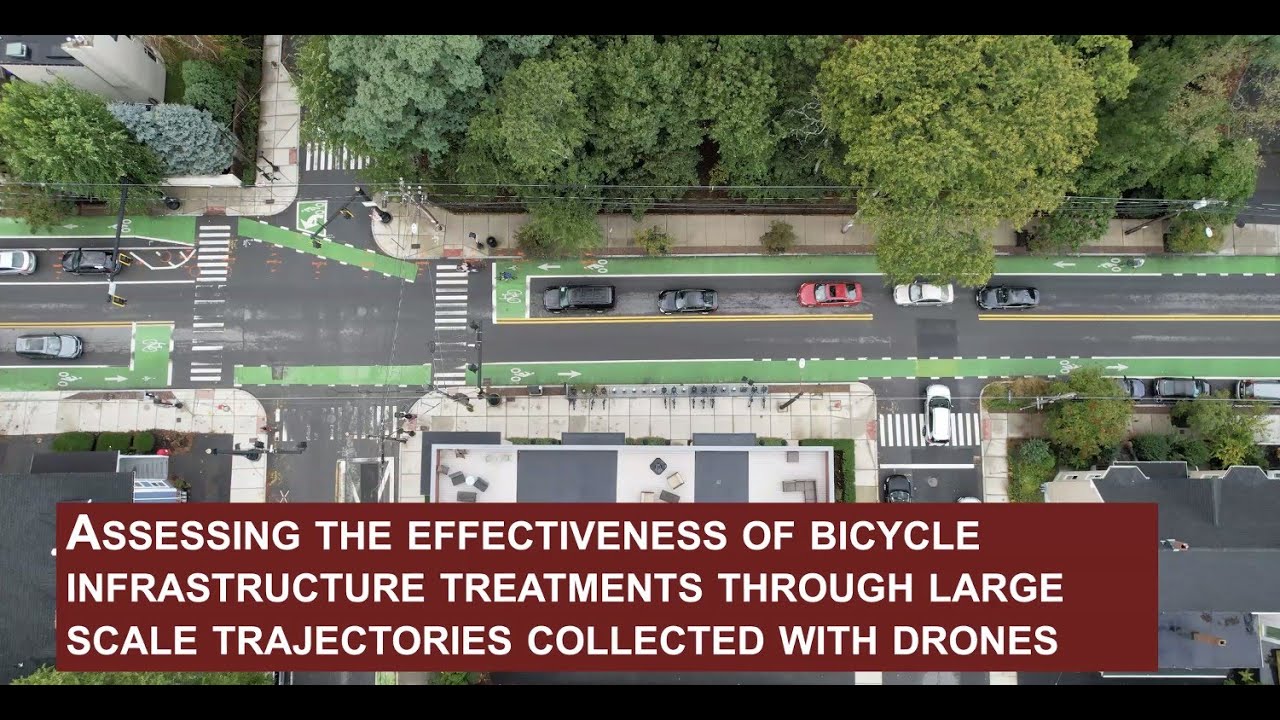
FMRI Webinar Series Fall 2025: Presented by Dr. Eleni Christofa
Keywords
Summary
172 words
Critical Evaluation
Value of the Information & Strength of the Argument
The presentation provides valuable insights into the design of floating bus stops, combining qualitative feedback from vulnerable users with quantitative behavioral data. The argumentation is solid, based on a systematic methodology including literature review, focus groups, and field observations. However, some findings are preliminary and lack statistical significance due to small sample sizes, which limits the strength of certain conclusions. The speaker acknowledges these limitations and outlines future work to address them.
Scientific Rigor, Source Quality, Title Accuracy
The presentation demonstrates scientific rigor through a structured research approach, including a literature review of guidelines from various agencies, focus groups with affected communities, and field data collection. The sources cited are primarily the research project’s own data and guidelines from transportation agencies. The title accurately reflects the content, which is a webinar on multimodal infrastructure design. The speaker’s expertise and the collaborative nature of the project enhance credibility, though the lack of published references in the description limits external verification.
168 words
Title / Content Match
The title accurately reflects the content, which is a webinar presentation by Dr. Eleni Christofa on multimodal infrastructure design.
Quality & Reliability
8/10
The presentation is based on a funded research project with data collection, focus groups, and literature review. The speaker is a professor with relevant expertise. However, some results are preliminary and not yet statistically significant.
Key Moments
Markers derived by PSI from the transcript: the creator did not define chapters.
- Introduction and overview of the webinar topic.
- Discussion on the overrepresentation of bicyclists in traffic crashes.
- Introduction to floating bus stops and their design challenges.
- Methodology for the floating bus stop study: literature review, focus groups, and field data collection.
- Behavioral analysis results: looking behavior, crossing patterns, and bicycle speeds.
- Recommendations for design improvements, including platform width and fencing.
- Introduction to the second project on bicycle safety using drone data.
- Discussion on future work and ongoing data collection.
Cited Sources
- Massachusetts Department of Transportation (MassDOT) — Funding agency for the floating bus stop study.
- MBTA (Massachusetts Bay Transportation Authority) — Transit agency for the Boston area, involved in the study.
- University of Massachusetts Amherst — Affiliation of the presenter and research institution.
Concurring Sources
- NACTO Urban Bikeway Design Guide — Provides design guidance for protected bike lanes and floating bus stops, aligning with the presentation's recommendations.
Contribution & Novelties
The presentation contributes original research on floating bus stops, a relatively understudied infrastructure element, by combining qualitative and quantitative methods. It provides practical design recommendations based on empirical data and user feedback. The work addresses accessibility concerns for visually impaired and wheelchair users, which is often overlooked in transportation research.
Pour aller plus loin :
- Floating bus stop design guidelines — Overview of design considerations for floating bus stops.
- Bicycle safety research — NHTSA resources on bicycle safety statistics and countermeasures.
- Accessibility in transportation — U.S. DOT resources on accessible transportation design.
92 words
Radar Profile
The radar profile shows high scores in information quantity and quality, reflecting the detailed research presented. The technical level is moderate, suitable for an academic audience. The overall reliability is high due to the rigorous methodology, though some findings are preliminary.