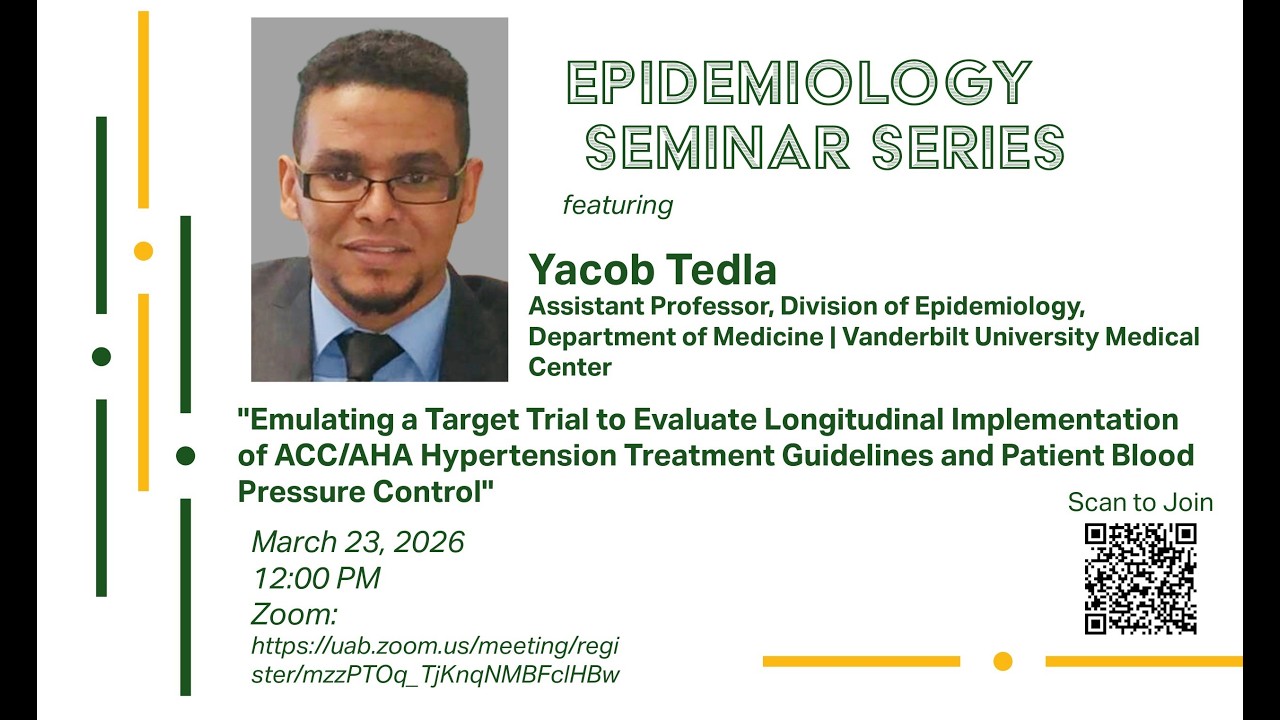
Evaluate Longitudinal Implementation of ACC/AHA Hypertension Treatment Guidelines
Keywords
Summary
151 words
Critical Evaluation
Value of the Information & Strength of the Argument
The presentation provides valuable insights into the methodology of assessing guideline adherence using EHR data and target trial emulation. The argumentation is well-structured, moving from the clinical problem to the limitations of previous studies and the development of a validated tool. The speaker effectively justifies the need for an objective measure and addresses potential confounders such as comorbidities and contraindications. The use of expert panel validation strengthens the credibility of the tool. The presentation is evidence-based, citing national statistics and major trials like SPRINT and ACCORD to support the importance of strict protocol adherence.
Scientific Rigor, Source Quality, Title Accuracy
The scientific rigor is high, with a detailed description of the tool development and validation process. The speaker acknowledges the limitations of self-report and previous studies, and the use of EHR data provides objective measures. The sources cited include the 2017 ACC/AHA guidelines and national surveys, though specific references are not explicitly listed. The title accurately reflects the content, focusing on the longitudinal implementation of guidelines. The presentation is well-organized and transparent about the study design, enhancing its reliability.
188 words
Title / Content Match
The title accurately reflects the content, which focuses on evaluating the implementation of ACC/AHA hypertension guidelines longitudinally.
Quality & Reliability
8/10
Presentation of a peer-reviewed research project with detailed methodology, expert panel validation, and use of EHR data. The speaker is a PhD epidemiologist with NIH funding. Limitations are acknowledged, and the study design is robust.
Key Moments
Markers derived by PSI from the transcript: the creator did not define chapters.
- Introduction of Dr. Tedla and his research background.
- Overview of hypertension prevalence and control rates in the US.
- Discussion of declining blood pressure control trends and therapeutic inertia.
- Limitations of previous studies on guideline adherence.
- Development of the measurement tool with expert panel.
- Details of the 28-item tool and content validity indices.
- Study design using target trial emulation on EHR data.
- Eligibility criteria and baseline definition.
- Outcomes: process and clinical measures.
- Conclusion and future directions.
Cited Sources
- 2017 ACC/AHA Hypertension Guideline — The guideline that the study evaluates adherence to.
- SPRINT Trial — Mentioned as a trial showing high blood pressure control with strict protocol adherence.
- ACCORD Trial — Mentioned as a trial showing high blood pressure control with strict protocol adherence.
Concurring Sources
- 2017 ACC/AHA Hypertension Guideline — The guideline that the study evaluates adherence to.
- SPRINT Trial — Mentioned as a trial showing high blood pressure control with strict protocol adherence.
Contribution & Novelties
The presentation offers a novel approach to assessing provider adherence to hypertension guidelines by developing a validated tool that incorporates multiple aspects of care, including comorbidities and follow-up. This addresses limitations of previous studies that relied on self-report or single measures. The use of target trial emulation on EHR data provides a robust framework for causal inference. The study’s longitudinal design allows for assessing changes in adherence over time.
Pour aller plus loin :
- Target Trial Emulation — A framework for causal inference from observational data.
- Clinical Content Validity — Overview of content validity in measurement tools.
- Therapeutic Inertia — Concept of failure to intensify treatment when indicated.
108 words
Radar Profile
The radar profile shows high scores in information quantity and quality, with slightly lower technical level and reliability. This indicates a well-presented, evidence-based seminar with strong methodological depth, though the technical level may be challenging for a general audience.
💬 No comments were provided for analysis.