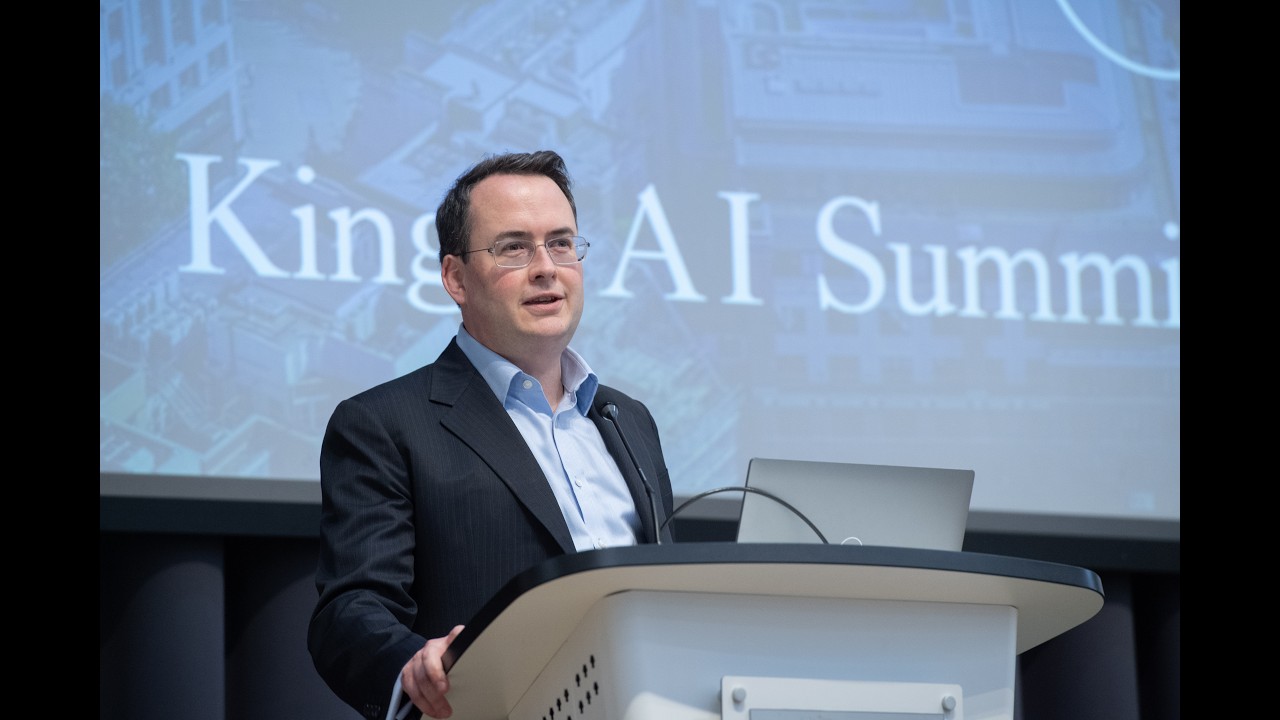
Navigating the AI Transition in the Labour Market | Dr Fabien Curto Millet at the King's AI Summit
Keywords
Summary
229 words
Critical Evaluation
Value of the Information & Strength of the Argument
The talk provides valuable insights from a senior economist, offering a balanced perspective that counters alarmist narratives. The argumentation is coherent, using historical analogies (China shock, clerical shock) and references to academic research (David Autor) to support the thesis that AI will be beneficial in the long run but requires careful management of the transition. The speaker effectively argues for proactive policies, such as public-private partnerships and AI-enhanced training, though the argumentation is more persuasive than rigorously data-driven, relying on selected examples and general trends.
94 words
Title / Content Match
The title accurately reflects the content, which focuses on the labour market impacts of AI.
Quality & Reliability
7/10
The speaker is a Chief Economist at Google, providing expert opinion grounded in economic research, but the talk is a keynote with limited depth and no formal citations.
Key Moments
Markers derived by PSI from the transcript: the creator did not define chapters.
- Introduction: critique of alarmist AI prophecies
- AI as solution to productivity and demographic challenges
- Framework: jobs lost, gained, changed; David Autor's 60% statistic
- Comparison with China shock and clerical shock
- Public-private partnerships for skilling; Google's training initiatives
- AI to improve training matching; reference to Jacobs and Kennedy paper
- Need for adaptability in product and capital markets; conclusion
Cited Sources
- King's AI Summit — Event website for the summit where the talk was given.
- AI and Workforce Futures programme — King's College London research programme related to the summit.
- Summit playlist — YouTube playlist of other summit videos.
Concurring Sources
- OECD Employment Outlook 2025 — Mentions demographic headwinds and labour market challenges.
Contribution & Novelties
The talk offers a refreshing, evidence-based perspective on AI’s labour market impact, emphasizing the importance of managing the transition rather than succumbing to fear. It introduces the concept of AI as a ‘whole economy phenomenon’ that will be less disruptive than trade shocks, and highlights the potential of AI to improve training matching. The speaker’s position as a Chief Economist at Google adds practical insight into industry-led skilling initiatives.
Pour aller plus loin :
- David Autor’s research on new work — Relevant to the 60% statistic on new jobs.
- OECD Employment Outlook 2025 — Source for demographic headwinds and labour market projections.
- Workforce Innovation and Opportunity Act (WIOA) — Relevant to the discussion on retraining programs.
116 words
Radar Profile
The radar profile shows moderate scores across all dimensions, with slightly higher quality and reliability, reflecting a well-informed but not deeply technical talk. The low quantity of information is due to the short duration and high-level nature, while the moderate technical level indicates accessibility to a general audience.