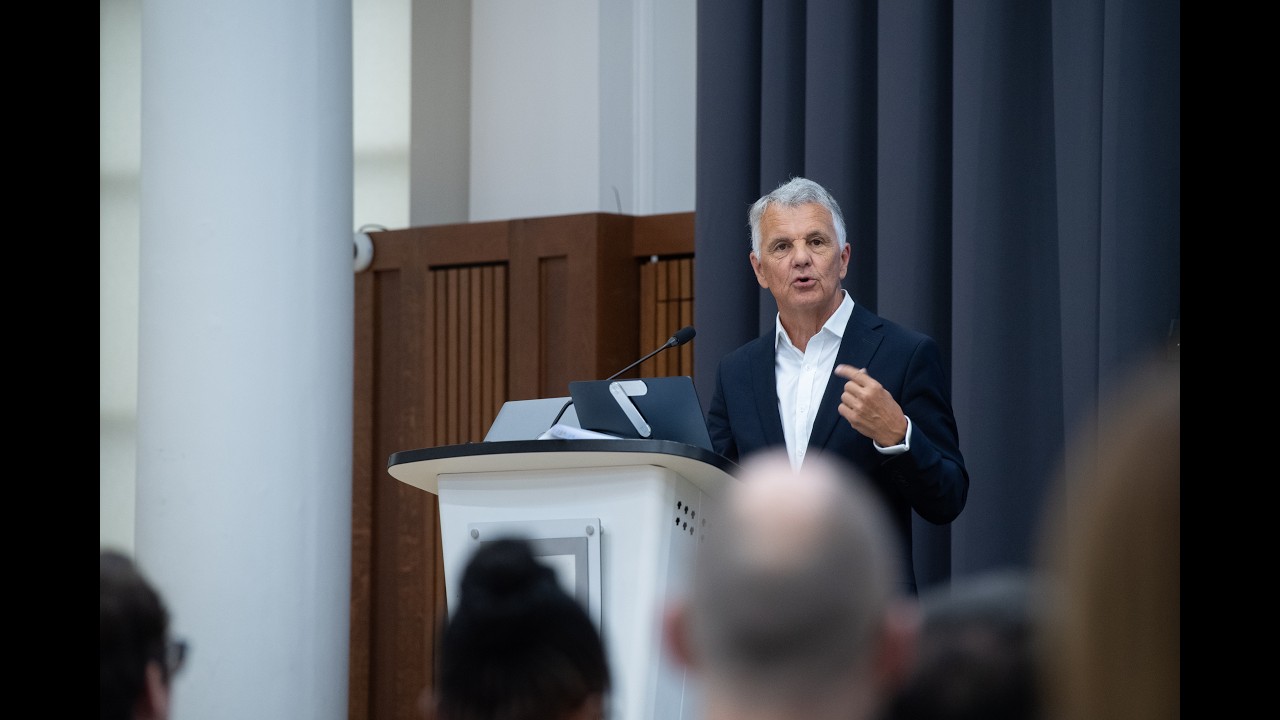
Building an AI-Confident Nation | Phil Smith CBE FREng at the King's AI Summit
Keywords
Summary
194 words
Critical Evaluation
Value of the Information & Strength of the Argument
The talk provides valuable insights into the UK’s approach to AI skills and workforce development, grounded in recent reports and statistics. The argumentation is coherent and persuasive, emphasizing the need for a balanced focus on technical and human skills. The speaker effectively argues that AI should be seen as an augmenting tool, not a replacement, and that inclusion is critical to avoid leaving people behind. However, the talk is largely based on opinion and institutional reports rather than original research, and some claims lack detailed citations.
Scientific Rigor, Source Quality, Title Accuracy
The speaker is a credible authority, and the content aligns with current policy discussions. The talk references specific reports (e.g., AI skills for UK workforce) and statistics (IMF, PwC), but does not provide detailed citations within the talk. The title accurately reflects the content. The description provides links to the summit and related programmes, which serve as sources. The talk is a keynote, so it is more opinion-based than rigorous scientific analysis, but it is well-informed and consistent with existing literature.
182 words
Title / Content Match
The title accurately reflects the content, which is a keynote on building an AI-confident nation.
Quality & Reliability
7/10
The speaker is a credible authority (Chair of Skills England and the Digital Skills Council), and the content is grounded in institutional reports and statistics. However, it is an opinion/keynote rather than a peer-reviewed study, with limited detailed sourcing.
Key Moments
Markers derived by PSI from the transcript: the creator did not define chapters.
- Introduction: AI as a people story, not just technology.
- Economic potential: PwC/Decent study, £80 billion annual contribution.
- Skills England's mission and the importance of confidence.
- IMF estimate: 70% of UK workers have tasks AI can enhance or automate.
- Skills gaps: 60% of businesses report limited AI skills; 57% technical gaps.
- Barriers to upskilling: digital literacy, fragmented pathways, affordability.
- Need for inclusion and accessible skills development.
- Skills England's evidence base and sector skills needs assessments.
- Reforms: shorter apprenticeships, flexible training, partnerships.
- Conclusion: AI-confident nation requires investment in human capability.
Cited Sources
- King's AI Summit — Official summit website, context for the keynote.
- AI and Workforce Futures programme — King's College London research programme related to the summit.
- King's AI Summit playlist — Playlist of summit videos, including this talk.
Concurring Sources
- AI skills for UK workforce report — Report referenced in the talk, identifying barriers to AI upskilling.
Contribution & Novelties
The talk provides a policy-oriented perspective on AI skills and workforce development, emphasizing the need for a holistic approach that includes both technical and human skills. It highlights the importance of confidence and inclusion, and outlines concrete steps being taken by Skills England. The talk is not highly novel but synthesizes current thinking and data.
Pour aller plus loin :
- Skills England — Official body for skills policy in England.
- AI skills for UK workforce report — Report referenced in the talk.
- IMF AI and the Future of Work — IMF analysis on AI’s impact on work.
97 words
Radar Profile
The radar profile shows balanced scores across information quantity, quality, technical level, and reliability, with a slight emphasis on quality and reliability. This indicates a well-structured and credible talk, though not deeply technical.