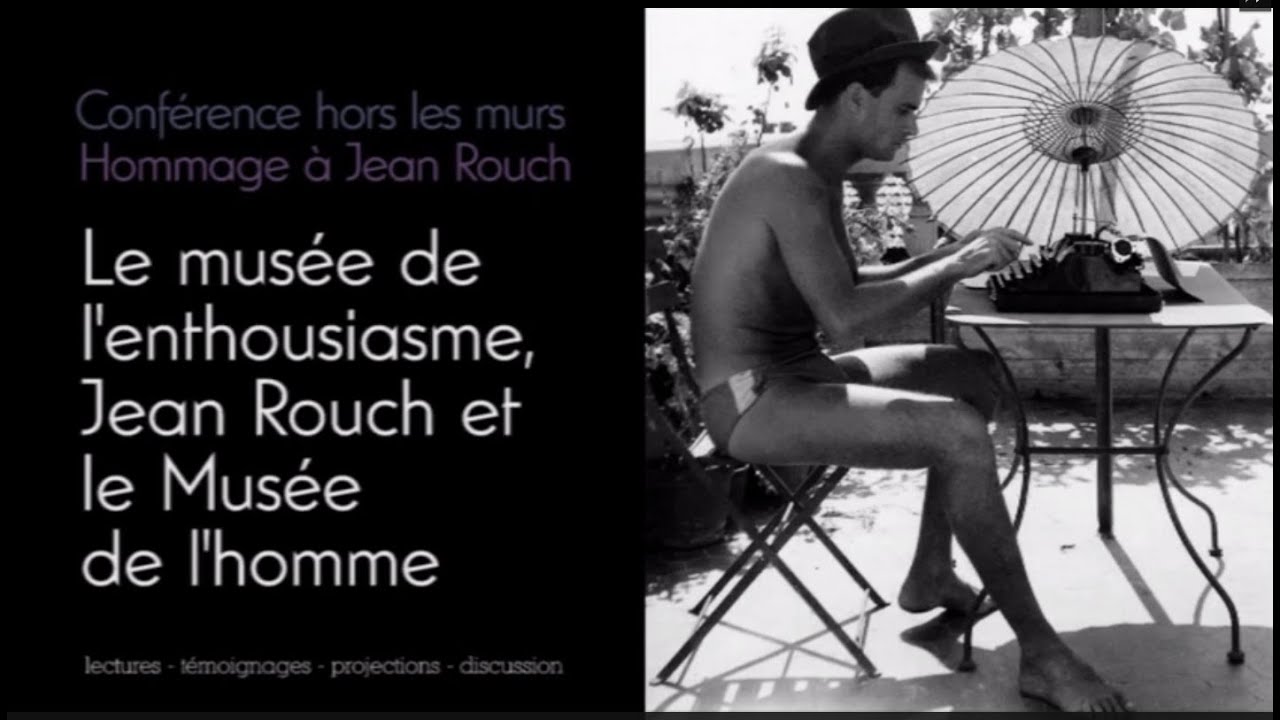
Le musée de l'enthousiasme, Jean Rouch et le musée de l'Homme
The Museum of Enthusiasm, Jean Rouch and the Museum of Man
Keywords
Summary
180 words
Critical Evaluation
Value of the Information & Strength of the Argument
The value of the information lies in its primary source nature: it includes direct readings of Jean Rouch’s own texts and testimonies from his close collaborators. This provides unique insights into Rouch’s personal reflections and the institutional history of the Musée de l’Homme. The argumentation is not analytical but rather commemorative, aiming to honor Rouch’s memory and highlight his achievements. The speakers present a coherent narrative of Rouch’s life and work, supported by anecdotes and historical context. However, the video lacks critical examination of Rouch’s methods or the ethical implications of his films, which limits its value for scholarly analysis.
Scientific Rigor, Source Quality, Title Accuracy
The scientific rigor is moderate: the video is a tribute event, not a peer-reviewed presentation. The sources cited are primarily Rouch’s own writings and the speakers’ personal memories, which are reliable for biographical accuracy but not for critical evaluation. The title accurately reflects the content, focusing on Rouch’s enthusiasm and his relationship with the museum. The adequacy between title and content is strong, as the video indeed portrays the museum as a place of enthusiasm and creativity. The quality of sources is high in terms of authenticity, but the lack of external references or critical perspective reduces its scientific rigor.
215 words
Title / Content Match
The title accurately reflects the content: the video is a tribute to Jean Rouch and his deep connection to the Musée de l'Homme, emphasizing his enthusiasm and contributions.
Quality & Reliability
8/10
The video is a tribute event organized by the Musée de l'Homme, featuring testimonies from close collaborators of Jean Rouch and screenings of two of his ethnographic films. The content is primarily anecdotal and commemorative, but it is grounded in the institutional context of the museum and includes direct readings of Rouch's autobiographical texts. The reliability is high for historical and biographical accuracy, though the format is not a critical academic analysis.
Key Moments
Markers derived by PSI from the transcript: the creator did not define chapters.
- Introduction and reading of a personal text about Jean Rouch's death and legacy.
- Reading of Jean Rouch's text 'Pour une Internationale du rêve' from 1983.
- Discussion about the tribute evening and selection of texts.
- Reading of Rouch's autobiographical text about his first encounter with the Musée de l'Homme.
- Screening of 'Initiation à la danse des possédés' (1949).
- Discussion about the making of 'Les Maîtres fous' and its reception.
- Screening of 'Les Maîtres fous' (1954).
- Anecdotes from Jean-Claude Carrière about working with Rouch in Africa.
- Closing remarks and tribute to Rouch's vitality and legacy.
Cited Sources
- Musée de l'Homme official website — Referenced in the video description as the institution hosting the event and providing further information.
Concurring Sources
- Jean Rouch - Wikipedia — Provides biographical information consistent with the video's portrayal of Rouch.
Contribution & Novelties
The video provides a unique archival record of a tribute event, offering direct access to Jean Rouch’s autobiographical texts and personal testimonies from his collaborators. It contributes to the documentation of Rouch’s legacy and the history of ethnographic cinema. The screening of his films within the context of the museum adds value for researchers interested in visual anthropology.
Pour aller plus loin :
- Jean Rouch - Wikipedia — Overview of Rouch’s life and work.
- Ciné-transe - Wikipedia — Concept coined by Rouch.
- Les Maîtres fous - Wikipedia — Details about the film and its significance.
95 words
Radar Profile
The radar profile shows high scores in information quality and reliability, reflecting the authentic primary source material. The quantity of information is moderate, as the video is a tribute rather than a comprehensive analysis. The technical level is moderate, suitable for a general audience interested in ethnographic film.