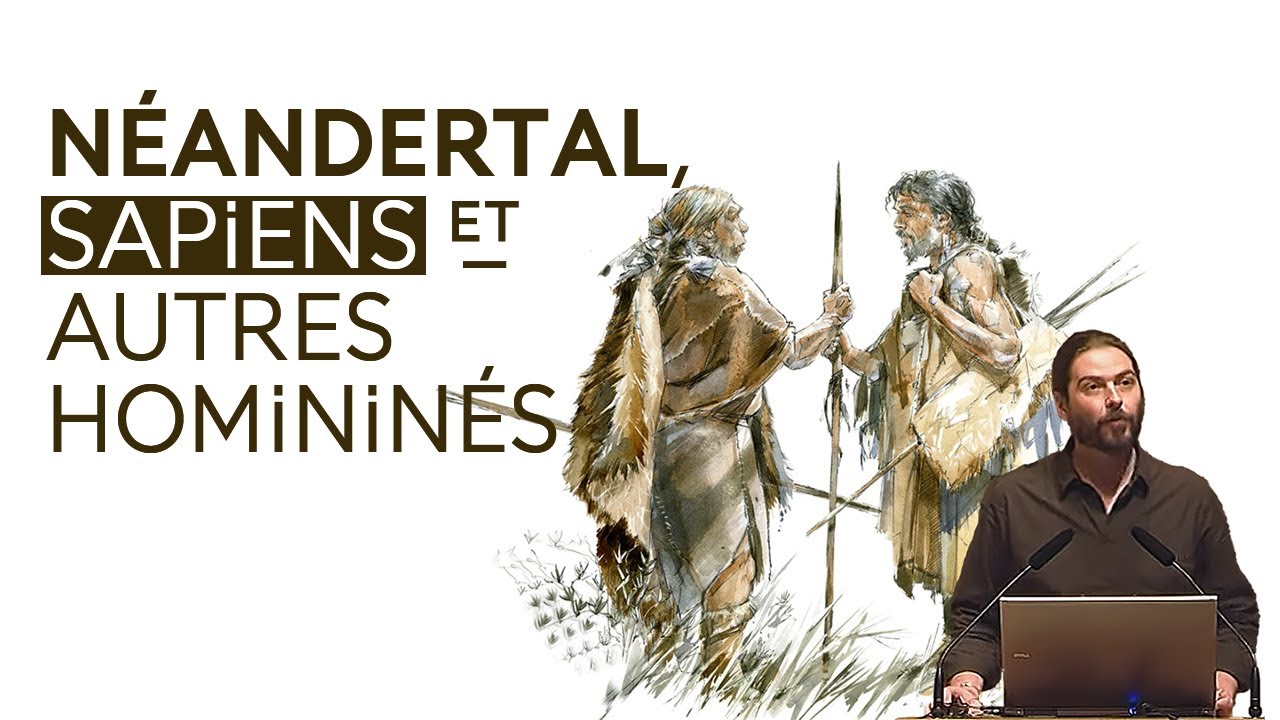
Homo sapiens, Néandertal et compagnie (Homo floresiensis, Dénisoviens, etc.) (3/3)
Homo sapiens, Neanderthals and company (Homo floresiensis, Denisovans, etc.) (3/3)
Keywords
Summary
165 words
Critical Evaluation
Value of the Information & Strength of the Argument
The conference provides a comprehensive and up-to-date overview of the latest research on the origins and interactions of Homo sapiens with other hominins. The argumentation is solid, based on a thorough review of fossil evidence and genetic studies. The speaker presents different hypotheses and evaluates them critically, avoiding oversimplification. He clearly explains the significance of each fossil and genetic finding, and how they contribute to our understanding of human evolution. The presentation is well-structured, with clear explanations of complex concepts, making it accessible to a general audience while maintaining scientific rigor.
Scientific Rigor, Source Quality, Title Accuracy
The scientific rigor is high, with the speaker citing specific studies and fossils. The sources are primarily academic publications and the speaker’s own expertise. The title accurately reflects the content, which covers the main hominin species of the late Pleistocene. The conference is part of a series by the Musée de l’Homme, a reputable institution. The speaker is a recognized expert in the field, and the content is consistent with current scientific knowledge. The presentation is well-documented, with clear references to the fossil record and genetic studies.
193 words
Title / Content Match
The title accurately reflects the content: the conference covers Homo sapiens, Neanderthals, Homo floresiensis, and Denisovans, as part of a series on human evolution.
Quality & Reliability
9/10
The conference is given by a recognized paleoanthropologist from the Muséum national d'Histoire naturelle, presenting a rigorous synthesis of current knowledge on the origins of Homo sapiens and other recent hominins. The content is well-structured, based on fossil evidence and genetic studies, and avoids speculative claims. The speaker clearly distinguishes established facts from hypotheses, and the presentation is consistent with the scientific consensus.
Key Moments
Markers derived by PSI from the transcript: the creator did not define chapters.
- Introduction to the conference and overview of the topics to be covered.
- Discussion of the multiregional and replacement models for the origin of Homo sapiens.
- Presentation of key African fossils: Bodo, Kabwe, Omo Kibish, and Herto.
- Explanation of the mosaic of primitive and derived traits in early Homo sapiens fossils.
- Discussion of the genetic evidence, including mitochondrial DNA and the 'African Eve' hypothesis.
- Presentation of the earliest Homo sapiens outside Africa, from Qafzeh and Skhul, and their funerary practices.
- Introduction to Neanderthals: morphology, distribution, and relationship with Homo sapiens.
- Discussion of Neanderthal interbreeding with Homo sapiens and its genetic legacy.
- Presentation of Denisovans, known primarily from DNA, and their contribution to modern human genetics.
- Discussion of Homo floresiensis, the 'hobbit' from Flores, and the debates surrounding its classification.
Cited Sources
- Rendez-vous du Muséum — Link to the conference series at the Muséum national d'Histoire naturelle.
Concurring Sources
- Homo sapiens — Wikipedia article providing general information on Homo sapiens, consistent with the conference content.
- Neanderthal — Wikipedia article on Neanderthals, supporting the information presented in the conference.
Contribution & Novelties
The conference provides a comprehensive and accessible synthesis of the latest research on the origins of Homo sapiens and its interactions with other hominins. It highlights the importance of both fossil and genetic evidence, and presents a balanced view of the current debates. The speaker’s expertise and clear presentation make it a valuable resource for understanding human evolution.
Pour aller plus loin :
- Homo sapiens — Overview of the species, including its origins and dispersal.
- Neanderthal — Detailed information on Neanderthal anatomy, behavior, and genetics.
- Denisovan — Information on the Denisovan hominins, known primarily from DNA.
- Homo floresiensis — Details on the ‘hobbit’ from Flores and the debates about its classification.
111 words
Radar Profile
The radar profile shows high scores in all dimensions, indicating a well-rounded and reliable presentation. The quantity and quality of information are excellent, and the technical level is appropriate for a general audience. The overall reliability is high, reflecting the speaker's expertise and the scientific rigor of the content.
💬 Très positif. Sur les 30 commentaires analysés, les spectateurs expriment une grande gratitude et admiration pour la clarté et la pédagogie de la conférence, soulignant sa valeur éducative et la qualité de l'exposé.