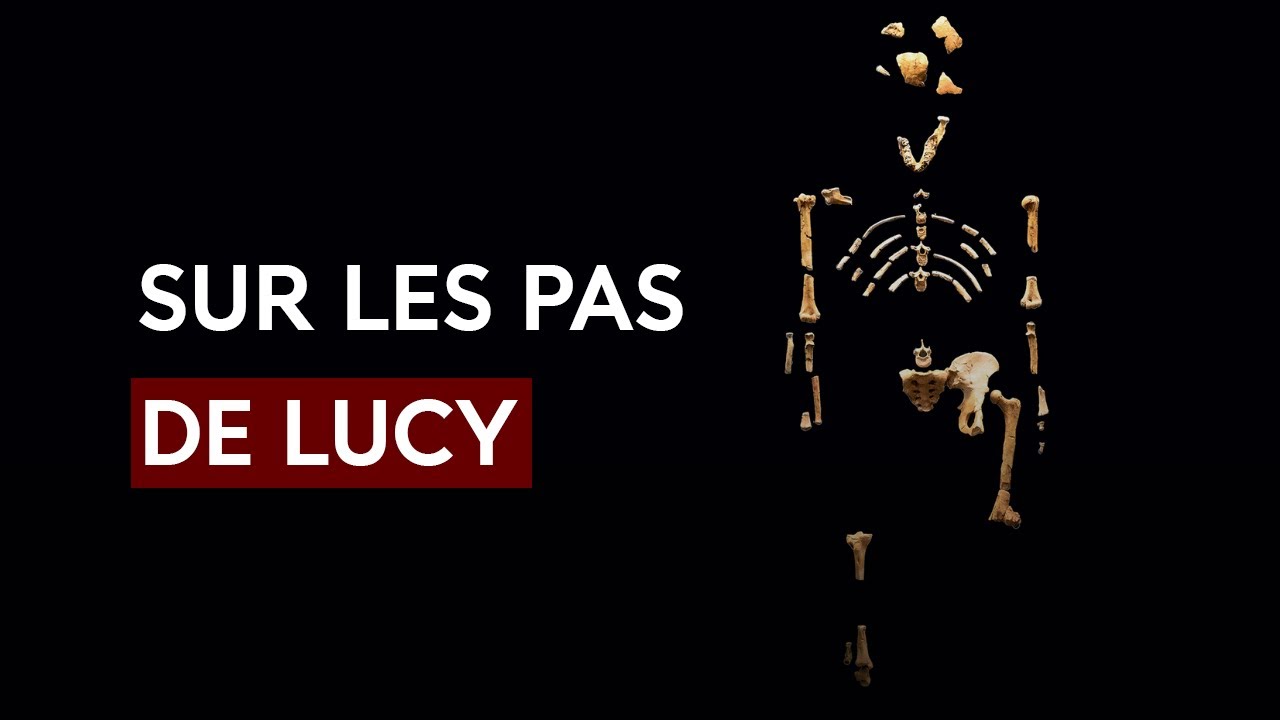
Sur les pas de Lucy | Une série de conférence sur Lucy l'Australopithèque 2/5
Following in Lucy's Footsteps | A lecture series about Lucy the Australopithecus 2/5
Keywords
Summary
164 words
Critical Evaluation
Value of the Information & Strength of the Argument
The value of the information is high, as it provides a first-hand account of the scientific expeditions that led to Lucy’s discovery, offering unique insights into the historical and methodological aspects of paleoanthropology. The argumentation is solid, based on the speakers’ direct involvement and expertise. The narrative is coherent, tracing the progression from the Omo Valley expeditions to the discovery of Lucy, and effectively highlights the importance of multidisciplinary approaches and technological advancements. The speakers also address the evolution of scientific theories, such as Yves Coppens’ hypotheses, and their subsequent revisions, demonstrating a balanced and critical perspective.
Scientific Rigor, Source Quality, Title Accuracy
The scientific rigor is high, given the speakers’ credentials and the institutional backing of the Musée de l’Homme. The sources are primarily the speakers’ own experiences and historical records, which are credible but not always explicitly cited. The title accurately reflects the content, focusing on the historical context of Lucy’s discovery. The video is a recorded conference, which is a reliable format for disseminating expert knowledge, though it is not a peer-reviewed publication. The description provides a link to the MNHN’s page on Lucy, which serves as a supplementary source. Overall, the content is well-researched and presented, with a clear alignment between the title and the content.
219 words
Title / Content Match
The title accurately reflects the content: the video is the second part of a conference series dedicated to Lucy the Australopithecus, focusing on the historical context and scientific impact of her discovery.
Quality & Reliability
8/10
The conference is presented by two senior researchers (Raymonde Bonnefille, palynologist, and Amélie Vialet, paleoanthropologist) from the Musée de l'Homme, with direct involvement in the 1974 excavations. The content is based on personal experience and historical records, and is consistent with established scientific knowledge. The institutional context (MNHN) and the presence of a detailed description with a reference link reinforce credibility. However, the format is a recorded conference, not a peer-reviewed publication, and some claims are presented without explicit citations.
Key Moments
Markers derived by PSI from the transcript: the creator did not define chapters.
- Introduction by Amélie Vialet, paying tribute to Yves Coppens and setting the stage for the historical context.
- Discussion of the Omo Valley expeditions, including the involvement of Camille Arambourg and the international collaboration.
- Explanation of the geological and chronological framework of the Omo Valley, including volcanic ash dating.
- Raymonde Bonnefille begins her talk, sharing personal experiences from the Omo Valley expeditions.
- Description of the logistics and challenges of the expeditions, including the colonial aspects and the daily routine.
- Introduction to palynology and its role in reconstructing past environments, with examples of pollen analysis.
- Discussion of the multidisciplinary nature of the research and the importance of collaboration between French and American teams.
- Explanation of the geological mapping and dating techniques used in the Omo Valley, including potassium-argon dating.
- Reflection on the legacy of the Omo Valley studies and their influence on the discovery of Lucy.
Cited Sources
- Australopithèque Lucy - MNHN — Official page from the Muséum national d'Histoire naturelle providing information about Lucy and her discovery.
Concurring Sources
- Australopithèque Lucy - MNHN — The official MNHN page provides consistent information about Lucy's discovery and significance.
Contribution & Novelties
The video provides a unique first-hand account of the historical context and scientific processes leading to Lucy’s discovery, emphasizing the importance of the Omo Valley expeditions and the multidisciplinary approach. It offers personal anecdotes and insights from a participant, which are not typically found in textbooks.
Pour aller plus loin :
- Lucy (Australopithecus) — Overview of Lucy’s discovery and significance.
- Yves Coppens — Biography of the paleoanthropologist central to the discovery.
- Omo River — Geographical context of the Omo Valley expeditions.
- Palynology — The study of pollen, a key method discussed in the video.
94 words
Radar Profile
The radar profile shows high scores in quantity and quality of information, reflecting the rich historical and scientific content. The technical level is also high, given the detailed explanations of dating methods and palynology. The overall reliability is strong, supported by the speakers' expertise and institutional backing.