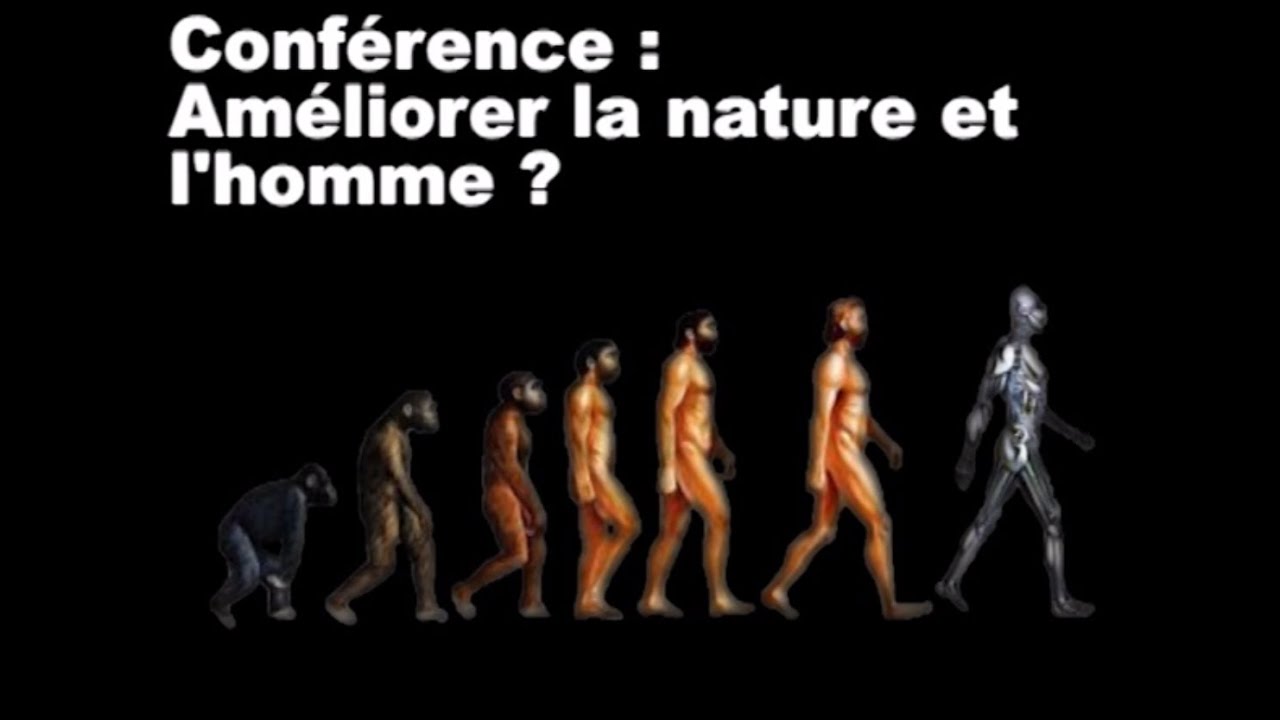
Améliorer la nature et l’homme ?
Improving Nature and Humanity?
Keywords
Summary
179 words
Critical Evaluation
Value of the Information & Strength of the Argument
The lecture provides a rich historical overview of Western perceptions of nature and humanity, drawing on key figures like Linnaeus, Buffon, Lamarck, and Darwin. Gouyon’s argumentation is solid, as he connects philosophical and scientific developments to contemporary ethical dilemmas. He effectively demonstrates how scientific theories have been used to justify both progress and atrocities, and he argues that science alone cannot provide moral guidance. The value lies in its interdisciplinary approach, blending biology, history, and philosophy, and in its call for a more nuanced understanding of the role of science in society.
Scientific Rigor, Source Quality, Title Accuracy
The speaker, a professor at the Muséum national d’Histoire naturelle, lends credibility to the content. He references historical texts and figures accurately, though he does not provide specific citations. The title accurately reflects the content, which explores the historical and philosophical dimensions of human attempts to improve nature and humanity. The lecture is well-structured and grounded in established scientific knowledge, though it includes personal interpretations and opinions.
174 words
Title / Content Match
The title accurately reflects the content, which explores the historical and philosophical dimensions of human attempts to improve nature and humanity.
Quality & Reliability
8/10
The speaker is a recognized biologist and professor at the Muséum national d'Histoire naturelle, providing a well-structured historical and philosophical analysis. The content is based on established scientific knowledge and historical facts, though it includes personal interpretations and opinions.
Key Moments
Markers derived by PSI from the transcript: the creator did not define chapters.
- Introduction: the link between perceptions of nature and humans.
- Discussion of biodiversity and the diversity of living beings.
- Critique of the 'little seed' myth in reproduction.
- Linnaeus's classification system and its religious foundations.
- Contrast between Rousseau and Buffon's views on nature.
- Lamarck's theory of inheritance of acquired characteristics.
- Darwin's theory of natural selection and its moral implications.
- The debate on evolution and the Church's position.
- The amorality of nature and the need for societal choices.
Cited Sources
- Philippe Descola's works on nature-culture relations — Mentioned as an anthropologist who studied different cultural perceptions of nature.
- Carl Linnaeus's Systema Naturae — Referenced as the basis for modern biological classification.
- Jean-Baptiste Lamarck's theory of evolution — Discussed in the context of inheritance of acquired characteristics.
- Charles Darwin's On the Origin of Species — Central to the lecture's discussion of natural selection.
- Thomas Huxley's defense of Darwin — Mentioned as Darwin's 'bulldog'.
- Pope John Paul II's statement on evolution — Quoted to illustrate the tension between science and religion.
Concurring Sources
- Darwin's On the Origin of Species — Supports the discussion of natural selection.
- Linnaeus's Systema Naturae — Provides context for the classification system.
Dissenting Sources
- Pope John Paul II's statement on evolution — The lecture presents a critical view of the Church's position, which may be seen as discordant with scientific consensus.
Contribution & Novelties
The lecture offers a unique synthesis of the history of biology and philosophy, highlighting how scientific ideas about nature have been shaped by cultural and religious contexts. It provides a critical perspective on the misuse of genetics in eugenics and the ongoing debates about biotechnology.
Pour aller plus loin :
- Philippe Descola — Anthropologist whose work on nature-culture relations is referenced.
- History of evolutionary thought — Provides background on the development of evolutionary theories.
- Eugenics — Discusses the historical misuse of genetics, relevant to the lecture’s themes.
87 words
Radar Profile
The radar profile shows high scores in information quantity, quality, and reliability, with a moderate technical level. This indicates a well-researched and credible lecture that is accessible to a general audience while still providing depth.