Keywords
Summary
211 words
Critical Evaluation
Value of the Information & Strength of the Argument
The video provides valuable descriptive information about several Paleolithic Venus figurines, including their discovery contexts, materials, and stylistic variations. The argumentation, however, is largely interpretive and speculative. Vialou’s narrative is engaging and poetic, but he often makes claims without presenting concrete evidence or alternative hypotheses. For example, his assertion that the Venus of Lespugue was ‘animated’ by firelight is plausible but not empirically demonstrated. Brenot’s psychoanalytic framework, while interesting, is not scientifically testable and relies on Lacanian concepts that are not universally accepted. The speakers acknowledge the subjectivity of their readings, but the lack of rigorous methodology weakens the overall argumentation.
Scientific Rigor, Source Quality, Title Accuracy
The scientific rigor is moderate. The speakers are experts in their fields, but they present personal interpretations rather than a systematic review of evidence. The video does not cite specific studies or data, and the only source mentioned is the general agenda page of the Muséum national d’Histoire naturelle. The title accurately reflects the content, which focuses on the interpretation of female figurines from the Paleolithic. The discussion is more of a public lecture than a scientific presentation, and the lack of citations and peer-reviewed references reduces its reliability.
205 words
Title / Content Match
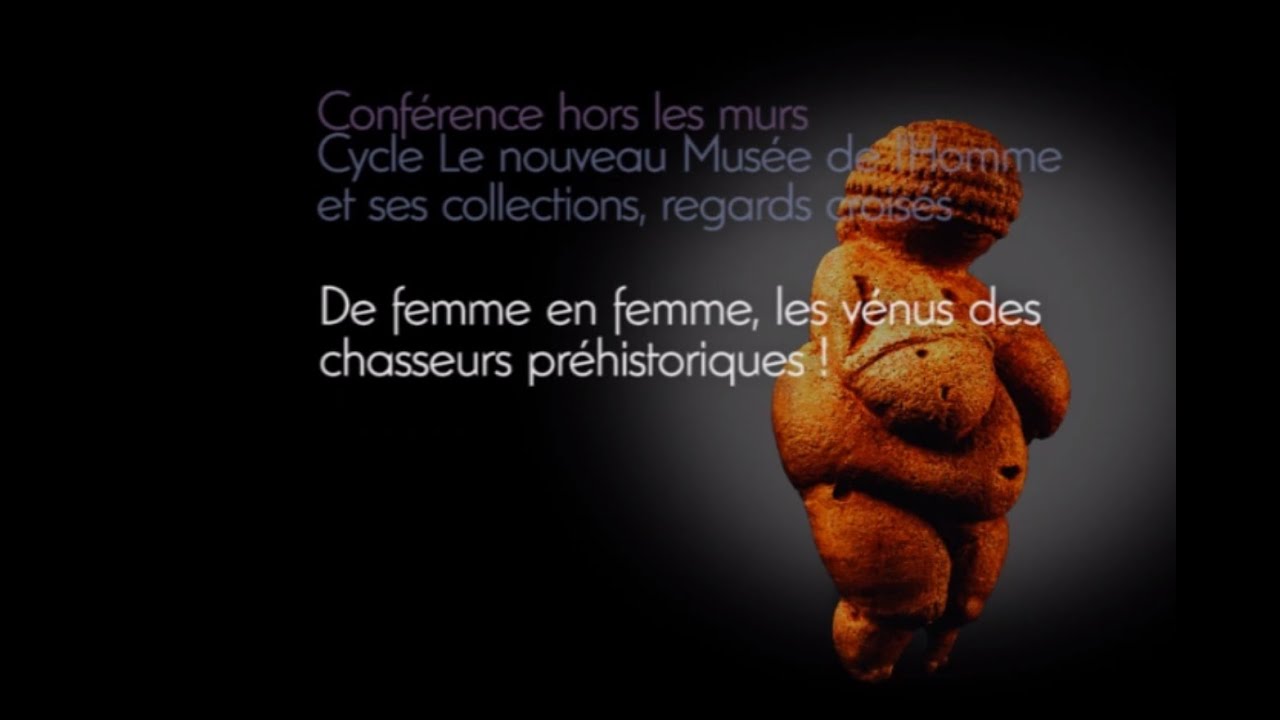
The title accurately reflects the content, which focuses on the interpretation of female figurines from the Paleolithic, presented by two experts.
Quality & Reliability
6/10
The video presents expert interpretations of Paleolithic Venus figurines, but the arguments are largely speculative and lack rigorous scientific evidence. The speakers acknowledge the subjectivity of their readings, and the discussion is more poetic than analytical, with limited reference to verifiable data or sources.
Key Moments
Markers derived by PSI from the transcript: the creator did not define chapters.
- Introduction to the Venus of Brassempouy and Venus of Willendorf, highlighting their exceptional facial features and historical interpretations.
- Discussion of the Venus of Lespugue, its discovery context near a hearth, and the hypothesis that it was planted in the ground and animated by firelight.
- Comparison of Venus figurines from Avdeevo and Kostenki, noting their portability, decoration, and burial in small graves.
- Introduction of the Venus impudique from Laugerie-Basse, a Magdalenian figurine with a schematic style and emphasized vulva.
- Cross-cultural comparisons with rock art from Brazil and Australia, illustrating the universal symbolism of female imagery.
- Philippe Brenot's psychoanalytic interpretation using Lacan's RSI framework, discussing the real, imaginary, and symbolic dimensions of the figurines.
Cited Sources
- Rendez-vous du Muséum — The video is part of a series of public lectures at the Muséum national d'Histoire naturelle.
Concurring Sources
- Venus figurines — The video's descriptions of Venus figurines align with general archaeological knowledge.
Dissenting Sources
- Alternative interpretations — Some commentators and scholars propose that Venus figurines may have been created by women or served as fertility symbols, contrasting with the erotic interpretations discussed in the video.
Contribution & Novelties
The video offers a unique perspective by combining archaeological and psychoanalytic interpretations of Paleolithic Venus figurines. It emphasizes the diversity of these artifacts and challenges the traditional ‘Venus’ stereotype, suggesting they were integrated into daily life and social practices. The discussion of the Venus of Lespugue being planted in the ground and animated by firelight is a novel interpretation that adds to the understanding of these objects.
Pour aller plus loin :
- Venus figurines — Overview of Paleolithic Venus figurines, their distribution, and interpretations.
- Venus of Willendorf — Detailed information on one of the most famous Venus figurines.
- Venus of Lespugue — Specific details about the Venus of Lespugue, including its discovery and characteristics.
- Gravettian — Archaeological culture associated with many Venus figurines.
- Lacan’s RSI — Explanation of Lacan’s psychoanalytic framework used in the video.
135 words
Radar Profile
The radar profile shows moderate scores across all dimensions, indicating a balanced but not exceptional video. The quantity of information is adequate, but the quality and reliability are limited by the speculative nature of the interpretations. The technical level is moderate, suitable for a general audience.
💬 The comments are predominantly critical, with many viewers questioning the male-centric interpretations and the lack of scientific rigor. Some express appreciation for the poetic descriptions, but the overall sentiment is negative.