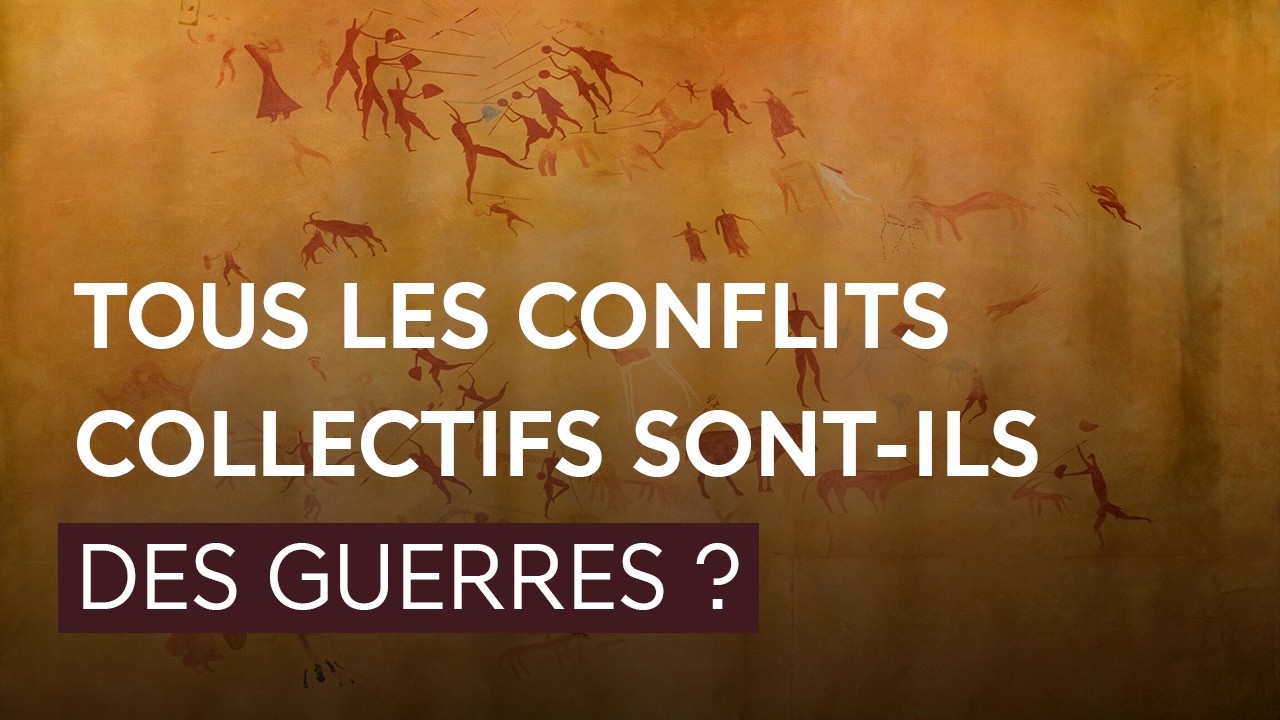
Faire la guerre est-il dans la nature humaine ?
Is War Inherent to Human Nature?
Keywords
Summary
175 words
Critical Evaluation
Value of the Information & Strength of the Argument
The talk provides valuable insights by synthesizing evidence from multiple disciplines (ethology, archaeology, ethnology) to address a complex question. The argumentation is solid, systematically presenting evidence for and against different positions, and acknowledging methodological limitations. The speaker’s use of the Aboriginal Australian case is particularly compelling, as it provides detailed ethnographic documentation of warfare among hunter-gatherers, challenging the notion that war is a recent development. The discussion of the two ethnographic invariants (us/them dichotomy and gendered combat) adds depth, though the speaker does not delve into potential counterarguments or alternative interpretations in detail.
Scientific Rigor, Source Quality, Title Accuracy
The speaker demonstrates scientific rigor by referencing specific archaeological sites (Jebel Sahaba, Nataruk, Goyet) and ethnographic studies, and by acknowledging the limitations of each type of evidence. He does not provide formal citations, but the content aligns with current anthropological scholarship. The title accurately reflects the content, which is a balanced exploration of the question. The talk is well-structured and avoids sensationalism, though it could benefit from more explicit references to academic literature.
181 words
Title / Content Match
The title accurately reflects the central question addressed, with the content providing a nuanced anthropological perspective.
Quality & Reliability
8/10
The speaker is an anthropologist presenting a balanced overview of the debate, citing archaeological and ethnographic evidence. The talk is structured, references specific sites and studies, and acknowledges uncertainties. However, it is a conference presentation without formal citations or peer review.
Key Moments
Markers derived by PSI from the transcript: the creator did not define chapters.
- Introduction: the question is broken into three parts.
- Discussion of ethological evidence: chimpanzees and bonobos.
- Archaeological evidence: Jebel Sahaba and Nataruk.
- Ethnological evidence: two invariants (us/them and gendered combat).
- Case study: Aboriginal Australian warfare and weapons.
- Analysis of 216 recorded collective fights in Australia.
- Discussion of the definition of war and its implications.
- Conclusion: war is not a biological inevitability but a social phenomenon.
Cited Sources
- Conference page on Musée de l'Homme website — Official page for the conference, providing context and possibly additional resources.
Concurring Sources
- Chimpanzee warfare — Supports the ethological evidence of intergroup hostility in chimpanzees.
- Jebel Sahaba — Provides background on the archaeological site discussed.
- Nataruk — Provides background on the archaeological site discussed.
Contribution & Novelties
The talk offers a comprehensive synthesis of evidence from multiple disciplines, challenging both the ‘hawk’ and ‘dove’ positions by emphasizing the complexity of human conflict. The use of Aboriginal Australian ethnographic data is particularly novel in this context, providing concrete examples of organized warfare among hunter-gatherers. The speaker’s distinction between ‘combat’ and ‘war’ adds nuance to the debate.
Pour aller plus loin :
- Chimpanzee warfare — Relevant for understanding ethological evidence.
- Jebel Sahaba — Key archaeological site discussed.
- Nataruk — Another archaeological site mentioned.
- Aboriginal Australian warfare — Provides further details on the ethnographic case.
95 words
Radar Profile
The radar profile shows high scores in information quantity, quality, and reliability, with a slightly lower technical level, reflecting the accessible yet rigorous nature of the talk. The balance across dimensions indicates a well-rounded presentation.