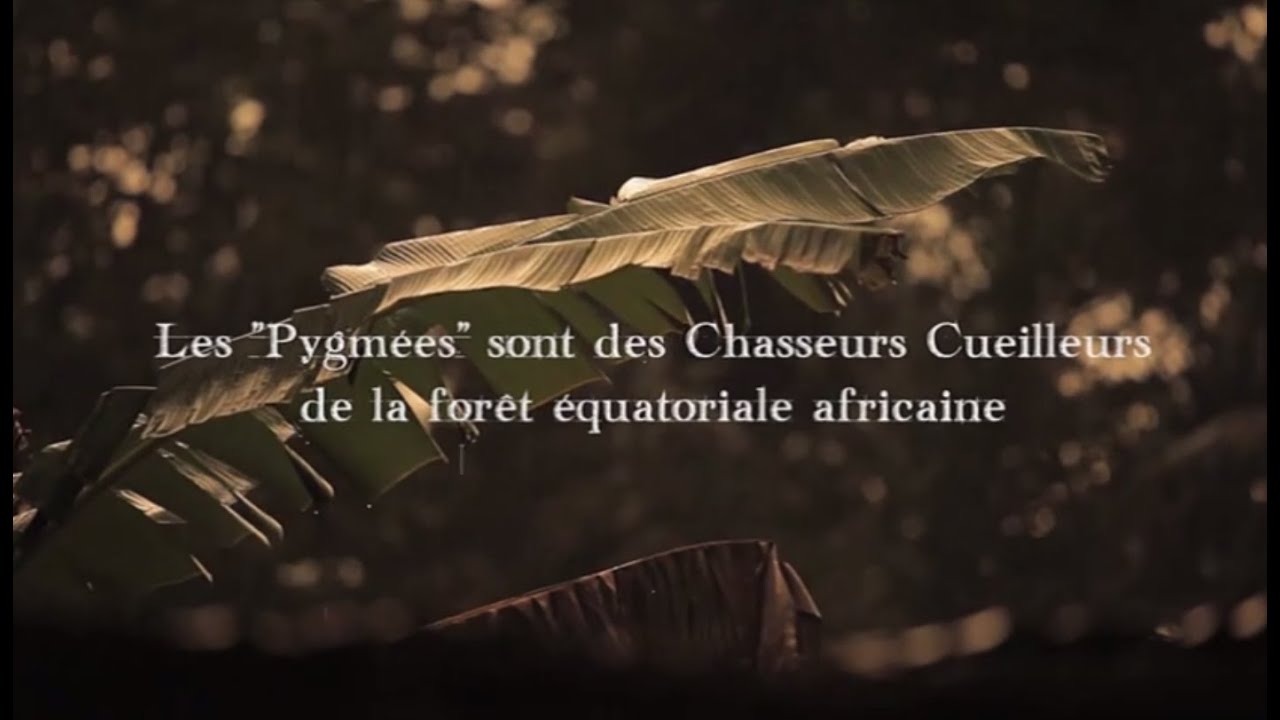
Pygmées Baka, le grand virage
Baka Pygmies: The Big Turning Point
Keywords
Summary
120 words
Critical Evaluation
Value of the Information & Strength of the Argument
The documentary provides valuable insights into the Baka’s current situation, combining scientific research with personal narratives. The argumentation is solid, grounded in long-term fieldwork and direct observations. The film effectively illustrates the complex interplay between environmental change, cultural identity, and adaptation. The inclusion of local voices, such as the Baka community leader and a teacher, adds depth and authenticity to the narrative. The scientific approach is rigorous, with clear explanations of methods and data collection, making the information credible and informative.
Scientific Rigor, Source Quality, Title Accuracy
The scientific rigor is high, with contributions from CNRS and IRD researchers. The sources are credible, including the researchers’ own fieldwork and historical records from missionaries. The title accurately reflects the content, focusing on the Baka’s transition. The documentary is well-structured, moving from the forest to the village, and effectively uses visual storytelling to convey the changes. The discussion after the film adds further scientific context and addresses audience questions, enhancing the overall reliability.
170 words
Title / Content Match
The title accurately reflects the content, focusing on the Baka Pygmies and the significant changes they are undergoing.
Quality & Reliability
8/10
The documentary is produced by CNRS Images and IRD, with scientific advisors Alain Froment (IRD) and Fernando V. Ramirez Rozzi (CNRS), ensuring a high level of scientific credibility. The content is based on long-term fieldwork and direct observations, with clear presentation of data and methods.
Key Moments
Markers derived by PSI from the transcript: the creator did not define chapters.
- Introduction to the Baka Pygmies and their forest environment.
- Arrival at the Bosquet settlement and discovery of birth records.
- Explanation of anthropometric measurements and growth studies.
- Case study of a child with growth retardation and health intervention.
- Discussion on the impact of deforestation and logging on Baka life.
- Interview with a Baka community leader about challenges and adaptation.
- Visit to a local school and discussion on education issues.
- Expert discussion on the future of the Baka and cultural resilience.
Cited Sources
- Muséum national d'Histoire naturelle - Agenda — Link provided in the video description for the conference event.
Concurring Sources
- Baka people (Wikipedia) — Provides background on the Baka people, their traditional lifestyle, and current challenges.
Contribution & Novelties
The documentary provides a unique longitudinal perspective on the Baka Pygmies, combining biological and cultural anthropology. It highlights the use of birth records to establish precise ages, enabling growth studies that were previously impossible. The film also sheds light on the health challenges and adaptation strategies of the Baka, offering a nuanced view of cultural change.
Pour aller plus loin :
- Baka people (Wikipedia) — Overview of the Baka people, their culture, and history.
- Pygmy peoples (Wikipedia) — General information on Pygmy populations in Africa.
- Hunter-gatherer (Wikipedia) — Context on hunter-gatherer societies and their transitions.
95 words
Radar Profile
The radar profile shows high scores in information quantity, quality, and reliability, with a slightly lower technical level. This indicates a well-researched and informative documentary that is accessible to a general audience while maintaining scientific depth.
💬 Sur les 0 commentaires analysés, aucune tendance n'est disponible.