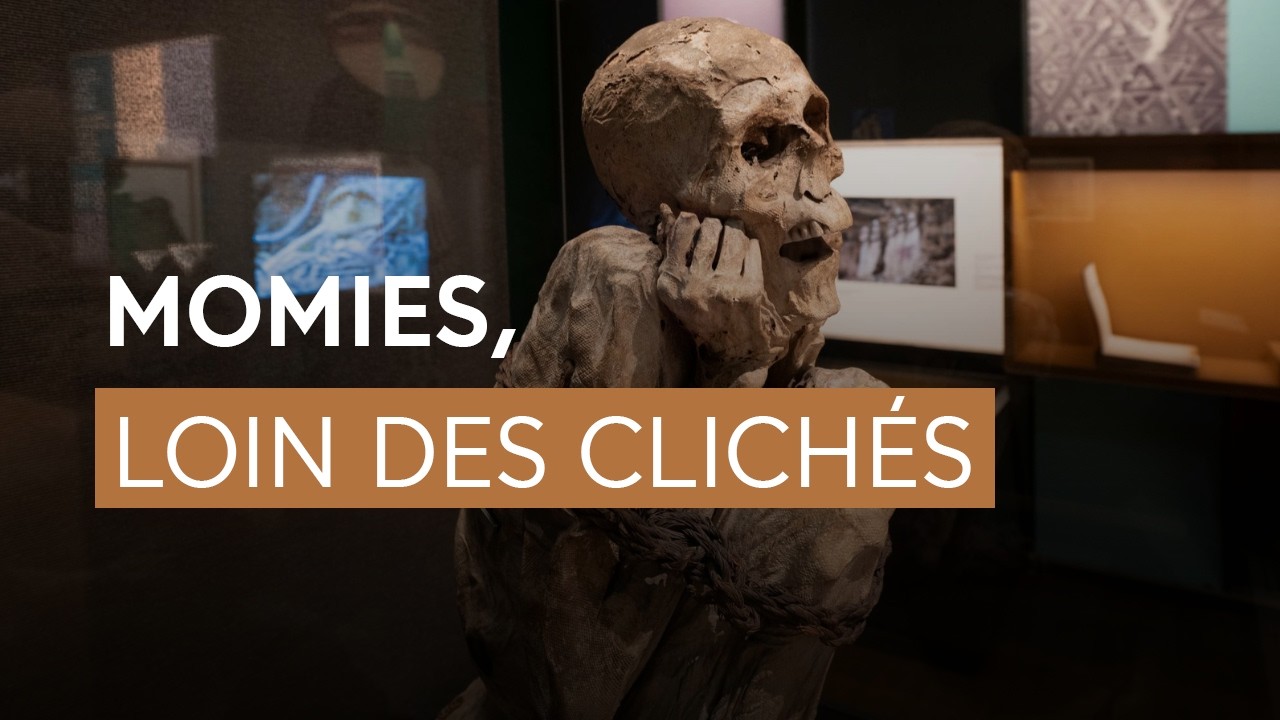
Momies : idées reçues et voies de recherche
Mummies: preconceived ideas and avenues of research
Keywords
Summary
177 words
Critical Evaluation
Value of the Information & Strength of the Argument
The lecture provides valuable insights by challenging common misconceptions and broadening the scope of mummy studies. The speaker’s argumentation is solid, based on his expertise and specific archaeological examples. He effectively demonstrates that mummification is not solely an Egyptian practice and that environmental factors are crucial for preservation. The discussion of medieval embalming and the comparison with South American practices enriches the understanding of funerary rites. The speaker’s perspective as a non-Egyptologist offers a fresh approach, focusing on the bodies themselves rather than purely textual or art-historical interpretations.
Scientific Rigor, Source Quality, Title Accuracy
The lecture demonstrates scientific rigor through the speaker’s expertise and the use of specific archaeological cases. However, the sources are not systematically cited, and the talk relies heavily on the speaker’s personal experience and general knowledge. The title accurately reflects the content, which debunks myths and explores research avenues. The lecture is well-structured and informative, though it could benefit from more explicit references to scientific studies and publications.
171 words
Title / Content Match
The title accurately reflects the content, which debunks common misconceptions about mummies and explores various research avenues.
Quality & Reliability
8/10
The speaker is a doctor in archaeology and a researcher at INRAP, providing expert insights. The lecture is well-structured, referencing specific archaeological cases and recent research, though it lacks detailed citations and some claims are presented without direct evidence.
Key Moments
Markers derived by PSI from the transcript: the creator did not define chapters.
- Introduction: speaker's background and the broad scope of mummification
- Definition of mummies: artificial vs natural, and examples worldwide
- Discussion on the role of environment in preservation, using Egyptian mummies as example
- Chinchorro mummies: the oldest mummies, predating Egyptian ones
- Medieval European embalming practices and comparison with other cultures
- The importance of studying mummies as bodies, not just artifacts
- Degradation of mummies due to environmental factors and looting
- Historical use of mummies in medicine and the fascination with them
Cited Sources
- Conference page on Musée de l'Homme website — Official page for the conference, providing details and context.
Concurring Sources
- Chinchorro mummies — Supports the claim that the oldest mummies are from South America, not Egypt.
- Tollund Man — Example of natural mummification in a bog, as mentioned in the lecture.
Contribution & Novelties
The lecture offers a fresh perspective on mummification by emphasizing the diversity of practices and the critical role of environment. It challenges the Egyptocentric view and encourages a broader, more scientific approach to studying preserved bodies.
Pour aller plus loin :
- Chinchorro mummies — The oldest known mummies, predating Egyptian ones, highlighting early artificial mummification.
- Tollund Man — A naturally preserved bog body, illustrating natural mummification.
- Mummy (Wikipedia) — General overview of mummification types and practices worldwide.
77 words
Radar Profile
The radar profile shows high scores in information quantity, quality, and technical level, indicating a dense and well-articulated lecture. The overall reliability is also high, reflecting the speaker's expertise and the use of concrete examples.