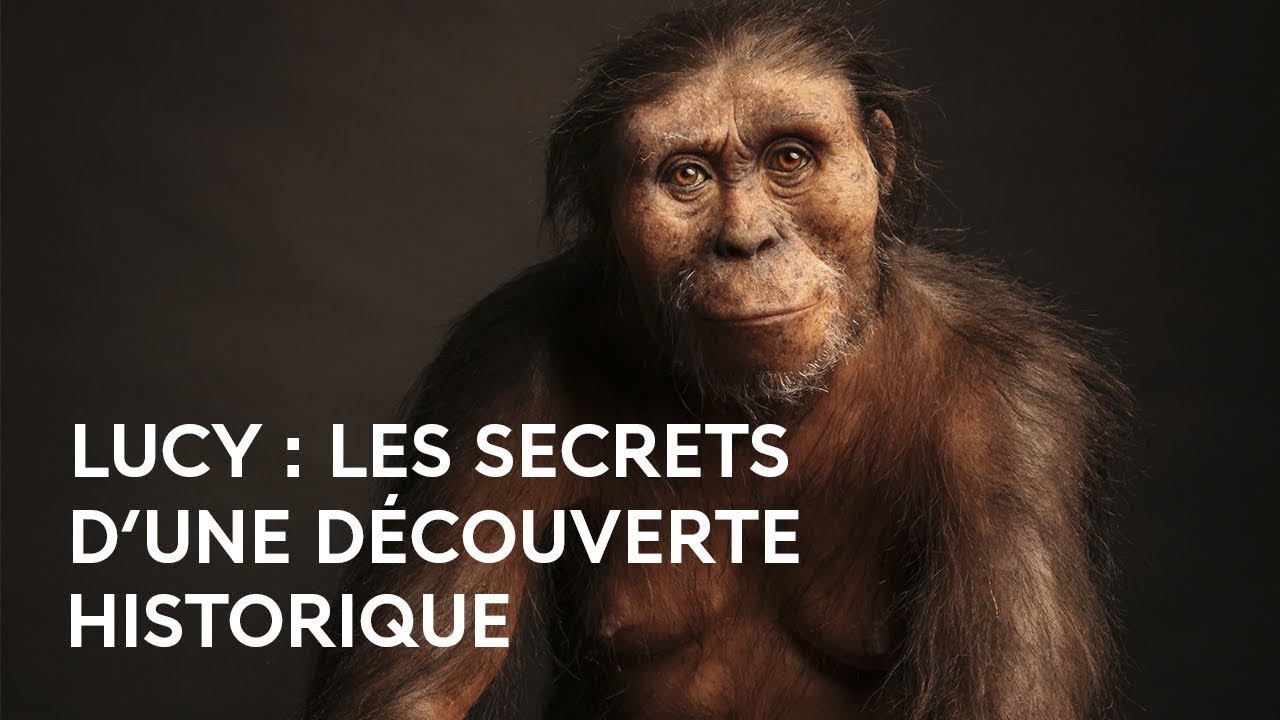
Lucy : les 50 ans d'une découverte
Lucy: the 50 years of a discovery
Keywords
Summary
156 words
Critical Evaluation
Value of the Information & Strength of the Argument
The video provides substantial value by synthesizing decades of research on Lucy and Australopithecus afarensis into an accessible format. It presents a balanced view, acknowledging both established knowledge and ongoing debates, such as the shift from a linear to a bushy model of human evolution. The argumentation is solid, grounded in anatomical comparisons, taphonomic reasoning, and paleoenvironmental reconstructions. The experts explain the scientific methods used, such as dental wear analysis and isotopic studies, to infer diet, and they clearly distinguish between hypotheses and tested conclusions. The documentary also highlights the importance of new discoveries, like the 3.3-million-year-old tools from Kenya, in reshaping our understanding of early hominin capabilities.
Scientific Rigor, Source Quality, Title Accuracy
The scientific rigor is high, as the content is presented by experts from a major natural history museum. The information is consistent with current paleoanthropological knowledge, and the documentary avoids overstatement, carefully qualifying claims. The sources are primarily the expertise of the featured scientists and the museum’s collections; the description provides a link to the MNHN’s page on Lucy for further reference. The title accurately reflects the content, which is a retrospective on Lucy’s discovery and its impact. The documentary also demonstrates good practice by noting that original fossils remain in their country of discovery, with casts used for research elsewhere.
224 words
Title / Content Match
The title accurately reflects the content, which celebrates the 50th anniversary of Lucy's discovery and provides a comprehensive overview of her significance.
Quality & Reliability
9/10
The video is produced by the Musée de l'Homme, a reputable scientific institution, and features expert paleoanthropologists. The content is well-structured, based on established scientific knowledge, and includes references to ongoing research. The information is presented with appropriate nuance and acknowledges the evolving nature of scientific understanding.
Key Moments
Markers derived by PSI from the transcript: the creator did not define chapters.
- Introduction to Lucy's significance and iconic status.
- Details of the discovery in 1974 and the expedition team.
- Explanation of taphonomy and the scattering of Lucy's remains.
- Discussion of the diversity of Australopithecus afarensis fossils and the shift from linear to bushy evolution.
- Tour of the Musée de l'Homme's cast collections, comparing Homo and Australopithecus skulls.
- Analysis of Lucy's postcranial skeleton and locomotion.
- Reconstruction of Lucy's environment and associated fauna.
- Methods for determining diet: dental morphology, microwear, and isotopic analysis.
- Discussion of stone tools from 3.3 million years ago and implications for cognitive abilities.
- Conclusion on the ongoing nature of paleoanthropological research.
Cited Sources
- Australopithèque Lucy - MNHN — Official page from the Muséum national d'Histoire naturelle providing further information on Lucy.
Concurring Sources
- Australopithecus afarensis - Wikipedia — General information on the species, consistent with the video's description.
Contribution & Novelties
The documentary’s original contribution lies in its synthesis of 50 years of research on Lucy, presenting a comprehensive and up-to-date overview that integrates recent discoveries, such as the 3.3-million-year-old tools from Kenya, and current scientific debates. It effectively communicates the dynamic nature of paleoanthropology, emphasizing that our understanding is constantly evolving with new findings.
Pour aller plus loin :
- Australopithecus afarensis - Wikipedia — Provides a detailed overview of the species, including anatomy, discovery, and significance.
- Lucy (Australopithecus) - Wikipedia — Focuses on the specific fossil specimen, its discovery, and its impact.
- Lomekwi stone tools - Wikipedia — Discusses the 3.3-million-year-old stone tools found in Kenya, which are mentioned in the video as contemporaneous with Lucy’s species.
117 words
Radar Profile
The radar profile shows high scores across all dimensions, indicating a well-rounded, informative, and reliable documentary. The slightly lower score in technical level reflects its accessible approach, but it still provides substantial scientific depth.
💬 Très positif. Sur les 30 commentaires analysés, le public exprime une admiration unanime pour la clarté et la qualité pédagogique du documentaire, saluant son apport à la vulgarisation de la paléoanthropologie.