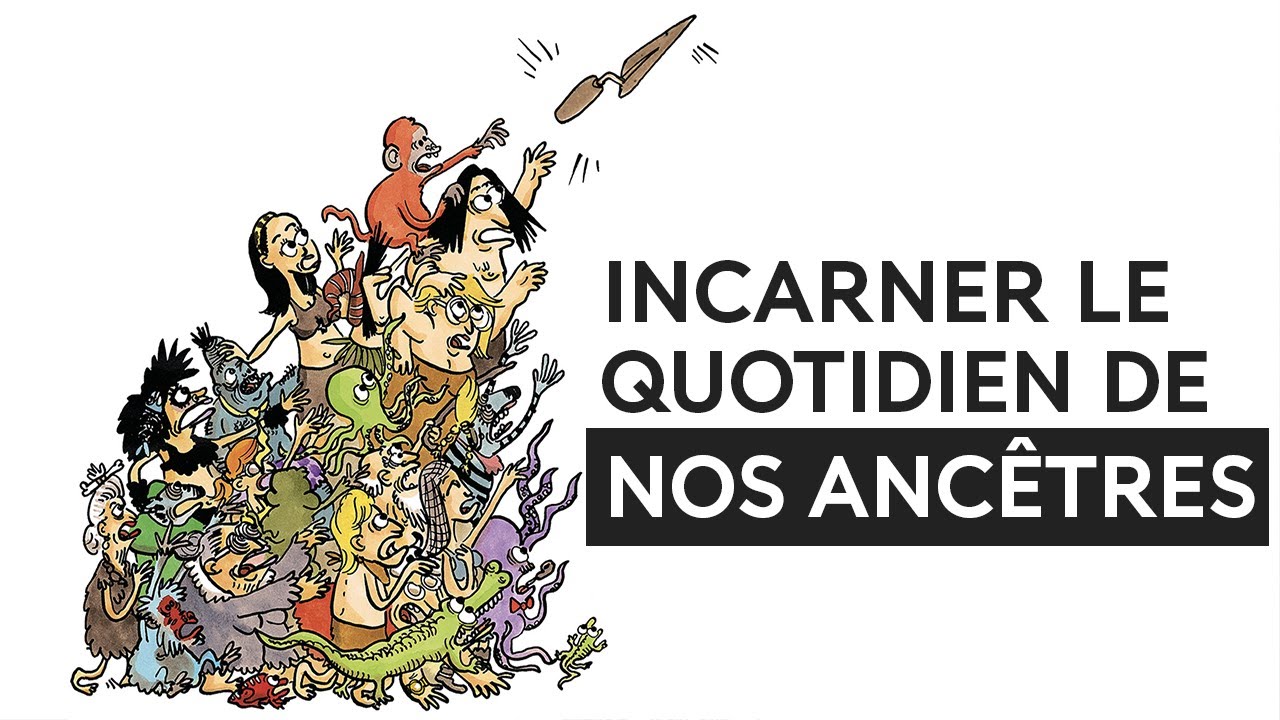
Dessiner l'archéologie
Drawing archaeology
Keywords
Summary
173 words
Critical Evaluation
Value of the Information & Strength of the Argument
The value of the information lies in the firsthand perspectives of two professionals who successfully integrate drawing and archaeology. Céline Piret provides concrete examples of how scientific constraints shape her reconstructions, such as removing trees from a Neolithic village scene due to uncertainty about species. Jul explains his method of ‘filling the gaps’ in archaeological knowledge with imaginative but plausible scenarios, always anchored in current research. The argumentation is coherent and grounded in practical experience, though it is more anecdotal than systematic. The speakers do not present formal evidence or data, but their credibility as practitioners lends weight to their insights.
Scientific Rigor, Source Quality, Title Accuracy
The scientific rigor is moderate: the conference is a discussion rather than a formal lecture, and the speakers rely on personal experience rather than citing specific studies. However, they demonstrate awareness of archaeological methods and the importance of accuracy. The sources mentioned are limited to the museum’s website and an exhibition page, which are relevant but not extensive. The title accurately reflects the content. The public comments (not provided) would likely reflect appreciation for the behind-the-scenes look at the creative process.
197 words
Title / Content Match
The title 'Drawing Archaeology' accurately reflects the content, which focuses on the role of drawing in archaeology through the perspectives of two artists.
Quality & Reliability
7/10
The conference features two practitioners (Jul and Céline Piret) discussing their creative processes and the role of drawing in archaeology. The discussion is moderated and framed by an introductory historical context. The information is largely anecdotal and based on personal experience rather than systematic scientific evidence, but it is credible and grounded in professional practice.
Key Moments
Markers derived by PSI from the transcript: the creator did not define chapters.
- Introduction by moderator Agathe Jagerschmidt-Séguin on the historical role of drawing in archaeology.
- Céline Piret describes her background as an archaeologist and her path to becoming a professional illustrator.
- Jul explains his transition from history teacher and press cartoonist to creating prehistoric comics.
- Discussion on the creative process: Céline details how scientific data constrains her reconstructions.
- Jul discusses how he uses archaeological research as a basis for his humorous extrapolations.
- Céline talks about the responsibility of illustrators in shaping public perception of the past.
- Jul reflects on the difference between his approach and that of the Flintstones, emphasizing his grounding in current research.
- Céline gives an example of removing trees from a Neolithic scene due to uncertainty about species.
- Jul talks about using scientific news, such as interbreeding between Sapiens and Neanderthals, as material for jokes.
- Conclusion and thanks to the speakers.
Cited Sources
- Conference page on the Musée de l'Homme website — Official page for the conference, providing context and information.
- Exhibition 'Silex and the City' — Page for the exhibition related to Jul's comic series.
Concurring Sources
- Archaeological illustration - Wikipedia — Provides background on the practice of archaeological drawing, supporting the discussion.
Contribution & Novelties
The conference offers a unique insight into the intersection of archaeology and visual arts, highlighting the creative processes of two practitioners. It underscores the importance of scientific accuracy in reconstructions while also showing how humor can make archaeology accessible. The discussion on the responsibility of illustrators in shaping public perception is particularly valuable.
Pour aller plus loin :
- Archaeological illustration — Overview of the field and its techniques.
- Silex and the City — French Wikipedia page on the comic series.
- Science communication — Context for the role of drawing in public engagement.
92 words
Radar Profile
The radar profile shows moderate to high scores across all dimensions, with a slight dip in technical level, reflecting the accessible nature of the discussion. The high scores in information quality and reliability indicate a credible and informative content.