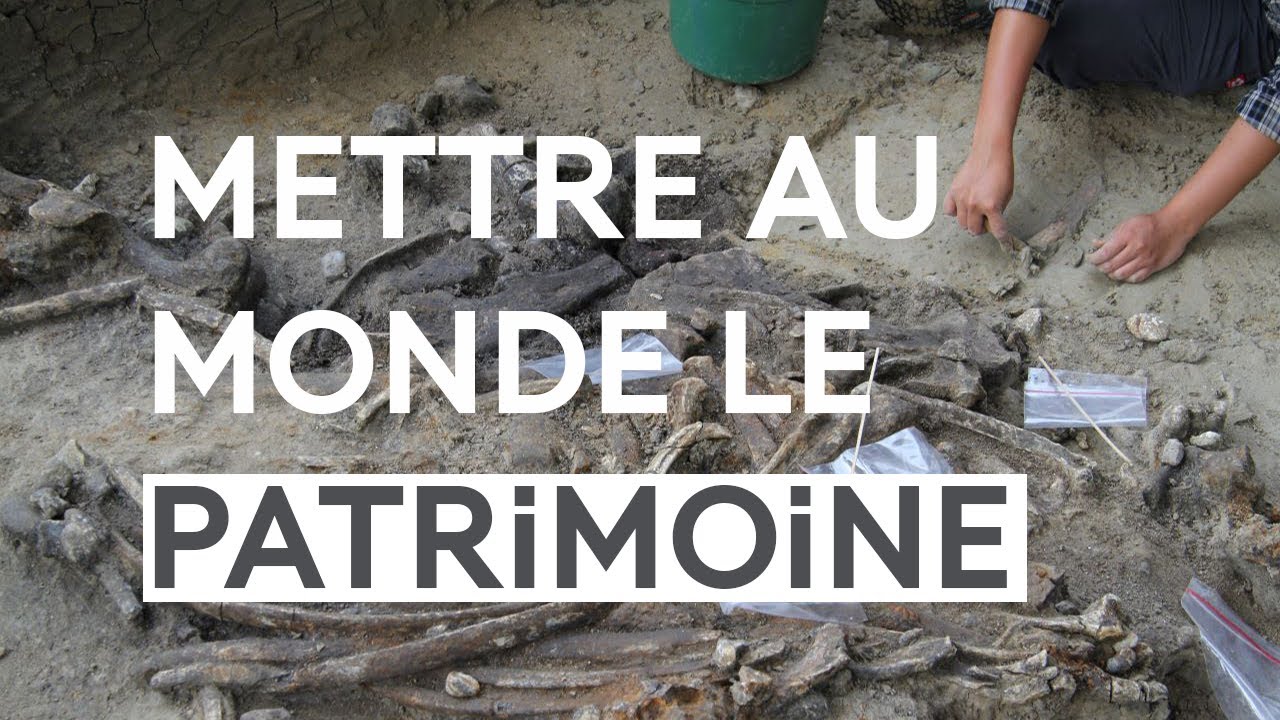
L'archéologie en acte
Archaeology in action
Keywords
Summary
177 words
Critical Evaluation
Value of the Information & Strength of the Argument
The lecture provides valuable insights into the conceptual and practical dimensions of archaeology and heritage. Lehoërff’s argumentation is solid, grounded in her extensive experience as an archaeologist and her leadership roles. She effectively uses the dog tag anecdote to illustrate the emotional and symbolic power of archaeological finds, and then systematically deconstructs the notions of ‘archaeology’ and ‘heritage’ through historical and semantic analysis. Her proposal of a three-stage ‘birth’ process (excavation, laboratory, public presentation) is a clear and original framework. The argumentation is well-supported by references to key figures (e.g., André Leroi-Gourhan, Alain Schnapp) and historical events (e.g., the French Revolution, the development of prehistoric archaeology). The lecture is persuasive in advocating for a broader, more inclusive understanding of archaeology as a scientific and citizen-centered practice.
Scientific Rigor, Source Quality, Title Accuracy
The lecture demonstrates high scientific rigor. Lehoërff cites specific examples, such as the Lavau tomb and the Kalinga site, and references scholarly works and historical documents (e.g., Abbé Grégoire’s report, Victor Hugo’s writings). The sources are credible and relevant. The title ‘L’archéologie en acte’ is well-chosen, as the lecture indeed focuses on archaeology as an active, dynamic process. The content is consistent with the title and the speaker’s expertise. The video description provides additional context and links, but no external sources are cited within the lecture itself. The lecture is a formal academic presentation, which enhances its reliability.
239 words
Title / Content Match
The title 'L'archéologie en acte' accurately reflects the lecture's focus on archaeology as a dynamic practice of bringing the past to light, both literally and metaphorically.
Quality & Reliability
8/10
The lecture is delivered by a recognized expert (Anne Lehoërff, professor and president of the National Council for Archaeological Research) in an institutional setting (Musée de l'Homme, Cergy Paris University). The content is well-structured, references historical and contemporary examples, and aligns with established academic discourse. The video is a recording of a formal lecture, ensuring high reliability, though it is not peer-reviewed.
Key Moments
Markers derived by PSI from the transcript: the creator did not define chapters.
- Introduction by the director of the Musée de l'Homme, presenting Anne Lehoërff's career.
- Anne Lehoërff begins her lecture with the story of the dog tag found in Normandy.
- Discussion on the concept of 'mettre au monde' (bringing to the world) and the three stages of archaeological birth.
- Historical overview of the notion of heritage, from the French Revolution to modern times.
- Explanation of the destructive nature of excavation and the importance of laboratory analysis.
- Presentation of the chair's objectives and the 'Archéologie dans la cité' program.
- Conclusion emphasizing the role of archaeology in contemporary society and the need for citizen engagement.
Cited Sources
- Lehoërff, A. (2016). Préhistoire d'Europe: de Néandertal à Vercingétorix. — Mentioned as a reference work on European prehistory.
- Lehoërff, A. (2018). Par les armes: le jour où l'homme inventa la guerre. — Cited as a key publication on the invention of war.
- Lehoërff, A. (2021). Dictionnaire amoureux de l'archéologie. — Mentioned as a recent publication.
- Lehoërff, A. (2023). Entretiens avec Yves Coppens. — Announced as a forthcoming book.
Concurring Sources
- Lehoërff, A. (2016). Préhistoire d'Europe. — The lecture aligns with her published work on European prehistory.
- Lehoërff, A. (2018). Par les armes. — Her research on the invention of war is consistent with the lecture's themes.
Contribution & Novelties
The lecture offers a novel conceptual framework for understanding archaeology as a ‘maieutic’ practice that actively brings the past into the present, transforming vestiges into heritage. It emphasizes the importance of the laboratory as a site of ‘birth’ alongside the excavation, and highlights the role of public presentation and designation in the patrimonialization process. The lecture also advocates for a ‘citizen archaeology’ that engages with contemporary society.
Pour aller plus loin :
- Archéologie — Overview of the discipline.
- Patrimoine culturel — Definition and history of cultural heritage.
- André Leroi-Gourhan — Key figure in French archaeology, mentioned in the lecture.
- Alain Schnapp — Archaeologist and historian, former thesis director of Lehoërff.
- Conseil national de la recherche archéologique — Official page of the CNRA, which Lehoërff presides.
125 words
Radar Profile
The radar profile shows high scores in information quantity, quality, technical level, and reliability, indicating a well-rounded and authoritative lecture. The lowest score is technical level (7), still high, reflecting the accessible yet scholarly nature of the presentation.