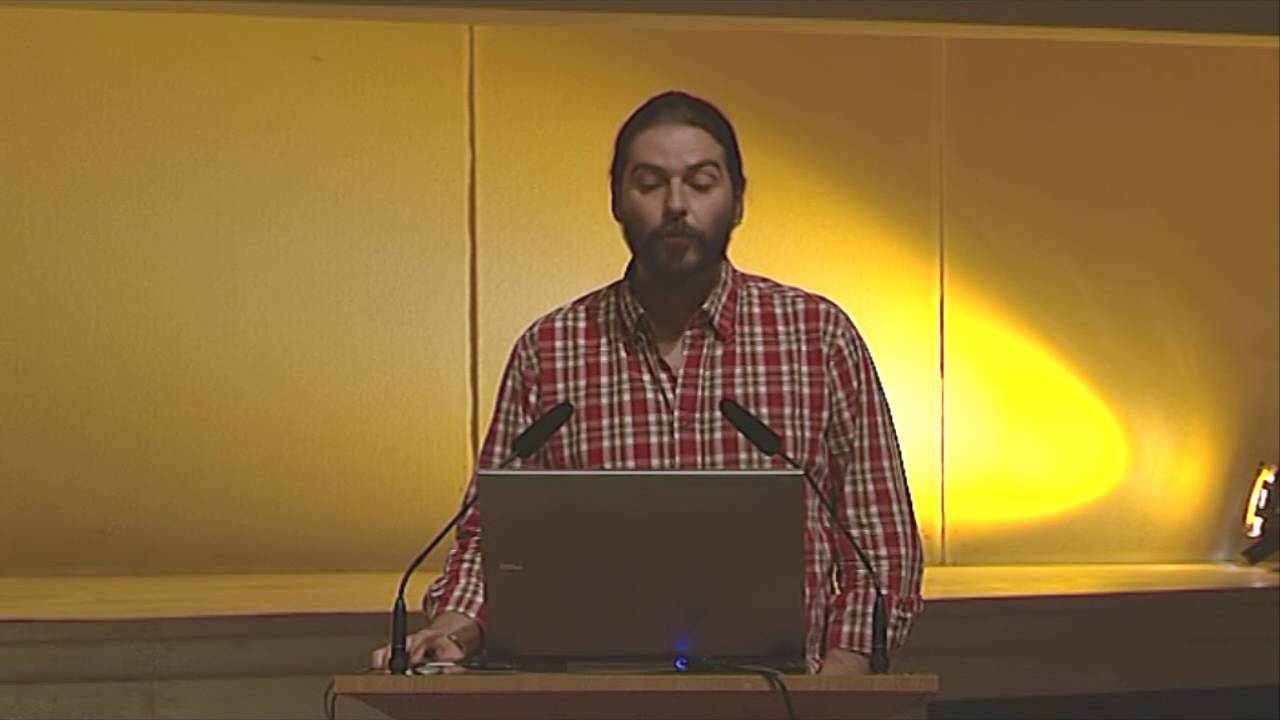
Interrogations sur les origines de l'Homme, d'hier à aujourd'hui (et demain ?) (1/3)
Questions about the origins of Man, from yesterday to today (and tomorrow?) (1/3)
Keywords
Summary
188 words
Critical Evaluation
Value of the Information & Strength of the Argument
The lecture provides a valuable historical perspective on paleoanthropology, synthesizing the contributions of key figures and the evolution of scientific thought. The argumentation is solid, based on well-documented historical events and scientific discoveries. Détroit effectively demonstrates how early theories were often speculative and influenced by cultural biases, and how empirical evidence gradually refined our understanding. The narrative is engaging and accessible, making complex historical developments clear.
Scientific Rigor, Source Quality, Title Accuracy
The scientific rigor is high, as the lecturer is a specialist in the field and the content aligns with established historical accounts. The sources are primarily historical publications and discoveries, which are accurately represented. The title accurately reflects the content, which is a historical overview with a forward-looking question. The lecture is well-structured and informative, though it does not include formal citations, which is typical for a public lecture.
150 words
Title / Content Match
The title accurately reflects the content, which explores the historical and current understanding of human origins, with a forward-looking question.
Quality & Reliability
8/10
The lecture is given by a paleoanthropologist from the Musée de l'Homme, providing a historical overview of paleoanthropology with references to key figures and discoveries. The content is well-structured and based on established scientific history, though it is a popular science lecture without detailed citations.
Key Moments
Markers derived by PSI from the transcript: the creator did not define chapters.
- Introduction to the lecture series and the topic of human origins.
- Discussion of early naturalists at the Muséum: Buffon, Lamarck, Geoffroy Saint-Hilaire.
- Cuvier's rejection of fossil humans and his influence.
- The pivotal 1850s-1860s: Boucher de Perthes' discoveries and Darwin's 'Origin of Species'.
- Darwin's cautious approach to human evolution and his 1871 book.
- Haeckel's naming of Pithecanthropus alalus and his evolutionary tree.
- Alfred Russel Wallace's work on biogeography and his disagreement with Darwin.
- Eugène Dubois's expedition to Indonesia and the discovery of Java Man.
- Analysis of Dubois's findings and their significance.
- Conclusion of the first part, setting the stage for the next lectures.
Cited Sources
- Rendez-vous du Muséum — Event page for the lecture series at the Muséum national d'Histoire naturelle.
Concurring Sources
- Muséum national d'Histoire naturelle — Institution hosting the lecture, providing credibility.
Contribution & Novelties
The lecture offers a comprehensive historical narrative of paleoanthropology, highlighting the speculative nature of early theories and the gradual accumulation of fossil evidence. It provides context for understanding current debates in human origins research.
Pour aller plus loin :
- History of paleoanthropology — Overview of the field’s development.
- Pithecanthropus erectus — The Java Man discovery and its significance.
- Alfred Russel Wallace — His contributions to biogeography and evolution.
- On the Origin of Species — Darwin’s foundational work.
- Ernst Haeckel — His role in popularizing evolution and naming Pithecanthropus.
88 words
Radar Profile
The radar profile shows high scores in information quantity and quality, with a moderate technical level, indicating a well-balanced lecture suitable for a general audience with some scientific background. The reliability is high, reflecting the expertise of the speaker.
💬 Positif. Sur les 30 commentaires analysés, la majorité exprime une grande appréciation pour la conférence, saluant sa clarté et son intérêt, malgré quelques remarques sur des problèmes techniques de son.