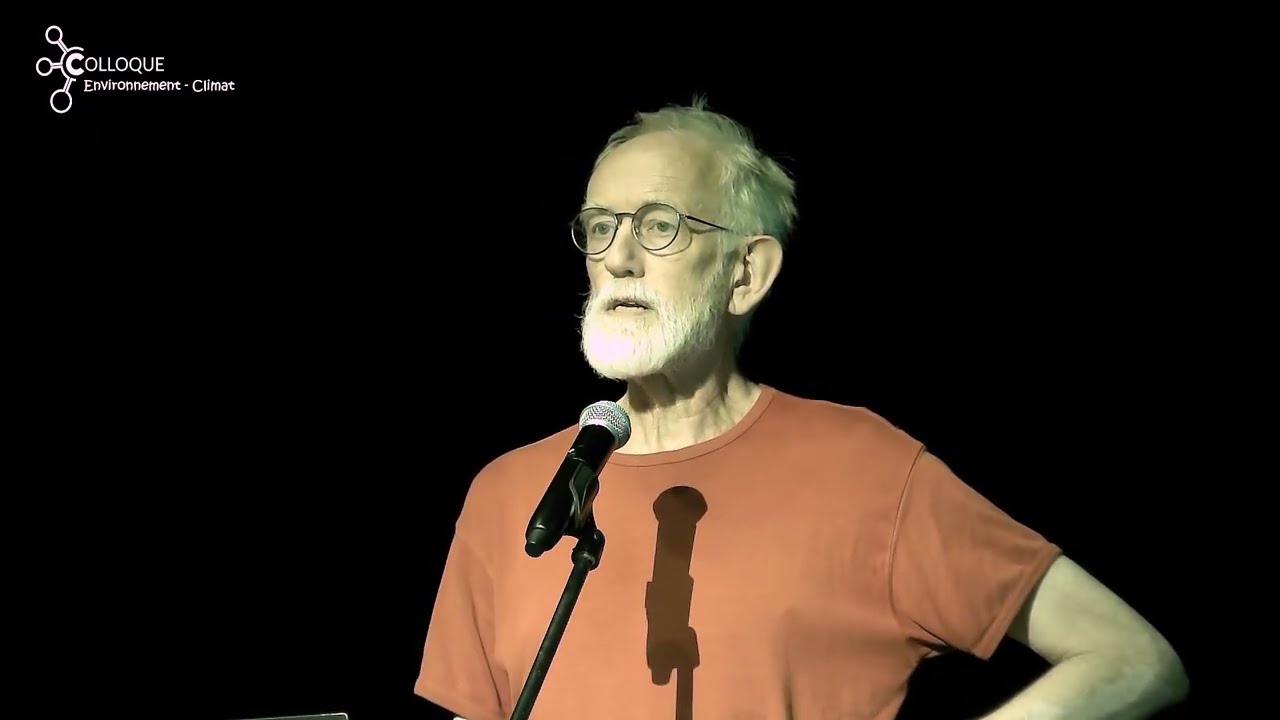
Wolfgang CRAMER (2026) L’habitabilité de la planète pendant l’anthropocène
Keywords
Summary
150 words
Critical Evaluation
Value of the Information & Strength of the Argument
The talk provides valuable insights from a seasoned scientist, emphasizing the urgency of climate action and the importance of addressing inequalities. The argumentation is passionate and well-structured, drawing on scientific evidence and personal experience. However, it is largely an opinion piece, and the speaker does not present new data or detailed analysis. The strength lies in the synthesis of existing knowledge and the call for transformative change.
Scientific Rigor, Source Quality, Title Accuracy
The speaker references major scientific reports (IPCC, IPBES) and specific events (e.g., Derna floods) to support his points. The sources are credible and well-known. The title accurately reflects the content. The talk is scientifically rigorous in its use of established findings, but the personal and political commentary introduces a subjective element. The adequacy between title and content is good.
141 words
Title / Content Match
The title accurately reflects the content, which discusses the habitability of the planet during the Anthropocene, focusing on climate change impacts, inequalities, and the role of science.
Quality & Reliability
8/10
The speaker is a recognized scientist (IPCC, IMBE) and the content is based on established scientific reports (IPCC, IPBES). However, the talk is largely an opinion piece with personal reflections and some political commentary, which slightly reduces the objective reliability.
Key Moments
Markers derived by PSI from the transcript: the creator did not define chapters.
- Introduction and expression of anger about the climate situation and political responses.
- Discussion of the acceleration of climate change indicators, including sea-level rise.
- Example of the Nile Delta and the impact of sea-level rise and sediment loss on vulnerable populations.
- Analysis of the Derna floods in Libya, highlighting the role of infrastructure and governance.
- Introduction of the concept of habitability and the importance of considering vulnerability and inequality.
- Discussion of the IPCC reports and the gap between scientific warnings and political action.
- Critique of false solutions like biofuels and electric cars, and the need for systemic transformation.
- Examples of positive regional collaborations and the potential for democratic transformation.
- Call for scientists to engage more actively, including through protest, and the myth of neutrality.
- Conclusion on the role of scientists and the need for a new relationship between science and society.
Cited Sources
- IPCC Sixth Assessment Report — Referenced as the basis for scientific consensus on climate change impacts and adaptation.
- IPBES Global Assessment Report on Biodiversity and Ecosystem Services — Mentioned as the 'little brother' of IPCC, highlighting the need for transformative change.
- Paris Agreement — Referenced as the international treaty setting temperature targets.
Concurring Sources
- IPCC Sixth Assessment Report — Supports the scientific consensus on climate change impacts and the need for adaptation.
- IPBES Global Assessment Report — Concurs on the need for transformative change to address biodiversity loss.
Dissenting Sources
- Climate change is not the only driver of extreme events — Some argue that natural variability plays a larger role in specific events, though the speaker acknowledges this nuance.
Contribution & Novelties
The talk offers a personal and passionate perspective on the climate crisis, emphasizing the acceleration of impacts and the importance of climate justice. It calls for a transformation of societal systems and a more active role for scientists. The novelty lies in the integration of scientific evidence with a strong ethical and political stance.
Pour aller plus loin :
- Planetary boundaries — Framework for understanding safe limits for Earth systems.
- Climate justice — Concept addressing the unequal impacts of climate change.
- IPCC Special Report on Global Warming of 1.5°C — Report detailing pathways to limit warming to 1.5°C.
98 words
Radar Profile
The radar profile shows high scores in quality of information and reliability, reflecting the speaker's expertise and use of credible sources. The quantity of information is moderate, and the technical level is accessible to a general audience. The overall profile indicates a well-informed but opinionated talk.
💬 No comments were provided for analysis.