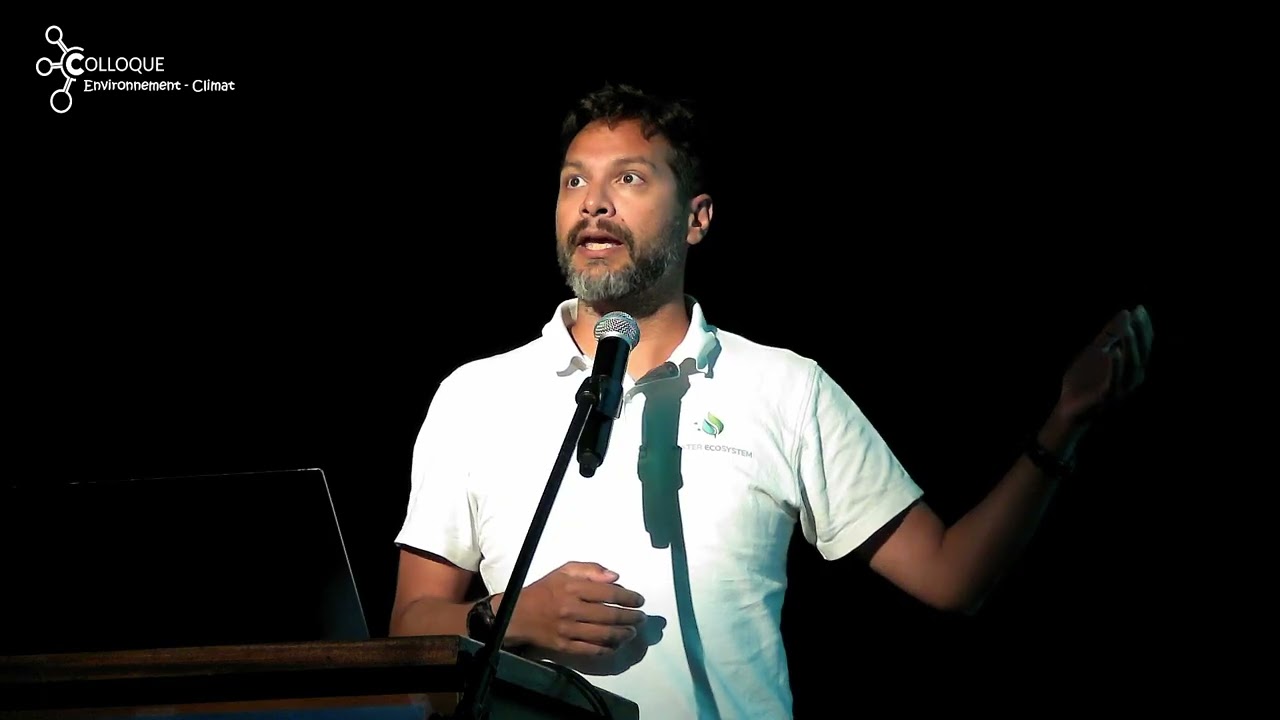
David MARDIVIRIN (2026) Water ECOsystem, Transformer l'air en eau
Keywords
Summary
139 words
Critical Evaluation
Value of the Information & Strength of the Argument
The presentation provides valuable insights into a practical application of atmospheric water generation, highlighting the real-world context of water scarcity. The argumentation is based on personal experience and preliminary data, which is appropriate for a startup pitch. However, the lack of quantitative performance data and independent validation weakens the scientific rigor. The comparison of solutions is qualitative and somewhat subjective, but it effectively illustrates the trade-offs. The speaker’s enthusiasm and clear explanation of the technology’s principles add value, but the absence of detailed technical specifications and economic analysis limits the depth.
Scientific Rigor, Source Quality, Title Accuracy
The speaker references public data sources such as BRGM and VigiEau, which are credible, but he does not provide specific citations or links. The collaboration with CNRS is mentioned but not detailed. The title accurately reflects the content, which is a company presentation rather than a scientific talk. The speaker acknowledges the preliminary nature of the results and the need for further research, which is honest. However, the lack of peer-reviewed sources and the reliance on anecdotal evidence reduce the overall scientific rigor.
189 words
Title / Content Match
The title accurately reflects the content, which focuses on the company's mission to transform air into water.
Quality & Reliability
6/10
The presentation is based on personal experience and preliminary data, with references to public data (BRGM, VigiEau) and a collaboration with CNRS, but lacks detailed scientific validation and peer-reviewed sources.
Key Moments
Markers derived by PSI from the transcript: the creator did not define chapters.
- Introduction: David Mardivirin presents his background and the company Water Ecosystem.
- Context: Water scarcity in southern France, with examples of droughts and restrictions.
- Comparison of water supply solutions: tap water, bottled water, desalination, fog collectors, wells, rainwater harvesting, water reuse.
- Introduction of solar-powered atmospheric water generators and their advantages.
- Technical explanation: use of adsorbent materials (silica gel) and the two-phase cycle (night capture, day release).
- Preliminary results: continuous water production in June despite heatwave, with small-scale tests.
- Company progress: demonstrator at a shopping center, collaboration with CNRS, and future plans.
Cited Sources
- BRGM groundwater maps — Referenced to show the state of groundwater in France.
- VigiEau — Referenced to show current water restrictions in France.
Concurring Sources
- BRGM groundwater maps — Supports the claim of groundwater depletion in southern France.
- VigiEau — Confirms the existence of water restrictions in France.
Contribution & Novelties
The presentation offers a novel approach to water generation by combining solar thermal energy with adsorption materials, which is an emerging field. The company’s focus on autonomous, off-grid solutions addresses a critical need in water-scarce regions. The collaboration with CNRS adds credibility, but the lack of published results limits the scientific contribution.
Pour aller plus loin :
- Atmospheric water generator — Overview of technologies and challenges.
- Adsorption — Fundamental principle behind the material’s water capture.
- Solar thermal energy — Basis for the heat source in the device.
87 words
Radar Profile
The radar profile shows moderate scores across all dimensions, indicating a balanced but not exceptional presentation. The highest score is in information quantity, reflecting the breadth of topics covered, while the lowest is in technical level, as the speaker avoids deep technical details.