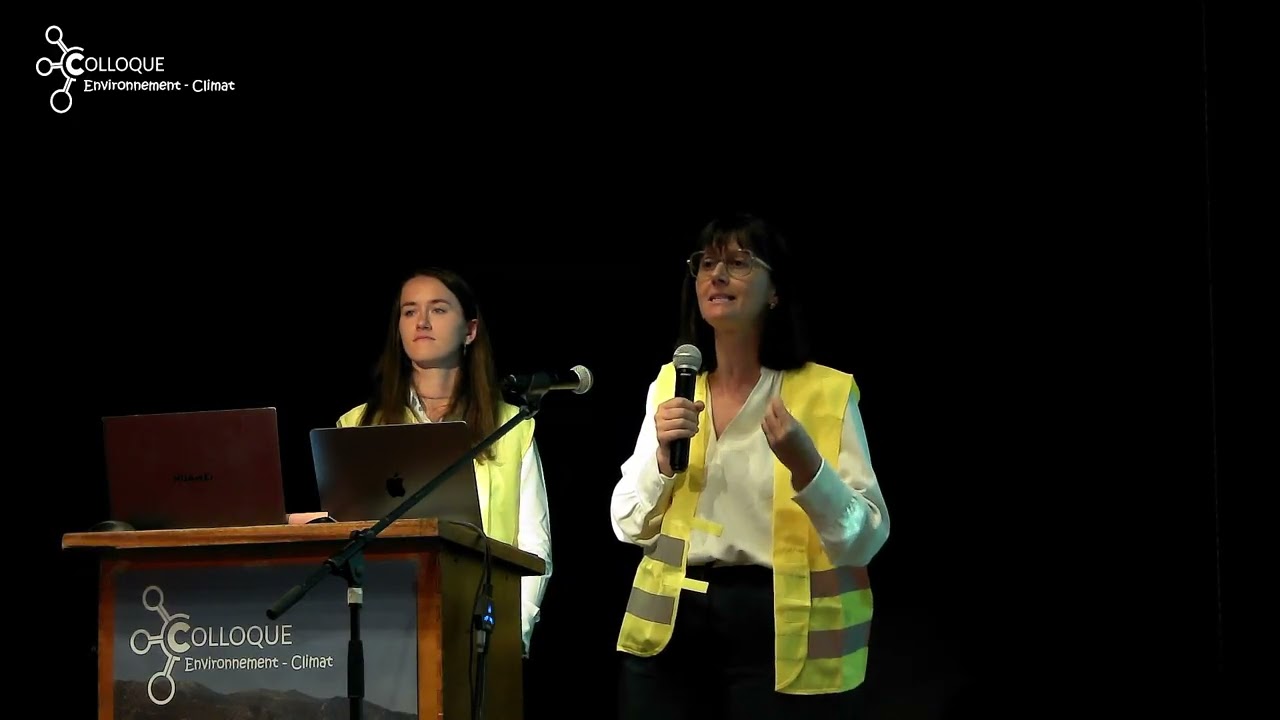
Amelie ARTIS & Capucine PELLISSIER (2026) Les conséquences du changement climatique
Keywords
Summary
172 words
Critical Evaluation
Value of the Information & Strength of the Argument
The presentation offers valuable insights into the social and political dimensions of climate change, moving beyond technical solutions to question the underlying social contract. The argumentation is coherent and well-structured, drawing on theoretical frameworks and empirical examples. The speakers effectively illustrate how climate policies can exacerbate inequalities and create resistance, using the Yellow Vests crisis and the Valencia floods as concrete cases. They also critically examine the individualization of responsibility and the market-based mechanisms like carbon trading, proposing a more collective approach. However, the argumentation could be strengthened by providing more detailed evidence and citations for the claims made, particularly regarding the media analysis and survey data.
Scientific Rigor, Source Quality, Title Accuracy
The presentation demonstrates a rigorous scientific approach, grounded in the FORCIS research program and referencing academic concepts like the social contract. The speakers cite specific studies, such as the analysis of climate misinformation on radio stations, and mention the involvement of researchers from various disciplines. However, the transcript lacks explicit citations to specific publications or data sources, which limits the ability to verify the claims. The title accurately reflects the content, focusing on the consequences of climate change through the social contract lens. The presentation is well-structured and maintains a high level of scientific rigor, though more detailed sourcing would enhance its credibility.
225 words
Title / Content Match
The title accurately reflects the content, which focuses on the consequences of climate change through the lens of the social contract.
Quality & Reliability
7/10
The presentation is based on ongoing research from the FORCIS program, with references to specific studies (e.g., media analysis of climate misinformation) and theoretical frameworks (social contract). However, it lacks detailed citations and empirical data in the transcript, and some claims are presented without full methodological transparency.
Key Moments
Markers derived by PSI from the transcript: the creator did not define chapters.
- Introduction to the FORCIS program and the question of why society does not act on climate change despite scientific warnings.
- Discussion on the invisibility of climate change and the paradox of solutions like air conditioning.
- Explanation of the social contract concept and its relevance to climate change.
- Analysis of media misinformation and the role of radio and press in shaping public perception.
- Examples of climate policies creating inequalities, such as low-emission zones and carbon taxes.
- Discussion on the individualization of responsibility and the polluter-pays principle.
- Proposal for a climate social security as a collective alternative.
- Presentation of research on wildfires in southern France and the lack of association with climate change.
- Conclusion and invitation for future engagement with the FORCIS program.
Cited Sources
- FORCIS program — The research program mentioned throughout the presentation, focusing on the consequences of climate change through the social contract.
- Rousseau's Social Contract — Referenced as the historical foundation of the social contract concept.
Concurring Sources
- IPCC Reports — The presentation aligns with IPCC findings on the impacts of climate change and the need for adaptation.
Dissenting Sources
- Climate misinformation studies — The presentation claims that certain media outlets spread climate misinformation, but without specific citations, it is difficult to verify the extent and methodology.
Contribution & Novelties
The presentation offers a novel perspective by framing climate change consequences as a challenge to the social contract, highlighting how climate policies can exacerbate inequalities and fragment society. It contributes to the discourse on climate justice by proposing a collective approach like a climate social security. The research on media misinformation and public perception of wildfires provides empirical insights into the barriers to action.
Pour aller plus loin :
- Climate justice — Relevant to the discussion on inequalities and fairness in climate policies.
- Social contract — Foundational concept discussed in the presentation.
- Just transition — Related to the idea of a fair shift to a low-carbon economy.
107 words
Radar Profile
The radar profile shows high scores in quantity and quality of information, with moderate technical level and reliability. This indicates a well-informed presentation that is accessible to a general audience, but with room for more rigorous sourcing.
💬 No comments were provided for analysis.