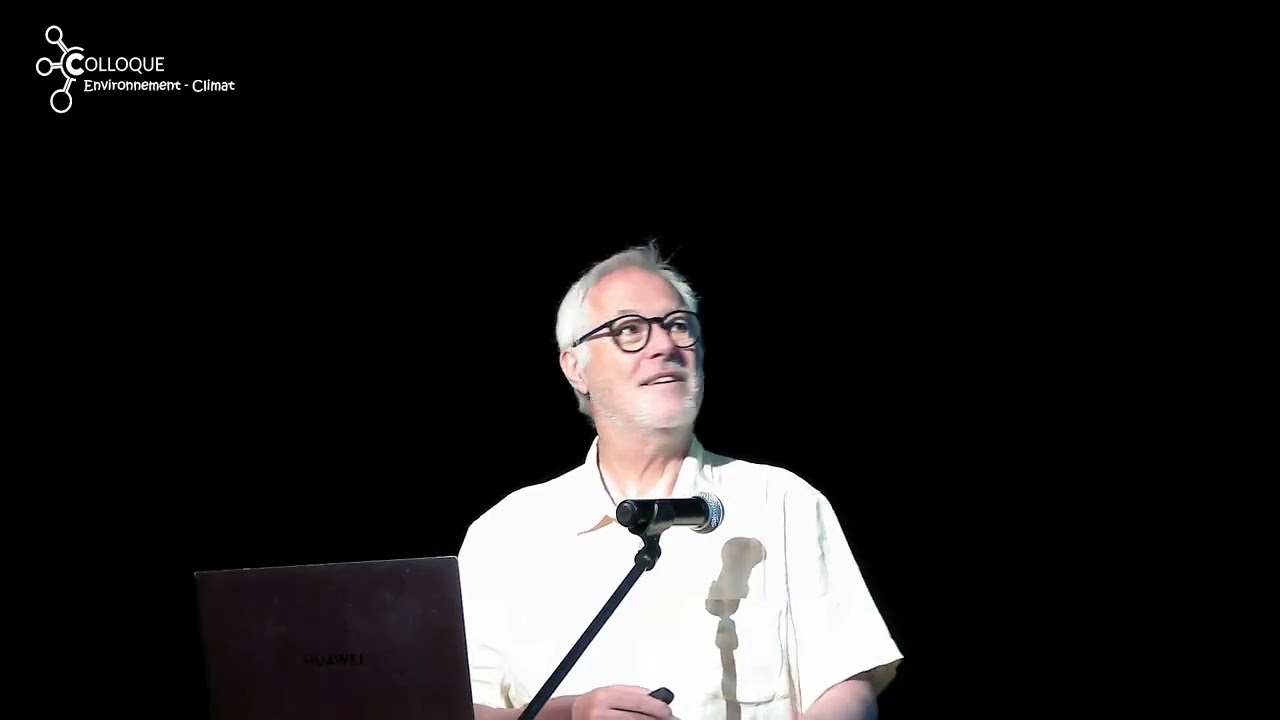
Robert VAUTARD (2026) Ruptures et travaux récents du GIEC
Keywords
Summary
197 words
Critical Evaluation
Value of the Information & Strength of the Argument
The presentation provides valuable, up-to-date information on climate science, directly from a leading IPCC author. Vautard’s argumentation is solid, grounded in the latest observations and model simulations. He clearly explains the scientific basis for attributing extreme events to climate change, using concrete examples like the 2021 heatwave. He also effectively communicates the urgency of the situation by highlighting the rapid increase in extreme events and the long-term persistence of CO2. The distinction between IPCC consensus and recent studies is well-articulated, helping the audience understand the evolving nature of climate science.
Scientific Rigor, Source Quality, Title Accuracy
The presentation is scientifically rigorous, with Vautard referencing IPCC reports and recent peer-reviewed studies. He clearly identifies which results are from the latest IPCC cycle and which are more recent, ensuring transparency. The title accurately reflects the content, which focuses on IPCC findings and recent developments. The talk is well-structured, and Vautard’s expertise lends credibility to the information presented. However, as a conference presentation, it lacks detailed citations, but the speaker’s authority and the context of the IPCC provide a high level of trustworthiness.
189 words
Title / Content Match
The title accurately reflects the content, which focuses on recent IPCC findings and emerging climate science.
Quality & Reliability
8/10
The speaker is a leading climate scientist and co-chair of IPCC Working Group I, providing authoritative and up-to-date information. The content is consistent with established scientific consensus, though some recent findings are not yet peer-reviewed in IPCC reports.
Key Moments
Markers derived by PSI from the transcript: the creator did not define chapters.
- Introduction: Vautard explains the presentation structure and the distinction between IPCC results and recent studies.
- Current warming: 1.26°C observed, 1.24°C due to human activities, 1.5°C threshold likely exceeded around 2030.
- Attribution of warming: 100% human-caused, with aerosols partially offsetting greenhouse gas warming.
- Projections vs observations: Historical model projections have accurately predicted current warming.
- Extreme heat: Increase in heatwaves globally, with some regions lacking data or showing no significant trend.
- Record-shattering events: Examples like the 2021 Pacific Northwest heatwave, only possible under climate change.
- 50°C in Paris: Study suggests possible under 3°C global warming, with implications for adaptation.
- Other extremes: Intense rainfall and droughts, with regional attribution and need for more studies.
- Tipping points: AMOC, Amazon, boreal forests, with uncertainties and potential for abrupt changes.
- Carbon cycle: CO2 persistence for centuries to millennia, historical responsibility, and the role of fossil fuels.
Cited Sources
- IPCC Sixth Assessment Report (AR6) — Vautard refers to the latest IPCC report for consensus findings on climate change.
- Study on record-shattering heatwaves — He mentions a 2024 study on the increasing frequency of extreme heat events.
- Study on 50°C in Paris — He discusses a recent study with the city of Paris on the possibility of 50°C.
Concurring Sources
- IPCC AR6 WG1 — Consistent with the IPCC's consensus on human-caused warming and extreme events.
- World Weather Attribution — Supports the attribution of extreme events to climate change.
Dissenting Sources
- Skeptical claims about climate change — Some contrarian views dispute the extent of human influence, but these are not supported by the scientific consensus.
Contribution & Novelties
This presentation offers a unique perspective from a leading IPCC scientist, providing the latest updates on climate science, including recent findings not yet in IPCC reports. It emphasizes the rapid increase in extreme events and the long-term persistence of CO2, which are crucial for understanding the urgency of climate action.
Pour aller plus loin :
- IPCC AR6 Synthesis Report — Summarizes the latest IPCC findings.
- Attribution of extreme events — Provides real-time attribution studies.
- Tipping points in the Earth system — Overview of potential tipping points.
86 words
Radar Profile
The radar profile shows high scores in information quality and reliability, reflecting the speaker's expertise and the scientific basis of the content. The technical level is moderate, making it accessible to a general audience while still providing depth. The quantity of information is substantial, covering multiple aspects of climate science.
💬 No comments were provided for analysis.