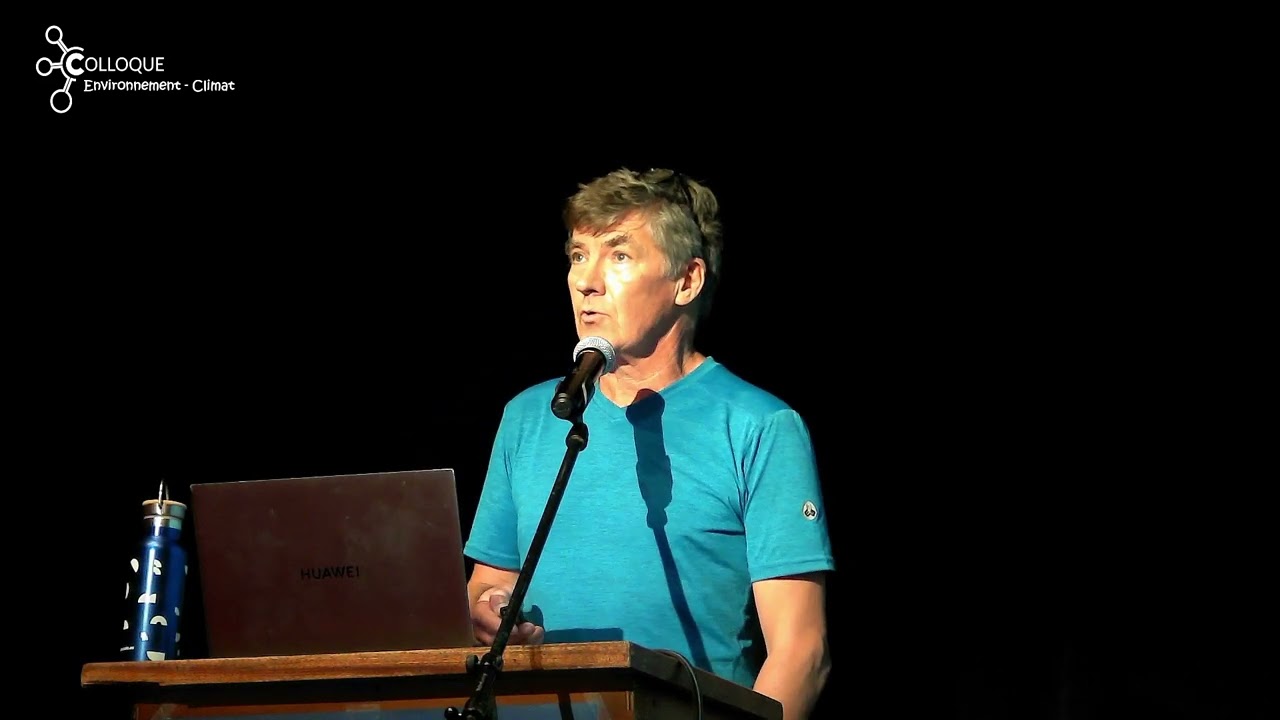
Rôle des océans dans le cycle du carbone
Keywords
Summary
211 words
Critical Evaluation
Value of the Information & Strength of the Argument
The talk provides valuable information on the ocean’s role in the carbon cycle, synthesizing well-established scientific knowledge. The argumentation is solid, based on data from the Global Carbon Project and IPCC scenarios. The speaker clearly explains complex mechanisms, such as the physical and biological pumps, and their implications for climate change. He also addresses uncertainties about the future behavior of the ocean sink, which adds nuance. The presentation is accessible yet scientifically rigorous, making it a useful resource for understanding the ocean’s role in climate regulation.
Scientific Rigor, Source Quality, Title Accuracy
The scientific rigor is high, with references to authoritative sources like the Global Carbon Project and IPCC. The speaker’s expertise in oceanography lends credibility. The title accurately reflects the content, which focuses on the ocean’s role in the carbon cycle. The talk is well-structured and the information is presented clearly. No comments were provided, so no analysis of public reception is possible.
163 words
Title / Content Match
The title accurately reflects the content, which focuses on the role of oceans in the carbon cycle and their response to climate change.
Quality & Reliability
8/10
The speaker is an experienced oceanographer with field expertise in carbon and iron cycles, and the talk relies on well-established data from the Global Carbon Project and IPCC scenarios. The presentation is clear and scientifically accurate, though it is a general overview rather than a detailed technical exposition.
Key Moments
Markers derived by PSI from the transcript: the creator did not define chapters.
- Introduction: oceanographer, focus on carbon and iron cycles in the Southern Ocean.
- Global temperature anomalies since 1860, +1.4°C average.
- Local temperature data for Perpignan, showing warming trend.
- Keeling Curve: CO2 concentration increase from 320 ppm to over 400 ppm.
- Global Carbon Project: annual CO2 emissions, 38 billion tonnes in 2025.
- Emissions scenarios and current trajectory, not aligned with Paris Agreement.
- Cumulative emissions vs temperature, linear relationship.
- Carbon budget: 36 Gt fossil + 5 Gt land use, but only 20 Gt accumulate in atmosphere.
- Ocean carbon pumps: physical and biological, storage timescales.
- Future of ocean sink: potential weakening due to warming and stratification.
Cited Sources
- Global Carbon Project — Source of emissions and sink data.
- IPCC Scenarios — Reference for climate scenarios.
- Copernicus Marine Service — Data on marine heatwaves.
Concurring Sources
- Global Carbon Project — Data on carbon emissions and sinks.
- IPCC AR6 — Climate scenarios and carbon cycle projections.
Contribution & Novelties
The talk provides a clear synthesis of the ocean’s role in the carbon cycle, emphasizing the two main pumps and their importance as carbon sinks. It highlights the current state of the ocean sink and discusses potential future changes, offering a balanced perspective. The speaker’s field experience adds practical insight.
Pour aller plus loin :
- Ocean carbon cycle — Overview of the ocean’s role in the carbon cycle.
- Biological pump — Detailed explanation of the biological carbon pump.
- Ocean acidification — Related consequence of CO2 absorption.
86 words
Radar Profile
The radar profile shows high scores in quality and reliability, with moderate scores in quantity and technical level, indicating a well-balanced and credible presentation.