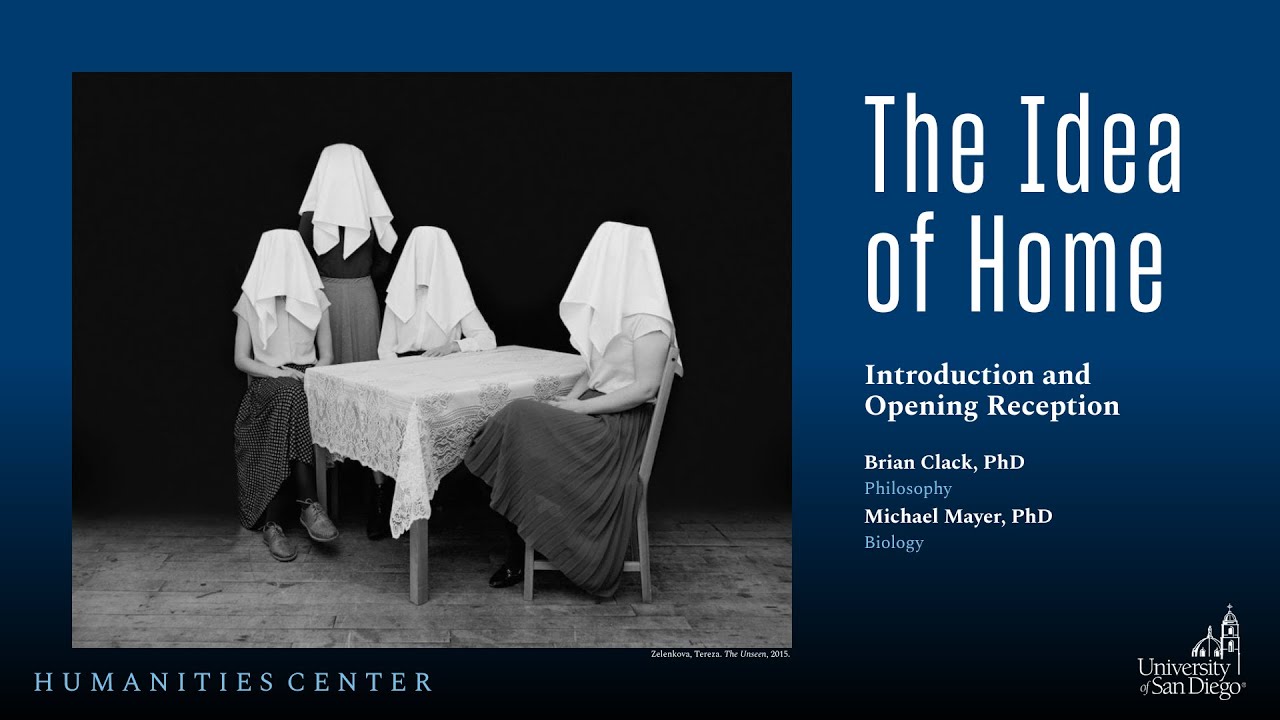
The Idea of Home | Introduction
Keywords
Summary
187 words
Critical Evaluation
Value of the Information & Strength of the Argument
The value of the information lies in its interdisciplinary framing, offering philosophical and biological perspectives on the concept of home. The argumentation is coherent and well-structured, with each speaker providing a clear thesis and supporting examples. Clack’s philosophical exploration is enriched by literary and psychoanalytic references, while Mayer’s biological viewpoint grounds the concept in evolutionary and ecological terms. The speakers acknowledge the complexity of the topic and invite further discussion, making the content valuable for an academic audience. However, the arguments are introductory and lack deep critical analysis or empirical evidence, which is appropriate for an opening lecture.
Scientific Rigor, Source Quality, Title Accuracy
The scientific rigor is moderate; the speakers reference established thinkers and works but do not provide formal citations or peer-reviewed sources. The quality of sources is high in terms of authority (e.g., T.S. Eliot, D.W. Winnicott, J.G. Ballard), but the presentation is conversational and lacks systematic referencing. The title accurately reflects the content, which is an introduction to the series. The video includes a brief Q&A session, but no comments are provided for analysis.
187 words
Title / Content Match
The title accurately reflects the content, which serves as an introductory exploration of the concept of home from multiple disciplinary angles.
Quality & Reliability
7/10
The video features two academics providing thoughtful reflections on the concept of home from philosophical and biological perspectives. They reference established thinkers and works (T.S. Eliot, Edward Abbey, D.W. Winnicott, J.G. Ballard, Yi-Fu Tuan) and offer a balanced, multidisciplinary introduction. However, it is an introductory talk with limited depth and no formal citations or peer-reviewed sources presented.
Key Moments
Markers derived by PSI from the transcript: the creator did not define chapters.
- Introduction by Brian Clack, welcoming attendees and outlining the series theme.
- Clack discusses T.S. Eliot's 'East Coker' and the line 'Home is where one starts from.'
- Clack explores definitions of home from the Oxford English Dictionary.
- Clack reflects on the immigrant experience and the idea that 'home is always somewhere else.'
- Clack discusses the home's role in shaping character, referencing D.W. Winnicott.
- Clack uses Yi-Fu Tuan's analysis of the ranch house to illustrate the house as a metaphor for the human body.
- Clack introduces J.G. Ballard's 'High-Rise' to discuss high-density living.
- Michael Mayer begins his biological perspective on home.
- Mayer discusses animal homes and the concept of home as a social group.
- Mayer critiques modern single-family zoning and its racist origins.
Cited Sources
- East Coker (poem) — Referenced by Brian Clack as the source of the line 'Home is where one starts from.'
- Desert Solitaire — Referenced by Brian Clack for Edward Abbey's reflections on the desert and meaning.
- The Dead Yard — Referenced by Brian Clack for an interviewee's quote about home being 'always somewhere else.'
- Home is Where We Start From — Referenced by Brian Clack as a book by D.W. Winnicott.
- High-Rise (novel) — Referenced by Brian Clack for its portrayal of high-rise living.
- Why It's Okay to Mind Your Own Business — Referenced by Brian Clack for a defense of the moral value of home.
Concurring Sources
- The Poetics of Space — Gaston Bachelard's phenomenological study of domestic spaces, aligning with the philosophical exploration of home.
- The Home: Its Work and Influence — Charlotte Perkins Gilman's critique of the traditional home, offering a contrasting perspective on domesticity.
Dissenting Sources
- The Home: Its Work and Influence — Gilman argues that the traditional home confines women and hinders social progress, contrasting with the positive view of home as a refuge presented in the video.
Contribution & Novelties
The video provides a multidisciplinary introduction to the concept of home, bridging philosophy and biology. It offers a fresh perspective by connecting literary, psychoanalytic, and ecological viewpoints, and highlights the tension between physical and abstract notions of home. The discussion of the biological basis of home and the critique of modern housing trends adds an original angle.
Pour aller plus loin :
- Place attachment theory — Explores the emotional bond between people and places, relevant to the concept of home.
- Territoriality (ethology) — Discusses how animals establish and defend territories, providing a biological basis for home.
- The Uncanny — Sigmund Freud’s concept, relevant to the unsettling aspects of home, as mentioned in the series description.
115 words
Radar Profile
The radar profile shows balanced scores across information quantity, quality, technical level, and reliability, indicating a well-rounded introductory talk. The technical level is moderate, making it accessible to a general academic audience, while the reliability is supported by references to established thinkers.