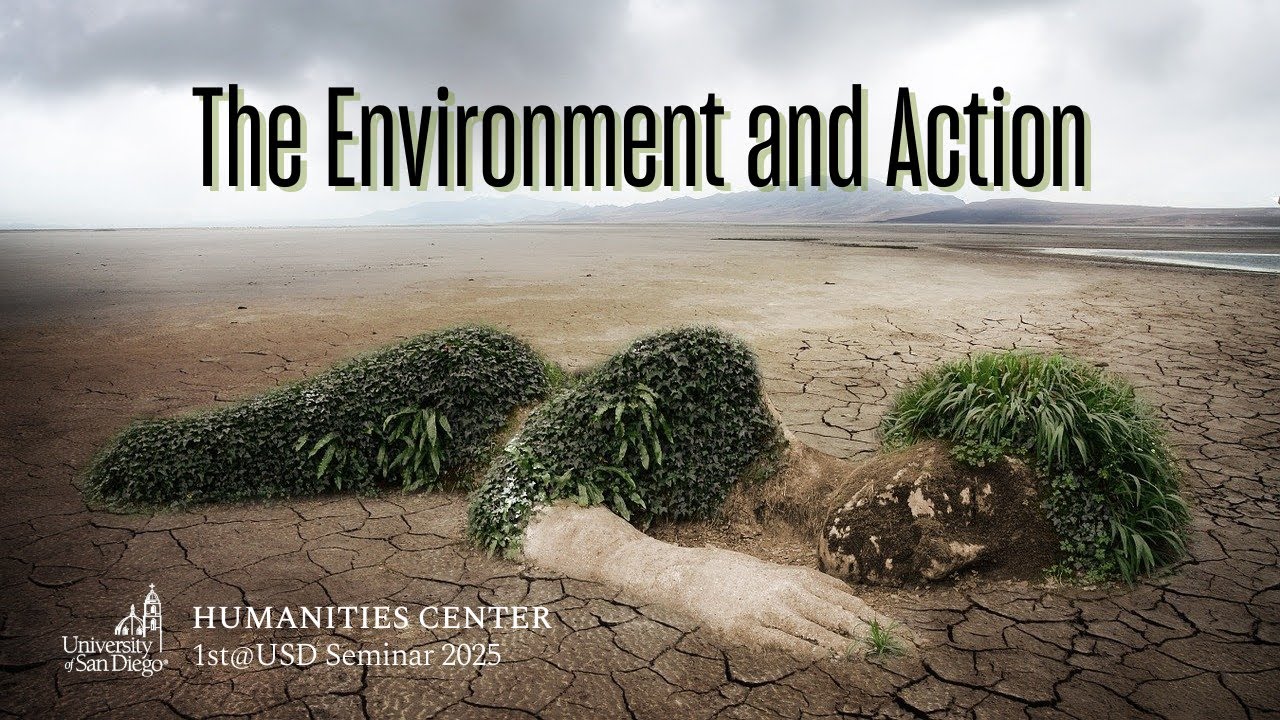
Environment and Action - Week 5: Stories as a Call to Environmental Action
Keywords
Summary
172 words
Critical Evaluation
Value of the Information & Strength of the Argument
The video provides valuable insights into how literature can serve as a call to environmental action. Each speaker presents a well-structured argument supported by textual evidence. Hasselbach’s analysis of ‘The Machine Stops’ is particularly compelling, drawing connections between Forster’s dystopian vision and contemporary issues like technology dependence and environmental degradation. Asaro’s discussion of a children’s novel highlights the importance of early education in environmental ethics. Vickers’ interpretation of the Atlantis myth offers a historical perspective on environmental collapse. The arguments are coherent and persuasive, though they are primarily interpretive rather than empirical. The speakers effectively demonstrate the relevance of literary analysis to environmental issues, making a strong case for the value of humanities in addressing contemporary challenges.
Scientific Rigor, Source Quality, Title Accuracy
The video demonstrates scientific rigor through its use of primary literary texts and scholarly interpretation. The speakers are PhDs in relevant fields, lending credibility to their analyses. However, the sources cited are primarily literary works and general references, with no explicit mention of scientific studies or data. The title accurately reflects the content, which focuses on stories as a call to environmental action. The presentation is well-organized and the arguments are logically developed. The video does not include any commercial content. The description provides context about the seminar series and the speakers, but no additional sources are listed. Overall, the scientific rigor is moderate, appropriate for a humanities lecture.
241 words
Title / Content Match
The title accurately reflects the content, which focuses on stories as a call to environmental action, with each speaker presenting a different literary work and its environmental message.
Quality & Reliability
7/10
The video is an academic seminar with three PhD speakers discussing literary works and their environmental themes. The content is well-structured, with clear arguments and textual evidence. However, it is a lecture rather than a peer-reviewed source, and the scientific rigor is moderate, focusing on interpretation rather than empirical data.
Key Moments
Markers derived by PSI from the transcript: the creator did not define chapters.
- Introduction by moderator and start of Sara Hasselbach's presentation on E.M. Forster's 'The Machine Stops'.
- Hasselbach discusses the value of studying literature and humanities.
- Analysis of the world-building in 'The Machine Stops' and its lack of nature and human connection.
- Discussion of the disconnect from nature and its consequences in the story.
- Hasselbach concludes with takeaways and recommendations for further reading.
- Brittany Asaro begins her presentation on a contemporary Italian children's novel and environmental action.
- Asaro discusses the novel's themes of community and ecological responsibility.
- Darby Vickers presents on the Atlantis myth as a cautionary tale for environmental collapse.
- Vickers concludes and the session ends with a thank you.
Cited Sources
- The Machine Stops — Primary text discussed by Sara Hasselbach.
- Parable of the Sower — Recommended by Hasselbach for further reading.
- Black Mirror — Referenced by Hasselbach as a modern example of technological dystopia.
- Plato's Allegory of the Cave — Mentioned by Hasselbach as a philosophical parallel.
Concurring Sources
- The Machine Stops — The primary text discussed, which aligns with the video's themes.
- Parable of the Sower — Recommended for further reading, consistent with the environmental themes.
Contribution & Novelties
The video offers a unique interdisciplinary perspective on environmental action through literary analysis. It demonstrates how classic and contemporary stories can serve as powerful calls to environmental stewardship. The presentations highlight the importance of humanities in fostering critical thinking and ethical engagement with environmental issues.
Pour aller plus loin :
- E.M. Forster’s The Machine Stops — A foundational text in technological dystopian fiction, directly relevant to the themes discussed.
- Environmental Humanities — An interdisciplinary field that connects humanities and environmental studies.
- Slow Food Movement — Mentioned by Asaro as an Italian environmental initiative, relevant to sustainable action.
97 words
Radar Profile
The radar profile shows high scores in quality of information and global reliability, reflecting the academic rigor of the presentations. The quantity of information is moderate, and the technical level is lower, indicating a focus on interpretation rather than technical detail. The overall profile suggests a well-balanced, credible lecture suitable for a general academic audience.
💬 No comments were provided for analysis.