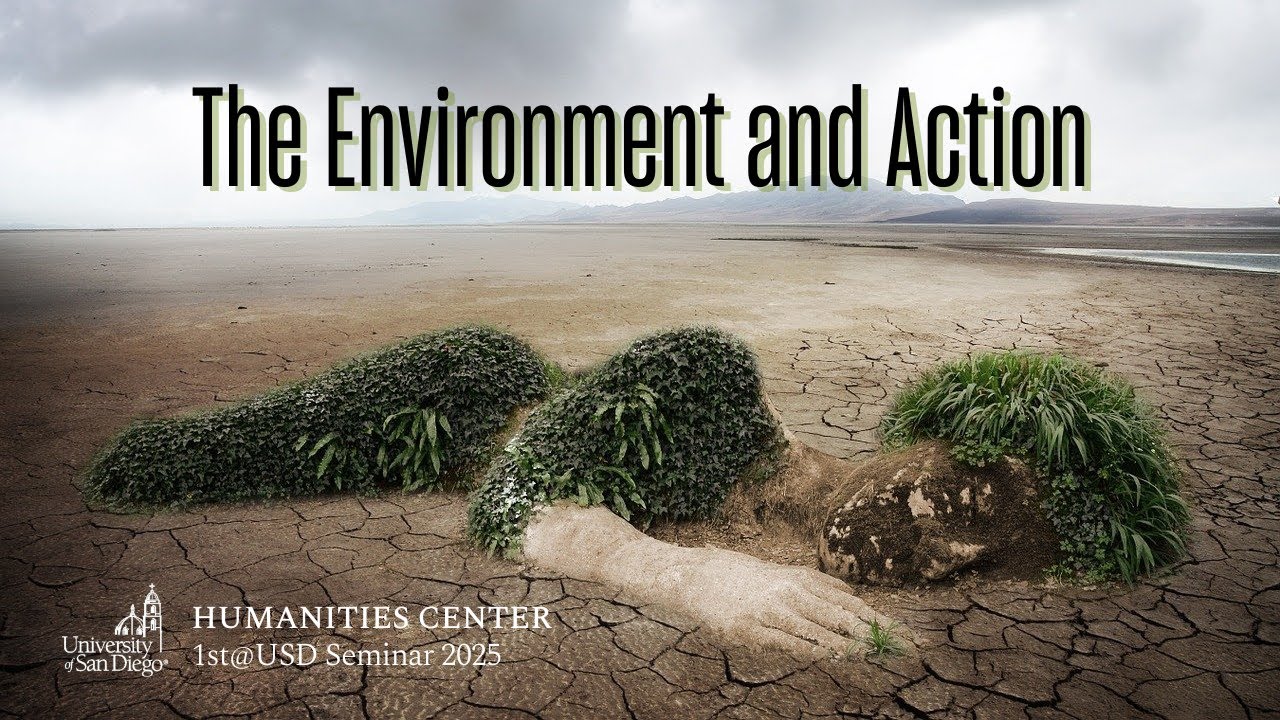
Environment and Action - Week 4: Rethinking Human Systems for Environmental Action
Keywords
Summary
125 words
Critical Evaluation
Value of the Information & Strength of the Argument
The value of the information is high, particularly in the first presentation, which provides a clear and accurate overview of climate science, including the greenhouse effect, the Keeling curve, and ice core data. The argumentation is solid, as the speaker uses well-established scientific evidence and addresses common misconceptions with logical explanations. The second and third presentations offer valuable perspectives from the humanities and business, though they are less data-driven. Overall, the arguments are well-structured and persuasive, though the scientific presentation is the most rigorous.
Scientific Rigor, Source Quality, Title Accuracy
The scientific presentation demonstrates rigor by referencing the IPCC and using well-known datasets like the Keeling curve. However, specific sources are not cited in detail. The title accurately reflects the content, which covers multiple disciplinary approaches to environmental action. The presentations are consistent with current scientific understanding, and the speakers are qualified in their respective fields. The lack of explicit citations in the video is a minor weakness, but the content aligns with established knowledge.
174 words
Title / Content Match
The title accurately reflects the content, which focuses on rethinking human systems for environmental action, with presentations on climate science communication, environmental humanities, and business systems thinking.
Quality & Reliability
8/10
The content is presented by a PhD in Environmental and Ocean Sciences, with clear scientific explanations of climate change, including the Keeling curve and ice core data. The presentation is consistent with established climate science, and the speaker emphasizes the scientific consensus. However, the lecture is introductory and does not provide detailed citations for all claims, though it references the IPCC.
Key Moments
Markers derived by PSI from the transcript: the creator did not define chapters.
- Introduction and welcome to week 4
- Jenny Prairie introduces herself and her background in oceanography
- Explanation of Earth's heat budget and greenhouse gases
- Introduction of the Keeling curve and its significance
- Discussion of ice core data and historical CO2 levels
- Debunking common myths about climate change
- Julia Medina presents on decentering the human in environmental thought
- Nichole Wissman discusses business and systems thinking
- Q&A and discussion with students
Cited Sources
- IPCC Report — Referenced as the consensus of scientists on climate change
- Keeling Curve — Mentioned as the longest continuous record of atmospheric CO2
Concurring Sources
- IPCC Sixth Assessment Report — Supports the scientific consensus on climate change and human influence.
- NASA Climate Change — Provides evidence and data on climate change, consistent with the lecture.
Contribution & Novelties
The video provides an interdisciplinary perspective on environmental action, combining natural science, humanities, and business perspectives. It offers a clear explanation of climate science and addresses common misconceptions, which is valuable for a general audience. The inclusion of diverse faculty perspectives enriches the discussion.
Pour aller plus loin :
- IPCC Sixth Assessment Report — The latest comprehensive assessment of climate change science.
- Keeling Curve — The ongoing record of atmospheric CO2 measurements.
- Doughnut Economics — A framework for sustainable development that aligns with the business systems thinking discussed.
88 words
Radar Profile
The radar profile shows high scores in quality and reliability, with moderate scores in quantity and technical level. This indicates a well-presented, scientifically sound lecture that is accessible to a general audience, though it may not delve deeply into technical details.
💬 No comments were provided for analysis.