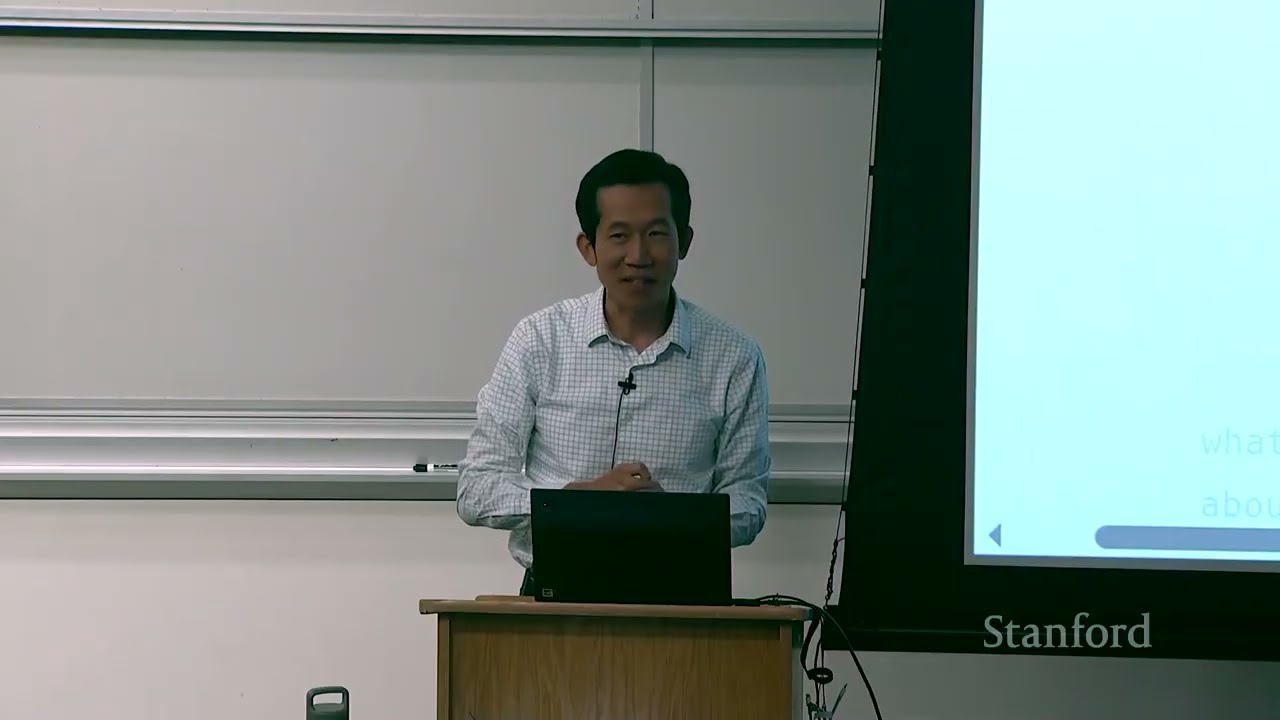
Stanford CS221 | Autumn 2025 | Lecture 1: Course Overview and AI Foundations
Keywords
Summary
137 words
Critical Evaluation
The lecture provides a solid, high-level introduction to artificial intelligence, effectively breaking down the field into four core components: perception, reasoning, acting, and learning. This framework is both intuitive and comprehensive, allowing students to see how various AI subfields fit together. The emphasis on resource constraints—computation and information—is particularly valuable, as it highlights the practical challenges that AI systems face. The discussion of alignment and societal impact is timely and thoughtful, acknowledging the broader implications of AI beyond technical performance. However, the lecture is introductory and does not delve into technical details, which is appropriate for a first lecture but limits its depth. The speaker, Percy Liang, is a highly credible authority in AI, and his explanations are clear and engaging. The course’s shift to a ’tensor-native’ approach using PyTorch is a modern and practical choice, though it may require students to have some programming background. The removal of constraint satisfaction problems is a notable change, but the trade-off for more societal impact discussion seems justified given the current AI landscape. Overall, the lecture is well-structured, informative, and sets a strong foundation for the course, though it is not a comprehensive technical resource on its own.
196 words
Title / Content Match
The title accurately reflects the content: a course overview and foundational concepts of AI.
Quality & Reliability
9/10
Lecture by a Stanford professor with deep expertise in AI, providing a structured overview of AI foundations. The content is accurate and well-aligned with current AI principles, though it is an introductory lecture and not a detailed technical exposition.
Key Moments
Markers derived by PSI from the transcript: the creator did not define chapters.
- Introduction and welcome to CS221
- Definition of AI and its four components
- Perception: processing raw inputs
- Reasoning: drawing inferences and planning
- Acting: generating outputs and affecting the world
- Learning: updating beliefs from experience
- Resource constraints: computation and information
- Developer goals and alignment
- Societal impact and ethical considerations
- Course structure and changes: tensor-native approach
Cited Sources
- Stanford CS221 Course Page — Official course page for CS221, providing enrollment and program information.
- CS221 Autumn 2025 Website — Course schedule and materials for the Autumn 2025 offering.
- Stanford AI Professional Programs — Information about Stanford's AI professional and graduate programs.
- CS221 Lecture Playlist — YouTube playlist containing all lectures for the course.
Concurring Sources
- Stanford CS221 Course Page — Official course page confirming the course structure and content.
Contribution & Novelties
The lecture provides a clear and updated framework for understanding AI, emphasizing the four pillars of perception, reasoning, acting, and learning, and highlighting the importance of resource constraints. It also addresses contemporary issues such as alignment and societal impact, reflecting the current state of AI. The course’s shift to a tensor-native approach using PyTorch is a modern pedagogical choice.
Pour aller plus loin :
- Artificial Intelligence (Wikipedia) — Overview of AI definitions and history.
- Machine Learning (Wikipedia) — Core concepts in learning algorithms.
- Reinforcement Learning (Wikipedia) — Framework for learning from interaction.
- AI Alignment (Wikipedia) — Discussion of aligning AI goals with human values.
104 words
Radar Profile
The radar profile shows high scores in quality of information and reliability, reflecting the authoritative source and accurate content. The quantity of information is moderate, as it is an introductory lecture, and the technical level is moderate, suitable for beginners. Overall, the lecture is well-balanced and reliable.
💬 Sur les 0 commentaires analysés, aucune tendance n'est disponible.