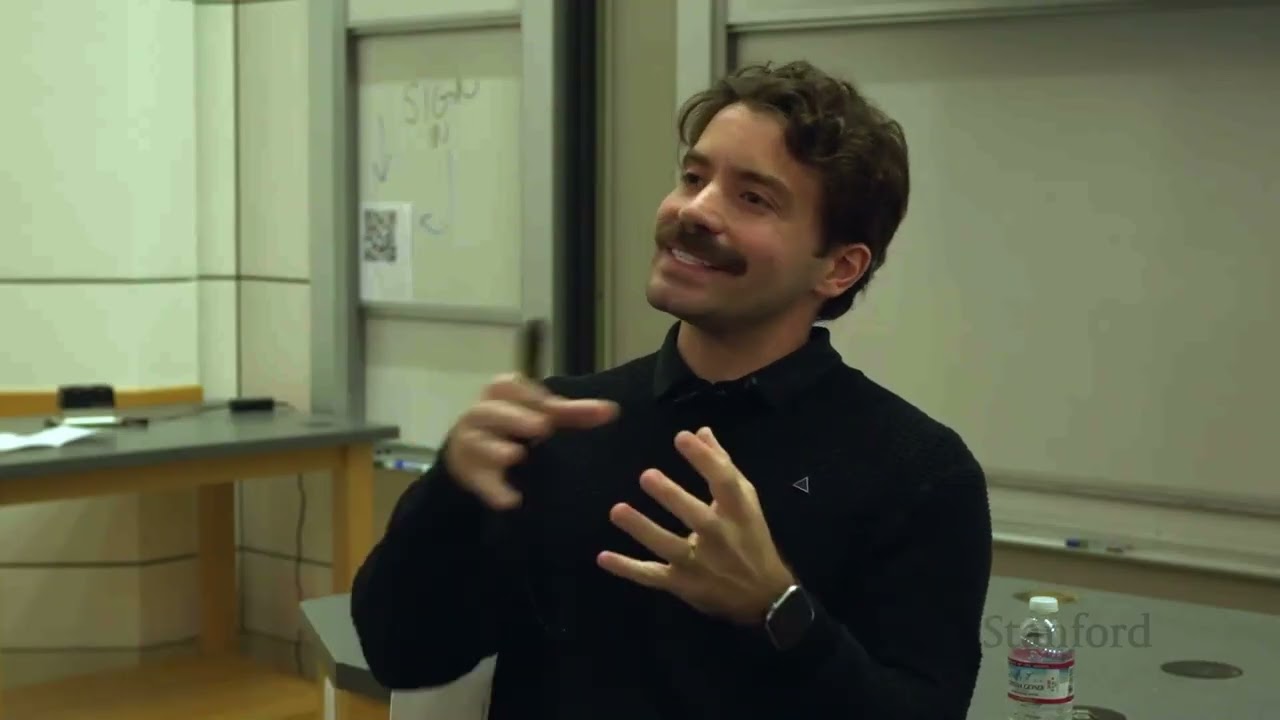
Stanford MS&E435 Economics of the AI Supercycle | Spring 2026 | Applications, Coding AI
Keywords
Summary
169 words
Critical Evaluation
The video provides valuable insights from a leading entrepreneur in the AI infrastructure space. Guillermo Rauch’s perspective is grounded in his direct experience building Vercel and observing the rapid adoption of AI coding agents. His arguments about the expansion of software creation to non-programmers and the shift towards agentic infrastructure are compelling and align with broader industry trends. However, the talk is largely anecdotal, relying on personal observations and specific examples (e.g., McDonald’s, Porsche) rather than systematic data or peer-reviewed research. The economic analysis is high-level and lacks rigorous quantitative backing, which limits its scientific reliability. The discussion of token-based pricing and the ‘death of SaaS’ is speculative and not supported by empirical evidence. The adéquation between title and content is strong, as the talk directly addresses the economics of the AI supercycle and coding AI. The video is well-structured and engaging, but it is more of an expert opinion than a scientific study. The lack of citations to external sources further reduces its reliability. Overall, the content is thought-provoking and relevant, but it should be viewed as an industry perspective rather than a rigorous academic analysis.
187 words
Title / Content Match
The title accurately reflects the content, which discusses the economics of the AI supercycle, applications, and coding AI, as presented by a key industry figure.
Quality & Reliability
7/10
The video features a credible guest (Guillermo Rauch, founder of Vercel) and is hosted by Stanford, but it is primarily an expert opinion with limited empirical data or peer-reviewed sources. The claims are anecdotal and based on personal experience, which reduces the overall reliability.
Key Moments
Markers derived by PSI from the transcript: the creator did not define chapters.
- Introduction of Guillermo Rauch by instructor Apoorv Agrawal, highlighting his background and Vercel's valuation.
- Guillermo Rauch begins his presentation, discussing Vercel's ecosystem and its impact on the modern web.
- Rauch explains the expansion of software creation due to AI coding agents, citing Opus 4.5 as a catalyst.
- Discussion on the shift from pages to agents, and the need for new infrastructure for long-running agents.
- Rauch introduces the concept of 'agentic infrastructure' and its three sides.
- Exploration of token-based pricing models and the potential decline of seat-based SaaS.
- Prediction of a return to immersive web experiences, referencing Microsoft Encarta.
- Q&A session begins, with questions from the audience.
Cited Sources
- MS&E435 Course Website — Mentioned in the video description as the schedule for the seminar series.
- Stanford Online Graduate Education — Referenced in the video description for more information about Stanford's graduate programs.
- Stanford MS&E435 Playlist — Linked in the video description as the playlist for the seminar series.
Concurring Sources
- Vercel Official Website — Official site of the company discussed, providing information on their products and services.
- Next.js Documentation — Documentation for the framework created by Guillermo Rauch, relevant to the discussion on developer experience.
Dissenting Sources
- No discordant sources found — No sources contradicting the video's claims were identified, but the video lacks citations to external research.
Contribution & Novelties
The video offers a unique industry perspective on the economic implications of AI coding agents, particularly the shift towards agentic infrastructure and token-based pricing. It provides concrete examples from Vercel’s experience, such as the rise in deployments after Opus 4.5, and introduces the concept of ‘peanut butter and jelly’ for coding agents and deployment platforms. This is valuable for understanding the current AI landscape from a practitioner’s viewpoint.
Pour aller plus loin :
- AI agent — Provides a foundational understanding of agents in AI.
- Software as a service — Context for the discussion on the ‘death of SaaS’.
- Cloud computing — Background on the evolution of cloud infrastructure.
108 words
Radar Profile
The radar profile shows a balanced score across all dimensions, with slightly higher scores in quantity and quality of information, reflecting the rich content and expert insights. The lower technical level and reliability scores indicate that while the talk is informative, it lacks deep technical detail and rigorous scientific backing.
💬 No comments were provided for analysis.