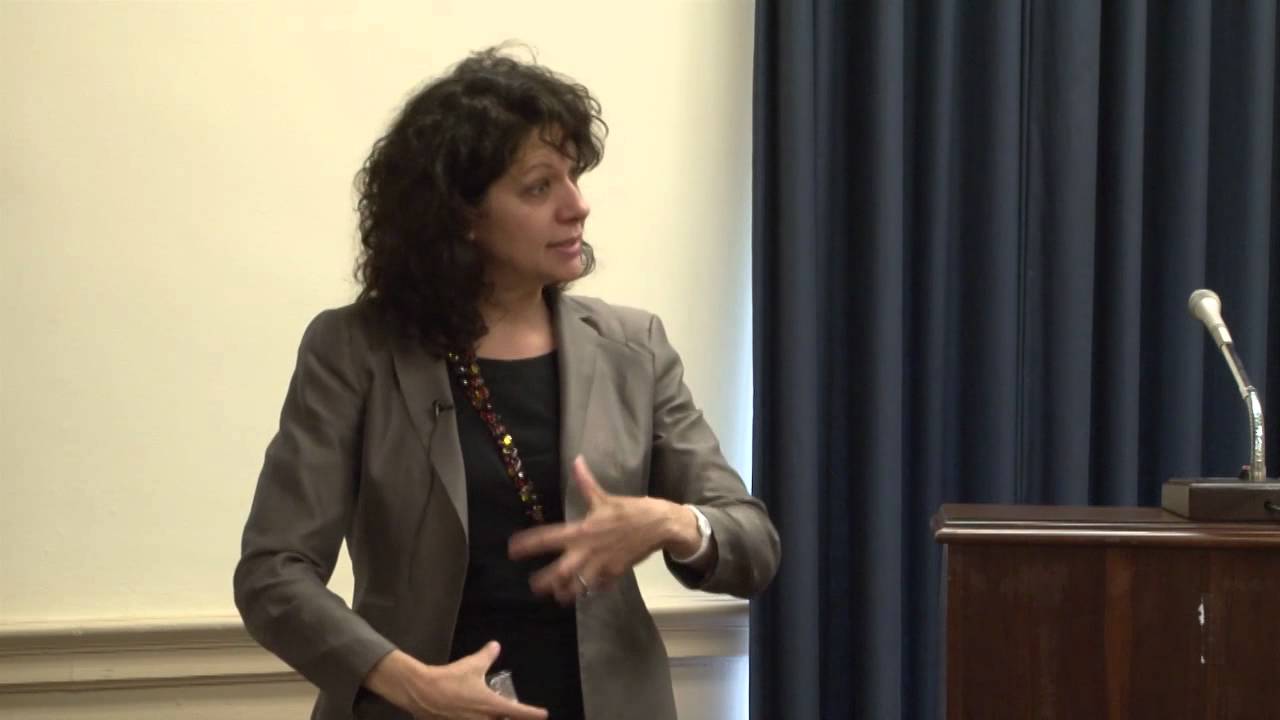
How Do Bacteria Communicate with Each Other and What Does That Mean for People
Keywords
Summary
173 words
Critical Evaluation
Value of the Information & Strength of the Argument
The talk provides valuable insights into a fundamental biological process, clearly explaining the mechanisms of quorum sensing and its implications. The argumentation is solid, built on decades of research from Bassler’s lab and others. She uses analogies and clear examples to make complex concepts accessible. The progression from discovery to broader significance is logical and compelling.
Scientific Rigor, Source Quality, Title Accuracy
The scientific rigor is high, as Bassler is a leading expert and the content is based on peer-reviewed research. However, she does not cite specific papers during the talk, which limits the ability to verify individual claims. The title accurately reflects the content, and the talk is well-structured. The presentation is aimed at a general audience but does not oversimplify the science.
133 words
Title / Content Match
The title accurately reflects the content: the talk explains how bacteria communicate via quorum sensing and discusses implications for human health and other applications.
Quality & Reliability
9/10
Presentation by a leading expert (Princeton professor, MacArthur Fellow, NAS member) based on peer-reviewed research. The content is well-established in the field of quorum sensing, with clear explanations and references to published work. Minor caveat: no explicit citations to specific papers during the talk, but the scientific credibility is high.
Key Moments
Markers derived by PSI from the transcript: the creator did not define chapters.
- Introduction to bacteria and their importance; humans are 90% bacterial.
- Discovery of quorum sensing in Vibrio harveyi; bioluminescence as a readout.
- Mechanism of quorum sensing: autoinducers and receptors.
- Quorum sensing is widespread; controls biofilm formation and virulence.
- Species-specific languages and the universal signal for cross-species communication.
- Bacteria measure ratios of signals to assess their environment.
- Potential therapeutic applications: disrupting quorum sensing to combat pathogens.
Cited Sources
- Quorum sensing in bacteria — Review article on quorum sensing, likely referenced in the talk.
Concurring Sources
- Quorum sensing in bacteria — Peer-reviewed review supporting the mechanisms described.
Contribution & Novelties
The talk provides a comprehensive overview of quorum sensing, emphasizing its role in bacterial multicellularity and potential applications. It highlights the discovery of a universal bacterial language and the idea of manipulating communication for therapeutic purposes.
Pour aller plus loin :
- Quorum sensing — Overview of the concept.
- Bonnie Bassler — Background on the speaker.
- Biofilm — Related concept.
- Autoinducer — Signaling molecules.
63 words
Radar Profile
The radar profile shows high scores in all dimensions, indicating a well-balanced and reliable presentation. The talk excels in information quality and reliability, with a slightly lower technical level due to its accessible nature.
💬 No comments were provided for analysis.