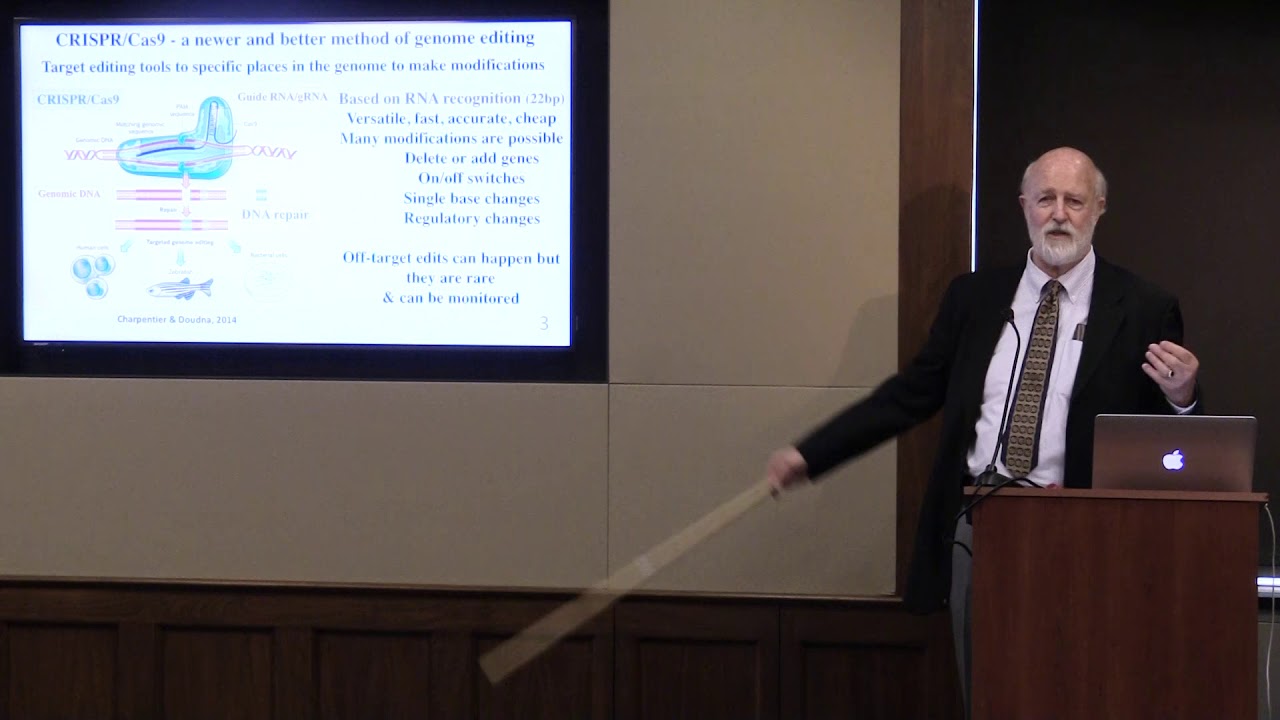
National Academy of Sciences’ Principles: Governing the Promise and Concerns - Human Genome Editing
Keywords
Summary
131 words
Critical Evaluation
Value of the Information & Strength of the Argument
The video provides a comprehensive and balanced overview of human genome editing, covering both the scientific potential and the ethical dilemmas. Dr. Hynes presents the information in an accessible manner, using analogies and clear explanations. He acknowledges the complexity of the issues and the need for societal debate. The argumentation is solid, drawing on the expertise of the National Academies and the speaker’s own research experience. He addresses counterarguments, such as the potential for enhancement and the risks of off-target effects, and provides reasoned justifications for the cautious approach recommended by the NAS.
Scientific Rigor, Source Quality, Title Accuracy
The presentation is scientifically rigorous, reflecting the consensus of the National Academies of Sciences, Engineering, and Medicine. Dr. Hynes cites the 2017 NAS report on human genome editing and references the work of other scientists. The title accurately reflects the content, which focuses on the NAS principles and the governance of human genome editing. The video is a talk given at the Congressional Biomedical Research Caucus, indicating a high level of expertise and institutional backing.
183 words
Title / Content Match
The title accurately reflects the content, which focuses on the NAS principles and the governance of human genome editing.
Quality & Reliability
8/10
Presentation by a distinguished scientist and chair of the NAS roundtable, providing a balanced overview of genome editing science, applications, and ethical considerations. The content is technically accurate and reflects the consensus of the National Academies, though it is an opinion piece rather than a peer-reviewed study.
Key Moments
Markers derived by PSI from the transcript: the creator did not define chapters.
- Introduction: Dr. Hynes outlines the topics to be covered, including the science of genome editing, potential applications, and regulatory concerns.
- Explanation of CRISPR-Cas9 mechanism: RNA-guided DNA cutting and repair.
- Discussion of the versatility of genome editing: deletions, insertions, base changes, and gene regulation.
- Somatic editing applications: treating sickle cell disease, HIV, and cancer immunotherapy.
- Introduction to germline editing and its heritable implications.
- Discussion of enhancement vs. treatment and the difficulty of defining the boundary.
- Challenges of germline editing: mosaicism and off-target effects.
- Alternative approaches: editing gametes (sperm and eggs) and the potential for future applications.
- NAS recommendations: heritable germline editing not currently permissible, but may be reconsidered if safety and ethical issues are resolved.
- Emphasis on the need for public discourse and international cooperation in regulating genome editing.
Cited Sources
- National Academies of Sciences, Engineering, and Medicine. (2017). Human Genome Editing: Science, Ethics, and Governance — Dr. Hynes chaired the roundtable that produced this report, and he references its conclusions throughout the talk.
Concurring Sources
- National Academies of Sciences, Engineering, and Medicine. (2017). Human Genome Editing: Science, Ethics, and Governance — The talk is based on this report, and the speaker's statements align with its conclusions.
Contribution & Novelties
The video provides a clear and authoritative summary of the NAS principles on human genome editing, delivered by the chair of the committee. It offers a balanced perspective on the potential benefits and risks, and emphasizes the need for public engagement. The talk is particularly valuable for its explanation of the scientific challenges, such as mosaicism, and its discussion of alternative approaches like gamete editing.
Pour aller plus loin :
- CRISPR gene editing - Wikipedia — Overview of CRISPR technology and its applications.
- Human Genome Editing: Science, Ethics, and Governance - National Academies Press — The full report referenced in the talk.
- International Commission on the Clinical Use of Human Germline Genome Editing - National Academies — Follow-up initiative to develop a framework for potential future use.
127 words
Radar Profile
The radar profile shows high scores in information quantity, quality, and reliability, with a slightly lower score in technical level, reflecting the accessible nature of the presentation. The overall balance indicates a well-rounded and trustworthy source for understanding the scientific and ethical landscape of human genome editing.