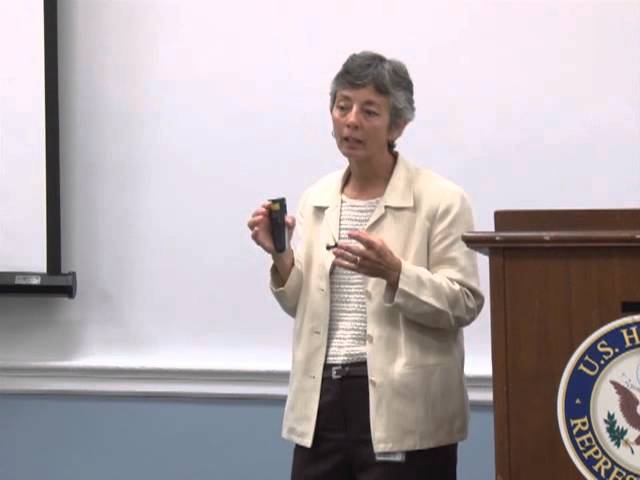
Regenerative Medicine and its Role in Improving Recovery from Traumatic Brain Injury
Keywords
Summary
158 words
Critical Evaluation
Value of the Information & Strength of the Argument
The presentation provides valuable insights into the complexities of TBI and the potential of regenerative medicine. Armstrong effectively argues that improved diagnostics are crucial for developing effective treatments, as the heterogeneity of TBI makes clinical trials challenging. She supports her points with examples from imaging and pathology, and emphasizes the need for collaborative research. The argumentation is logical and well-structured, though it is more of an overview than a detailed scientific exposition.
Scientific Rigor, Source Quality, Title Accuracy
The presentation is scientifically rigorous, with the speaker citing her own experience and institutional collaborations. However, specific sources are not cited in the talk, and the description only provides the speaker’s affiliation. The title accurately reflects the content, which is a high-level overview of regenerative medicine for TBI. The talk is not a peer-reviewed study but a briefing for a congressional caucus, so the scientific depth is limited.
155 words
Title / Content Match
The title accurately reflects the content, which focuses on regenerative medicine approaches for traumatic brain injury recovery.
Quality & Reliability
7/10
The presentation is given by a domain expert with extensive experience in neuroscience and regenerative medicine, and it is hosted by a reputable organization. However, it is a briefing rather than a peer-reviewed study, and some claims lack specific citations.
Key Moments
Markers derived by PSI from the transcript: the creator did not define chapters.
- Introduction and welcome by Joan Goldberg, executive director of ASCB.
- Dr. Armstrong begins her presentation, introducing the Center for Neuroscience and Regenerative Medicine.
- Discussion of the collaborative structure involving USU, NIH, and Walter Reed.
- Explanation of the challenges in diagnosing mild TBI and its overlap with PTSD.
- Introduction of the concept of 'blast plus' and the spectrum of military TBI.
- Discussion of advanced imaging techniques like DTI and PET for TBI diagnosis.
- Emphasis on the need for biomarkers and better diagnostics to guide treatment.
- Overview of regenerative medicine strategies: neuroprotection, neuroplasticity, and stem cell approaches.
- Challenges in applying regenerative medicine to TBI due to heterogeneity of injuries.
- Conclusion and call for collaborative research and improved diagnostics.
Cited Sources
- Coalition for the Life Sciences — Mentioned as the organization hosting the briefing and providing past briefings.
Concurring Sources
- Defense and Veterans Brain Injury Center — Mentioned as tracking military TBI statistics.
Contribution & Novelties
The presentation provides a comprehensive overview of the challenges and opportunities in regenerative medicine for TBI, emphasizing the need for improved diagnostics and personalized treatment. It highlights the collaborative efforts between military and civilian institutions, which is a unique perspective.
Pour aller plus loin :
- Traumatic brain injury - Wikipedia — Provides background on TBI types and epidemiology.
- Regenerative medicine - Wikipedia — Overview of regenerative approaches including stem cells.
- Diffusion tensor imaging - Wikipedia — Explanation of DTI used in the talk.
- Positron emission tomography - Wikipedia — Details on PET imaging mentioned.
94 words
Radar Profile
The radar profile shows high scores in quantity of information and technical level, indicating a dense and detailed presentation. Quality and reliability are slightly lower, reflecting the lack of specific citations and the nature of the talk as an expert opinion rather than a peer-reviewed study.