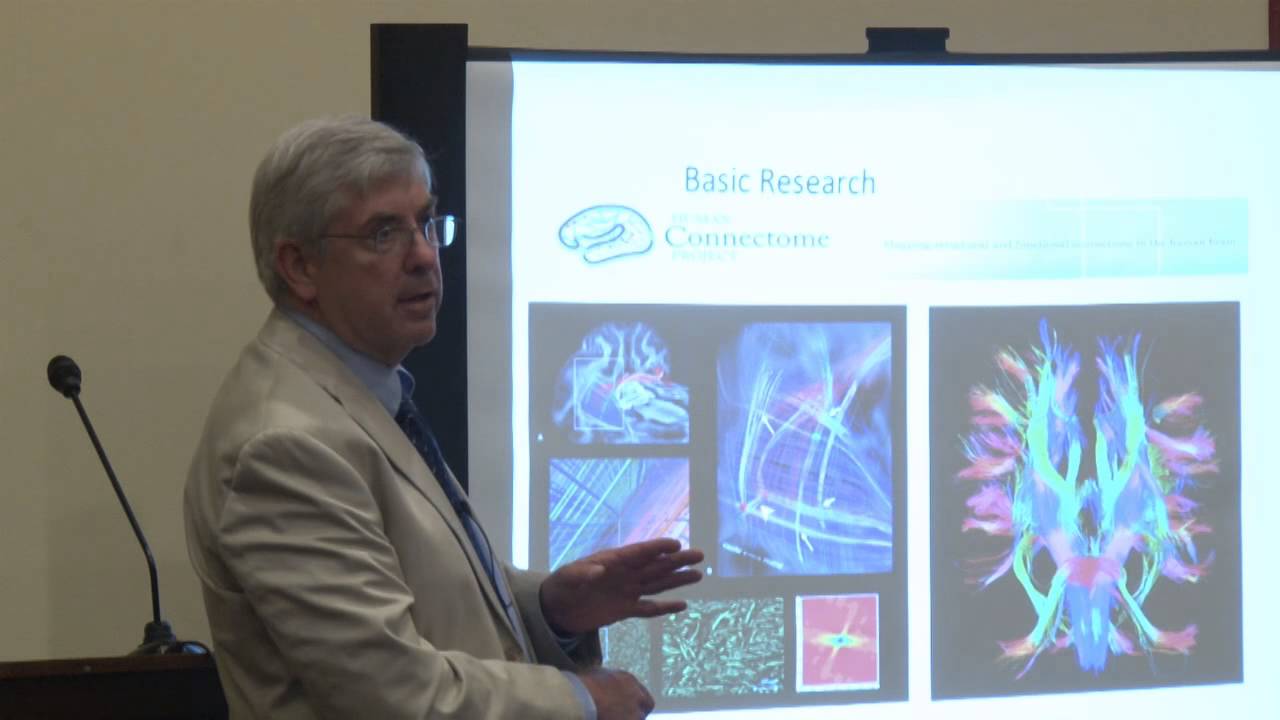
Traumatic Head Injury: What Football Players and Returning Veterans Have in Common
Keywords
Summary
202 words
Critical Evaluation
Value of the Information & Strength of the Argument
The talk provides valuable information on the scope and mechanisms of TBI, particularly the comparison between sports and military contexts. It offers a clear explanation of the biomechanics of rotational injury and the vulnerability of white matter. The argumentation is solid, based on the speaker’s expertise and established scientific knowledge, though it lacks specific citations. The use of personal anecdotes (Scobell, LaFontaine) effectively illustrates the human impact and the similarities between the two populations. The speaker appropriately acknowledges uncertainties and the need for further research, particularly regarding blast injury.
98 words
Title / Content Match
The title accurately reflects the content, which compares traumatic brain injury in football players and veterans, highlighting commonalities and differences.
Quality & Reliability
8/10
Presentation by a senior NIH scientist with extensive clinical and research experience. Content is grounded in established neuroscience and epidemiology, with appropriate caveats about uncertainties. No citations to specific studies are provided, but the speaker's authority and the institutional context lend credibility.
Key Moments
Markers derived by PSI from the transcript: the creator did not define chapters.
- Introduction and thanks to caucus co-chairs; introduces Dr. Koroshetz.
- Dr. Koroshetz begins talk, showing historical helmets and discussing the commonality of head protection.
- Discusses the magnitude of TBI in military: 273,000 cases since 2000, 82.4% mild.
- Explains blast injury and its differences from civilian TBI, including rapid brain swelling.
- Provides neuroscience basics: gray matter, white matter, and the fragility of axons.
- Describes rotational injury and shearing of white matter as the basis of severe TBI.
- Discusses the difficulty of detecting white matter damage on standard scans.
- Mentions the 1950s paper on concussion and the concept of post-concussive syndrome.
- Shows a rat experiment demonstrating brain activity shutdown and recovery after concussion.
Cited Sources
- Pete Scobell's YouTube video — Mentioned as a personal account of a veteran with blast injuries.
- Pat LaFontaine's video — Mentioned as a personal account of a hockey player with multiple concussions.
Concurring Sources
- CDC Traumatic Brain Injury & Concussion — Provides statistics and information on TBI, consistent with the talk's data.
- Defense and Veterans Brain Injury Center — Military TBI research and resources, aligning with the talk's military focus.
Contribution & Novelties
The talk provides a clear synthesis of the commonalities between sports-related and military-related TBI, emphasizing the shared mechanisms of rotational injury and the challenges of diagnosis. It highlights the need for better biomarkers and imaging techniques to detect white matter damage. The personal stories add a human dimension that is often missing in scientific discussions.
Pour aller plus loin :
- Chronic traumatic encephalopathy (CTE) — A neurodegenerative disease linked to repetitive head trauma, relevant to the discussion of long-term consequences.
- Diffuse axonal injury — A key mechanism of TBI involving shearing of axons, as described in the talk.
- Blast injury — Provides background on the physics and pathophysiology of blast-related TBI.
- National Institute of Neurological Disorders and Stroke (NINDS) — The institution where the speaker works, offering resources on TBI research.
131 words
Radar Profile
The radar profile shows high scores in information quantity, quality, and reliability, with a moderate technical level. This indicates a well-balanced presentation that is informative and credible, but not overly technical, making it accessible to a general audience.