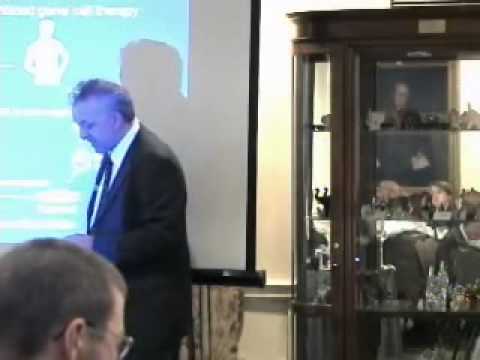
Do We Still Need Research on Embryonic Stem Cells?
Keywords
Summary
157 words
Critical Evaluation
Value of the Information & Strength of the Argument
The talk provides valuable insights into the state of stem cell research from a leading expert. The argumentation is solid, based on scientific evidence and personal experience. Daley effectively explains the scientific rationale for continuing ESC research despite the promise of iPSCs, highlighting the differences and limitations of iPSCs. He also addresses ethical and policy issues, making a compelling case for federal funding. The talk is well-structured and persuasive, though it is an opinion piece rather than a balanced review.
Scientific Rigor, Source Quality, Title Accuracy
The scientific rigor is high, as the speaker is a renowned researcher and the content is consistent with established knowledge. However, specific sources are not cited in the talk, and the description provides no links. The title accurately reflects the content, and the talk directly answers the question posed. The speaker’s credentials and the context of a congressional briefing add to the credibility.
158 words
Title / Content Match
The title accurately reflects the central question addressed, and the speaker directly answers it affirmatively.
Quality & Reliability
8/10
The speaker is a leading expert in stem cell research, with extensive credentials and direct involvement in the research discussed. The talk is based on established scientific knowledge and personal research experience, but it is an opinion piece advocating for continued embryonic stem cell research, and some claims are not fully referenced.
Key Moments
Markers derived by PSI from the transcript: the creator did not define chapters.
- Introduction by Congressman Mike Castle, emphasizing the importance of NIH-funded research.
- Dr. Daley begins his talk, sharing a patient story to illustrate the need for stem cell research.
- Discussion of the history and importance of embryonic stem cells, including the Nobel Prize awarded to Martin Evans.
- Explanation of induced pluripotent stem cells (iPSCs) and the breakthrough by Shinya Yamanaka.
- Comparison of iPSCs and embryonic stem cells, highlighting differences and limitations.
- Discussion of the potential of stem cells for drug testing and disease modeling.
- Warning about stem cell tourism and the need for standards in the field.
- Emphasis on the continued need for embryonic stem cell research to understand human development.
- Conclusion: both embryonic and induced pluripotent stem cells are needed; call for support of all avenues of research.
Contribution & Novelties
The talk provides an expert perspective on the ongoing debate about the necessity of embryonic stem cell research in the era of iPSCs. It offers a clear argument for the continued importance of ESCs, based on scientific differences and the need for fundamental knowledge. The speaker also highlights the risks of stem cell hype and the importance of responsible translation to the clinic.
Pour aller plus loin :
- Induced pluripotent stem cell — Overview of iPSC technology and its applications.
- Embryonic stem cell — Background on embryonic stem cells and their properties.
- International Society for Stem Cell Research — Organization that sets guidelines for stem cell research and clinical translation.
110 words
Radar Profile
The radar profile shows high scores in all dimensions, indicating a well-rounded and reliable presentation. The talk is rich in information, technically sound, and highly reliable due to the speaker's expertise.