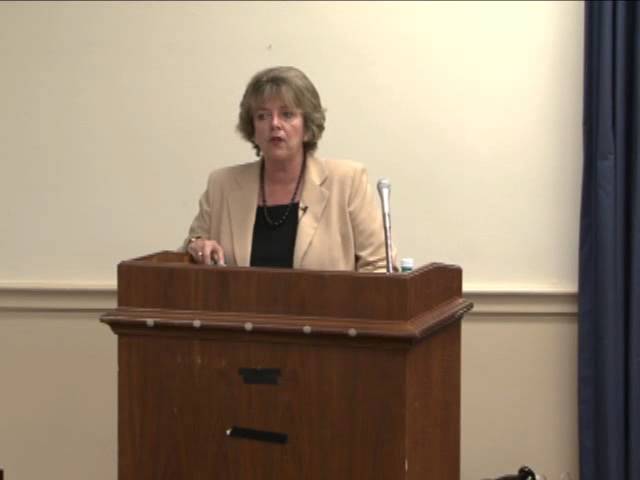
Does Aging Bring Wisdom?
Keywords
Summary
156 words
Critical Evaluation
Value of the Information & Strength of the Argument
The talk provides a balanced view of aging, presenting both declines and gains. It argues that wisdom is not automatic but can be cultivated. The argumentation is solid, based on research findings, though some claims are simplified. The speaker effectively uses examples and analogies to make the science accessible. The value lies in its positive reframing of aging and practical advice for maintaining cognitive health.
Scientific Rigor, Source Quality, Title Accuracy
The talk references several studies (e.g., Salthouse, Salat, Buckner, Kramer, Cohen) but does not provide specific citations. The title accurately reflects the content. The presentation is scientifically grounded but lacks detailed source information, which limits its rigor for a scientific audience.
121 words
Title / Content Match
The title is a question that the talk addresses directly, exploring whether aging brings wisdom and concluding that it can, under certain conditions.
Quality & Reliability
7/10
The talk is based on established neuroscience research, but it is a popular science presentation with some oversimplifications and lacks detailed citations.
Key Moments
Markers derived by PSI from the transcript: the creator did not define chapters.
- Introduction and context on aging population
- Definition of aging and wisdom
- Brain structure changes: volume, cortical thinning
- Myelin damage and dopamine decline
- Cognitive deficits: fluid intelligence, memory, processing speed
- Positive changes: crystallized intelligence, compensation strategies
- Creativity and wisdom in aging
- Enhancing the aging brain: exercise, mental engagement, diet, sociality
- Rethinking retirement and wisdom in society
Cited Sources
- Salthouse, T. (2009). When does age-related cognitive decline begin? — Cited as a study showing cognitive decline begins in mid-20s.
- Salat, D. & Buckner, R. (2004). Thinning of the cerebral cortex in aging. — Cited for cortical thinning patterns.
- Kramer, A. et al. (1999). Aerobic exercise and cognitive function. — Cited for exercise enhancing brain function.
- Cohen, G. (2000). Creativity and aging study. — Cited for creative engagement improving health.
Concurring Sources
- Park, D. C., & Reuter-Lorenz, P. (2009). The adaptive brain: Aging and neurocognitive scaffolding. — Supports the idea of compensation strategies in aging.
- Grady, C. L. (2012). The cognitive neuroscience of ageing. — Reviews age-related changes and compensation.
Dissenting Sources
- Salthouse, T. A. (2012). Consequences of age-related cognitive declines. — Salthouse argues that cognitive decline is largely inevitable, contrasting with the talk's emphasis on enhancement.
Contribution & Novelties
The talk offers a nuanced perspective on aging, emphasizing that cognitive decline is not inevitable and that wisdom can be cultivated. It integrates research on brain plasticity and creativity, providing a hopeful message. The novelty lies in its focus on the positive aspects of aging and practical strategies for enhancement.
Pour aller plus loin :
- Neuroplasticity — Relevant to the brain’s ability to adapt.
- Fluid and crystallized intelligence — Key concepts in the talk.
- Cognitive reserve — Related to resilience against decline.
82 words
Radar Profile
The radar profile shows high scores in information quantity and quality, with moderate technical level and reliability. This indicates a well-balanced presentation that is informative but not overly technical, suitable for a general audience.