Medical Marijuana: Is It the Medical Panacea Some Hope It to Be?
Keywords
Summary
197 words
Critical Evaluation
Value of the Information & Strength of the Argument
The talk provides valuable insights from a researcher directly involved in cannabis research. The argumentation is balanced, acknowledging both potential benefits and risks. The speaker uses his own data and references to large-scale studies to counter common claims about cannabis causing brain damage. He also highlights the lack of research due to regulatory obstacles and proposes innovative methods to study real-world use. The discussion on the opioid epidemic is compelling, citing multiple sources suggesting cannabis may reduce opioid use. However, the talk is largely based on observational data and self-reports, and the speaker calls for more rigorous clinical trials.
Scientific Rigor, Source Quality, Title Accuracy
The speaker demonstrates scientific rigor by referencing peer-reviewed studies, including his own published research and the National Academy of Sciences report. He is transparent about limitations and the need for further research. The title accurately reflects the content, as the talk critically evaluates the potential of medical marijuana. The speaker does not overstate conclusions and acknowledges the complexity of the issue.
175 words
Title / Content Match
The title poses a question that the talk directly addresses, weighing risks and benefits, concluding that cannabis is not a panacea but has potential benefits.
Quality & Reliability
8/10
Presentation by a clinical neuroscientist with 20+ years of experience, referencing peer-reviewed studies and a National Academy of Sciences report. The speaker acknowledges limitations and the need for more research. However, some claims rely on self-report and observational data, and the talk is a single expert's perspective.
Key Moments
Markers derived by PSI from the transcript: the creator did not define chapters.
- Introduction: importance of medical marijuana as a public health issue.
- Reframing the question: weighing risks and benefits.
- Background: personal shift in perspective after Colorado legalization.
- Research on brain morphology: no differences between users and non-users.
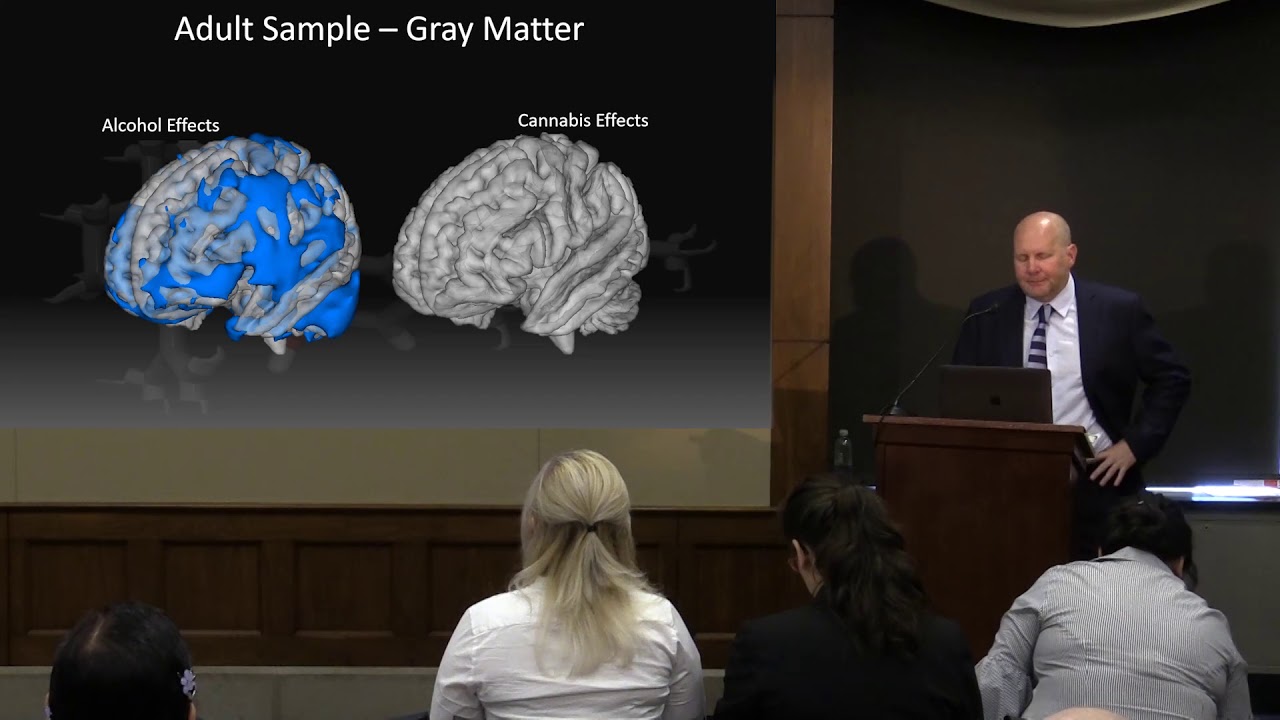
- Large-scale study: no effects of cannabis on gray matter, unlike alcohol.
- Need to study actual products: mobile pharmacology lab and observational design.
- Preliminary data: higher potency leads to higher blood THC but not more cognitive impairment.
- Safety data from Sativex: minimal adverse effects, no abuse liability.
- Benefits: National Academy of Sciences report on pain, nausea, spasticity, sleep.
- Cannabis and opioid epidemic: surveys and prescription data suggest potential benefit.
Cited Sources
- National Academy of Sciences report on health effects of cannabis — Referenced as a comprehensive review of health effects.
- Study on brain morphology (2014) — Own study comparing daily users and non-users.
- Large-scale brain imaging study (2017) — Own study with 1336 scans, showing no cannabis effects on gray matter.
- JAMA Internal Medicine study on dispensaries and opioid prescriptions — Cited as evidence that states with dispensaries have fewer opioid prescriptions.
Concurring Sources
- National Academy of Sciences report — Supports the benefits for pain, nausea, and spasticity.
- JAMA Internal Medicine study — Supports the association between medical marijuana laws and reduced opioid prescriptions.
Dissenting Sources
- Studies suggesting cannabis harms brain — Some small studies have found associations between cannabis use and brain changes, but the speaker argues these are confounded and not replicated in larger samples.
Contribution & Novelties
The talk provides an expert perspective on the current state of cannabis research, highlighting the lack of evidence for long-term brain damage and the potential benefits for pain and opioid reduction. It introduces innovative research methods, such as a mobile pharmacology lab, to study real-world cannabis use. The speaker emphasizes the need for more research on medical users and THC:CBD ratios.
Pour aller plus loin :
- Cannabis (drug) - Wikipedia — Overview of cannabis and its effects.
- Cannabidiol - Wikipedia — Information on CBD, a key cannabinoid.
- National Academies Press: The Health Effects of Cannabis and Cannabinoids — The report referenced in the talk.
- Sativex - Wikipedia — Details on the THC:CBD combination drug.
- Opioid epidemic - Wikipedia — Context on the opioid crisis.
124 words
Radar Profile
The radar profile shows high scores across all dimensions, indicating a well-rounded and reliable presentation. The talk is information-dense, technically sound, and scientifically rigorous, with a strong balance between risks and benefits.
💬 No comments were provided for analysis.