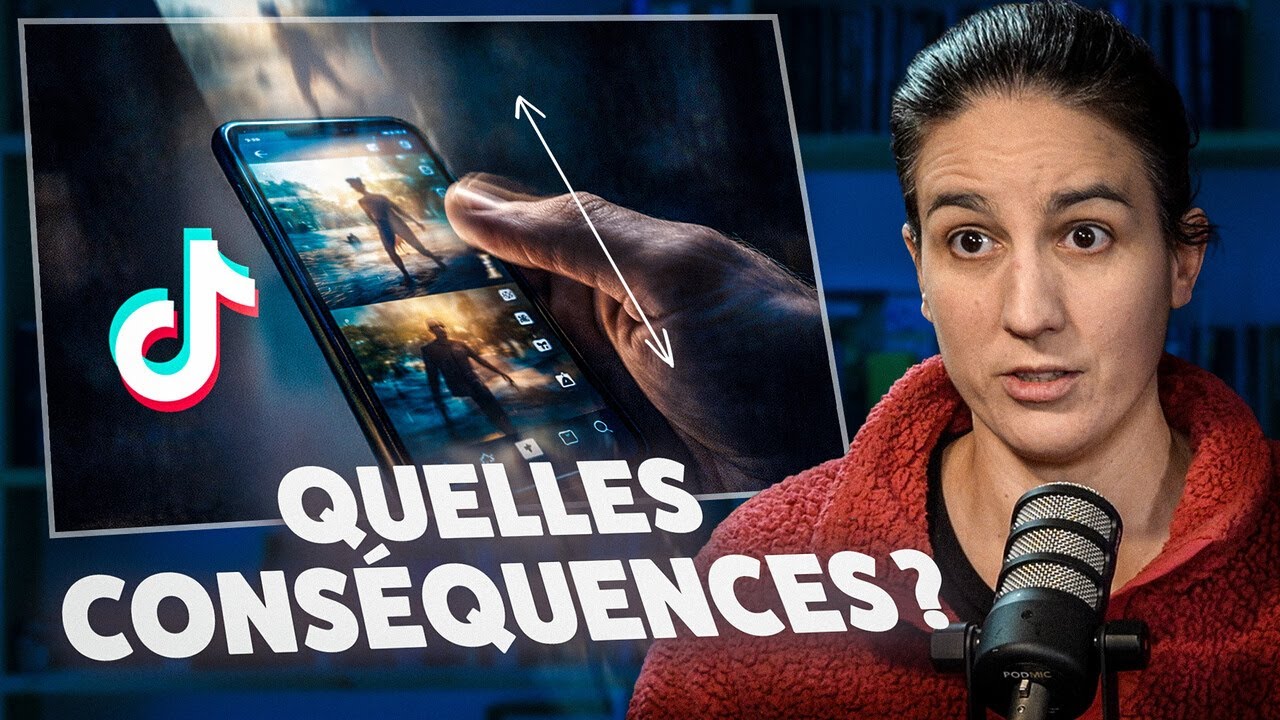
TikTok et le cerveau : ce que disent vraiment 70 études
Keywords
Summary
155 words
Critical Evaluation
The video provides a thorough and balanced analysis of a meta-analysis on short-form video effects, which is a significant strength. The hosts clearly explain the methodology of meta-analysis, emphasizing that it compiles existing studies and provides a robust synthesis. They correctly highlight the distinction between correlation and causation, a critical point often overlooked in science communication. The presentation of the two proposed theories (habituation and sensitization) adds depth, offering plausible mechanisms for the observed effects. The discussion of age-related vulnerability is also well-handled, noting that adults are equally affected, which counters common assumptions. The segment on mental health is nuanced, acknowledging that the association is weaker and that content diversity may mitigate negative effects on body image. The hosts also provide practical advice, such as using digital wellbeing tools and being intentional about usage, which is helpful for viewers. The sources cited are credible, including the meta-analysis itself and articles from Quebec Science, a reputable science magazine. The inclusion of a mystery news segment adds engagement but does not detract from the scientific content. The main limitation is that the video covers multiple topics, so the depth on each is limited, but this is appropriate for a news roundup format. The adéquation between title and content is good, as the title highlights the main segment. Overall, the video demonstrates high scientific rigor in its presentation, with clear explanations and appropriate caveats.
231 words
Title / Content Match
The title accurately reflects the main segment on TikTok and brain effects, though the video covers multiple other news items.
Quality & Reliability
8/10
The video presents a meta-analysis of 71 studies on short-form video effects, with clear methodology and balanced interpretation. Sources are provided for each segment, including peer-reviewed articles and reputable science media. The hosts distinguish correlation from causation and acknowledge limitations.
Chapters
- Sommaire
- Actu mystère : indice 1
- L'actu hmm... c'est intéressant
- Actu mystère : indice 2
- Présentation des avantages Ulule
- Les actus Québec Science
- Des parachutes en kirigami
- Des filtres de voitures pour mesurer notre antibiorésistance
- Bloquer un interrupteur moléculaire du cancer
- Atténuer la douleur grâce au bon tempo musical
- Le climat protégé grâce au commerce
- L'actu mystère
- Quoi voir ensuite
Cited Sources
- Meta-analysis on short-form videos and cognitive/mental health — Main study discussed in the segment on short-form video effects.
- Québec Science - Les 10 découvertes de 2025 — Collaboration and source for several news items.
- Kirigami parachutes article — News item on kirigami-inspired parachutes.
- Car filters and antibiotic resistance article — News item on using car filters to measure antibiotic resistance.
- Cancer molecular switch article — News item on blocking a molecular switch in cancer.
- Music tempo and pain article — News item on music tempo for pain relief.
- Climate protection through trade article — News item on climate protection via trade.
- Nature article on short-form videos — Possibly related to the meta-analysis or another study mentioned.
Concurring Sources
- Meta-analysis on short-form videos — The main study discussed, providing the core evidence.
- Québec Science articles — Supporting news items from a reputable science magazine.
External References
Contribution & Novelties
The video provides a comprehensive and accessible synthesis of a recent meta-analysis on short-form video effects, translating complex research into actionable insights. It emphasizes the distinction between correlation and causation, a crucial nuance often lost in media coverage. The discussion of habituation and sensitization theories offers a framework for understanding the mechanisms. The video also covers diverse scientific news, showcasing the breadth of current research.
Pour aller plus loin :
- Attention and cognitive control — Foundational concepts for understanding the cognitive effects discussed.
- Meta-analysis — Methodological background for the main study.
- Digital media use and mental health — WHO resource on mental health, relevant to the discussion.
107 words
Radar Profile
The radar profile shows high scores across all dimensions, indicating a well-rounded and reliable science communication video. The strongest aspects are information quality and reliability, while the technical level is slightly lower, reflecting the accessible presentation style.
💬 Très positif. Sur les 30 commentaires analysés, les spectateurs expriment un fort enthousiasme pour le format et la qualité des informations, avec plusieurs mentionnant leur appréciation de la métaanalyse et des sujets variés.