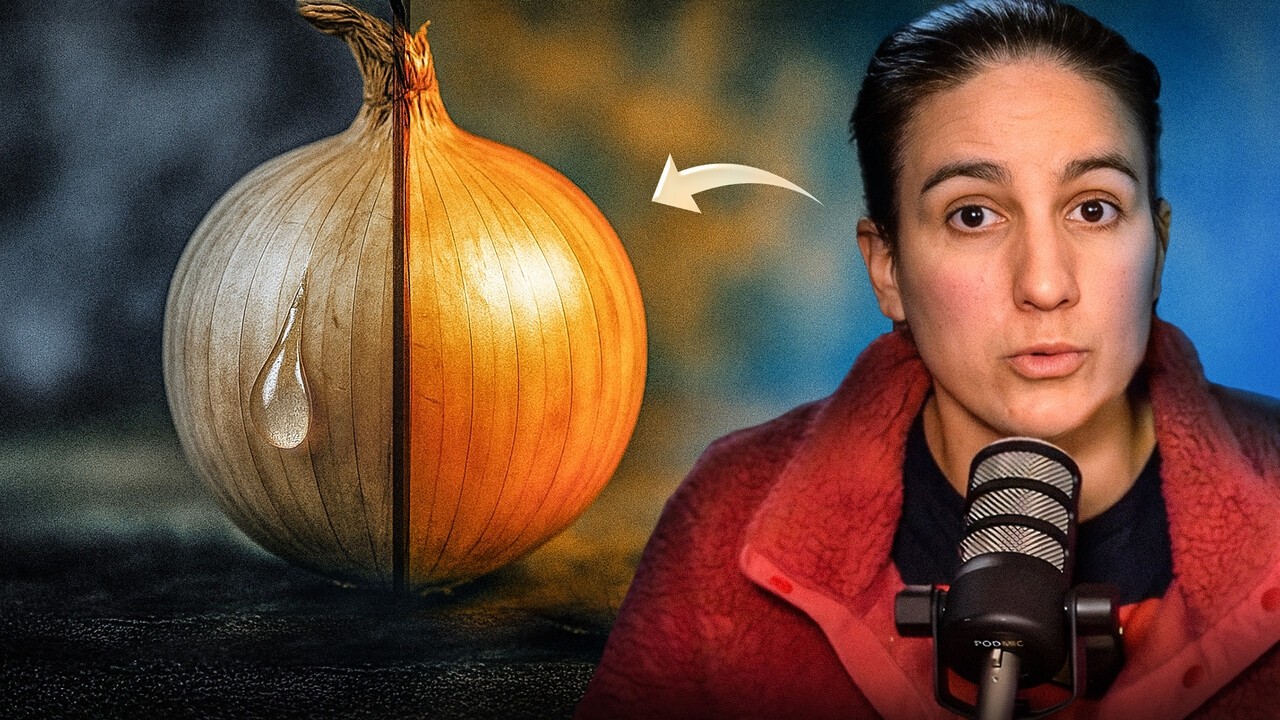
Comment couper un oignon SANS verser de larme
Keywords
Summary
138 words
Critical Evaluation
The video excels in presenting complex scientific topics in an accessible and engaging manner. The hosts, Viviane and Thomas, demonstrate a strong grasp of the subject matter, explaining the underlying mechanisms and methodologies with clarity. The onion study is presented with humor and practical implications, while the 3D bioprinting segment highlights the potential of the technology and its current limitations. The smartphone study is handled with particular care, as the hosts emphasize the correlational nature of the findings and the need for further research. The inclusion of a mystery material quiz adds an interactive element that enhances viewer engagement. The sources cited are reputable (PNAS, Cell, Nature), and the hosts provide context and critical analysis, such as noting the short duration of the smartphone study. However, the video could benefit from more in-depth discussion of the statistical methods used in the studies, and the transition between segments feels slightly rushed. The title, focusing on onions, may mislead viewers expecting a single-topic video, but the content is rich and varied. Overall, the video is a valuable resource for science communication, balancing entertainment with rigorous reporting.
184 words
Title / Content Match
The title focuses on the onion-cutting segment, which is the first major topic, but the video covers multiple science news items. The title is somewhat clickbait but not misleading.
Quality & Reliability
8/10
The video presents recent scientific studies with clear references to peer-reviewed journals (PNAS, Cell, Nature). The hosts explain methodology and limitations, and provide context. The content is accurate and well-sourced, though some simplifications are made for a general audience.
Chapters
Cited Sources
- Onion cutting study (PNAS) — Study on microdroplets and tear production when cutting onions.
- 3D bioprinting of vocal cords (Cell Device) — Research on a flexible robotic arm for in situ bioprinting of vocal cords.
- Smartphone and mental health study (PNAS) — Large-scale study on the association between smartphone use and mental health.
- Mystery material study (Nature Communications) — Study on a carbon-negative material used in clothing and as animal feed.
Concurring Sources
- Onion cutting study (PNAS) — The study's findings align with the video's explanation of microdroplet ejection.
- 3D bioprinting of vocal cords (Cell Device) — The video accurately describes the technology and its potential.
Dissenting Sources
- Smartphone and mental health study (PNAS) — The study's conclusion that smartphone use has no significant negative impact on mental health contradicts some previous research and public discourse.
External References
Contribution & Novelties
The video provides a synthesis of recent scientific findings, making them accessible to a general audience. It highlights the practical implications of the onion study, the potential of 3D bioprinting in medicine, and the nuanced results of the smartphone study. The mystery material segment adds an element of discovery.
Pour aller plus loin :
- Onion chemistry — Background on the chemical compounds responsible for tearing.
- 3D bioprinting — Overview of the technology and its applications.
- Smartphone use and mental health — Summary of research on this topic.
87 words
Radar Profile
The radar profile shows high scores in information quantity, quality, and reliability, with a moderate technical level. This indicates a well-balanced science communication video that is both informative and accessible.
💬 Très positif. Sur les 30 commentaires analysés, les spectateurs expriment un fort enthousiasme pour le format et le contenu, avec quelques remarques sur le volume de la musique de fond.