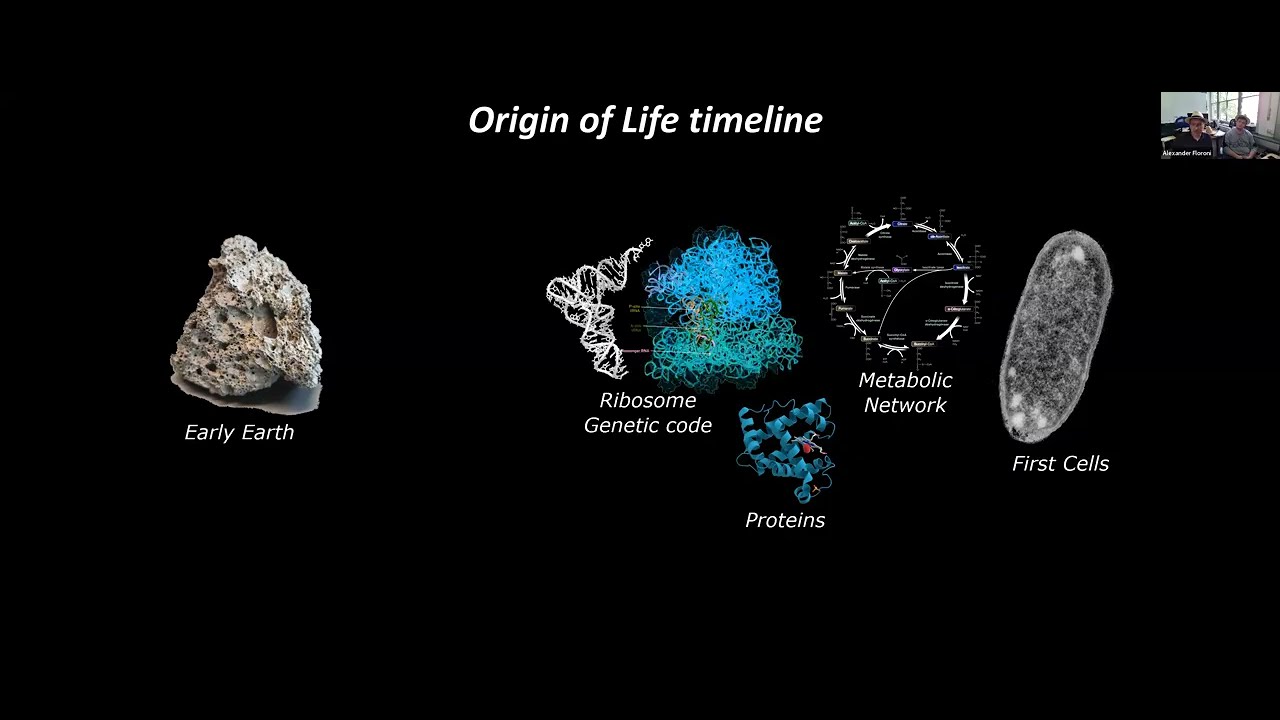
Build-a-Cell seminar Braun and Floroni: Defining and feeding synthetic cell with a thermal gradient
Keywords
Summary
158 words
Critical Evaluation
Value of the Information & Strength of the Argument
The value of the information is high, as it presents novel experimental results on using thermal gradients to drive and sustain complex biochemical reactions, which is directly relevant to synthetic cell research and origin of life studies. The argumentation is solid: the speakers systematically describe their experimental setup, controls, and simulations, and they interpret the results cautiously. They address potential limitations, such as the need for specific temperature ranges and the eventual depletion of resources. The evidence is compelling, with clear demonstrations of accumulation and gene expression under thermal gradients, and the comparison with controls strengthens the conclusions.
Scientific Rigor, Source Quality, Title Accuracy
The scientific rigor is evident in the detailed methodology and the use of appropriate controls. The speakers are established researchers in the field, and the work appears to be based on peer-reviewed publications (though not explicitly cited in the video). The sources mentioned are limited to the Build-a-Cell website, which provides context but not direct references. The title accurately reflects the content, focusing on defining and feeding synthetic cells with thermal gradients. The video is a seminar recording, so it is not a formal publication, but the content is presented with sufficient detail to be evaluated.
209 words
Title / Content Match
The title accurately reflects the content: the seminar focuses on defining and feeding a synthetic cell using thermal gradients.
Quality & Reliability
8/10
The seminar presents original research from a recognized group (LMU Munich) in the field of origin of life and synthetic cells. The methods and results are described in detail, with controls and simulations, indicating a rigorous scientific approach. However, the video is a recording of a live seminar without post-processing, and the claims are not peer-reviewed in this format.
Key Moments
Markers derived by PSI from the transcript: the creator did not define chapters.
- Introduction to the origin of life perspective and the role of thermal gradients.
- Explanation of thermophoresis and convection in water-filled pores.
- Description of the thermal chamber setup and experimental methods.
- Results on accumulating transcription-translation reaction components.
- Demonstration of gene expression (superfolder GFP) under thermal gradient.
- Analysis of accumulation of DNA, proteins, and ions.
- Experiments with flow to feed nutrients and remove waste.
- Simulation of long-term stability and nutrient feeding.
- Introduction to air-water interface mechanism and coffee ring effect.
- Experimental results on accumulation at air-water interfaces.
Cited Sources
- Build-a-Cell contact page — Mentioned as a way to reach the community for questions.
- Build-a-Cell seminar page — Mentioned as the source for the seminar series.
Concurring Sources
- Build-a-Cell seminar page — The seminar is part of the Build-a-Cell series, which focuses on synthetic cell engineering.
Contribution & Novelties
The seminar presents a novel approach to synthetic cell construction by using thermal gradients to create non-equilibrium conditions that drive molecular accumulation and enable complex biochemical reactions. This is a significant departure from traditional membrane-based synthetic cells, offering a potential pathway for creating cell-like systems without a physical boundary. The work also demonstrates the feasibility of feeding and sustaining such systems, which is crucial for long-term operation.
Pour aller plus loin :
- Thermophoresis — Relevant to the mechanism of molecular accumulation.
- Cell-free protein synthesis — The PURE system used in the experiments.
- Origin of life — Context for the research.
- Convection — The other key mechanism in the trapping process.
110 words
Radar Profile
The radar profile shows high scores across all dimensions, indicating a well-rounded and reliable seminar. The quantitative and qualitative information are strong, and the technical level is appropriate for a specialized audience. The overall reliability is high, reflecting the expertise of the presenters and the experimental rigor.