Build-a-Cell seminar Nils Averesch: Microbial Cell Factories for Space and Earth
Keywords
Summary
175 words
Critical Evaluation
Value of the Information & Strength of the Argument
The seminar provides valuable insights into the emerging field of space biomanufacturing and the production of advanced bioplastics. The speaker presents original research from his lab, including novel results on incorporating aromatic monomers into PHA backbones, which is a significant contribution. The argumentation is logical and well-structured, starting with the motivation for in-situ manufacturing in space, then discussing the challenges of plastic recycling, and finally presenting his lab’s approach to engineering microbes for better bioplastics. He supports his claims with data from his experiments, such as polymer composition analysis. However, some claims are preliminary and not yet published, and the talk is a seminar rather than a peer-reviewed presentation. The speaker also acknowledges limitations, such as the low fraction of aromatic monomers incorporated, and outlines future work. Overall, the value is high for researchers interested in synthetic biology and space applications.
Scientific Rigor, Source Quality, Title Accuracy
The seminar demonstrates scientific rigor through the presentation of experimental data and reference to known pathways and organisms. The speaker cites specific enzymes and pathways, such as the PHA biosynthesis pathway and the use of Cupriavidus necator. He mentions that some results are from ongoing or soon-to-be-finished studies, indicating that they are not yet peer-reviewed. The title accurately reflects the content, focusing on microbial cell factories for space and Earth. The speaker does not provide explicit citations to external sources, but the content aligns with established knowledge in the field. The description provides links to the Build-a-Cell website for contact and seminar information, but no direct references to the research. The adequacy between title and content is good, as the talk indeed covers microbial cell factories for space and Earth applications.
287 words
Title / Content Match
The title accurately reflects the content, which focuses on microbial cell factories for space and Earth applications.
Quality & Reliability
8/10
The seminar presents original research from the speaker's lab, with clear methodology and results. The speaker is an assistant professor at a reputable institution, and the content is consistent with current scientific knowledge. However, as a seminar, it lacks peer review and some claims are preliminary.
Key Moments
Markers derived by PSI from the transcript: the creator did not define chapters.
- Introduction and overview of the seminar topic.
- Motivation for space biomanufacturing: high launch costs and need for in-situ resource utilization.
- Discussion of what products are needed in space: food, pharmaceuticals, and materials.
- Overview of carbon dioxide fixation pathways and the advantage of microbes.
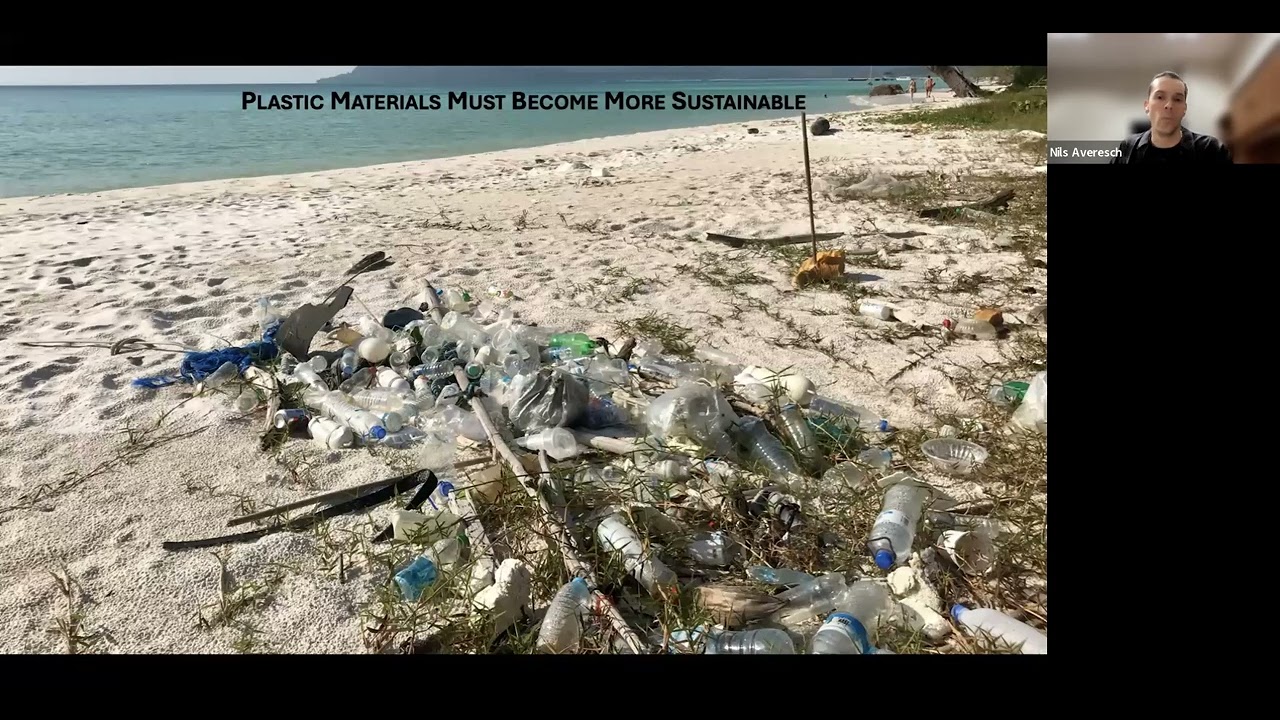
- Introduction to the plastics problem and the potential of bioplastics.
- Explanation of polyhydroxyalkanoates (PHAs) as natural polyesters and their limitations.
- Research on engineering Cupriavidus necator to produce PHAs with improved properties using levulinic acid.
- Discovery of novel polymer compositions and the role of different enzymes.
- Goal of producing high-performance polyesters with aromatic rings in the backbone.
- Results on incorporating aromatic monomers into PHA backbone, a first-time achievement.
- Future directions: expanding monomer range and increasing aromatic fraction.
- Q&A session discussing water sources, choice of organism, and cell-free systems.
Cited Sources
- Build-a-Cell Contact — Provided in the video description for contacting the Build-a-Cell community.
- Build-a-Cell Seminar — Link to the seminar series where this talk was presented.
Concurring Sources
- Build-a-Cell Contact — Provided in the video description for contacting the Build-a-Cell community.
- Build-a-Cell Seminar — Link to the seminar series where this talk was presented.
Contribution & Novelties
The seminar presents original research on engineering Cupriavidus necator to produce polyhydroxyalkanoates (PHAs) with novel compositions, including the first incorporation of aromatic monomers into the polymer backbone. This is a significant advancement in bioplastics production, potentially enabling high-performance materials from renewable carbon sources. The talk also provides a comprehensive framework for space biomanufacturing, integrating mission design with microbial cell factory selection.
Pour aller plus loin :
- Polyhydroxyalkanoates — Overview of PHA bioplastics and their production.
- Cupriavidus necator — Information on the bacterium used in the research.
- Carbon dioxide fixation — Background on biological carbon fixation pathways.
- In-situ resource utilization — Concept of using local resources in space exploration.
108 words
Radar Profile
The radar profile shows high scores across all dimensions, indicating a well-rounded and reliable seminar. The strongest aspects are the quantity and quality of information, as well as the technical level, reflecting the speaker's expertise. The global reliability is also high, though slightly lower due to the preliminary nature of some results.