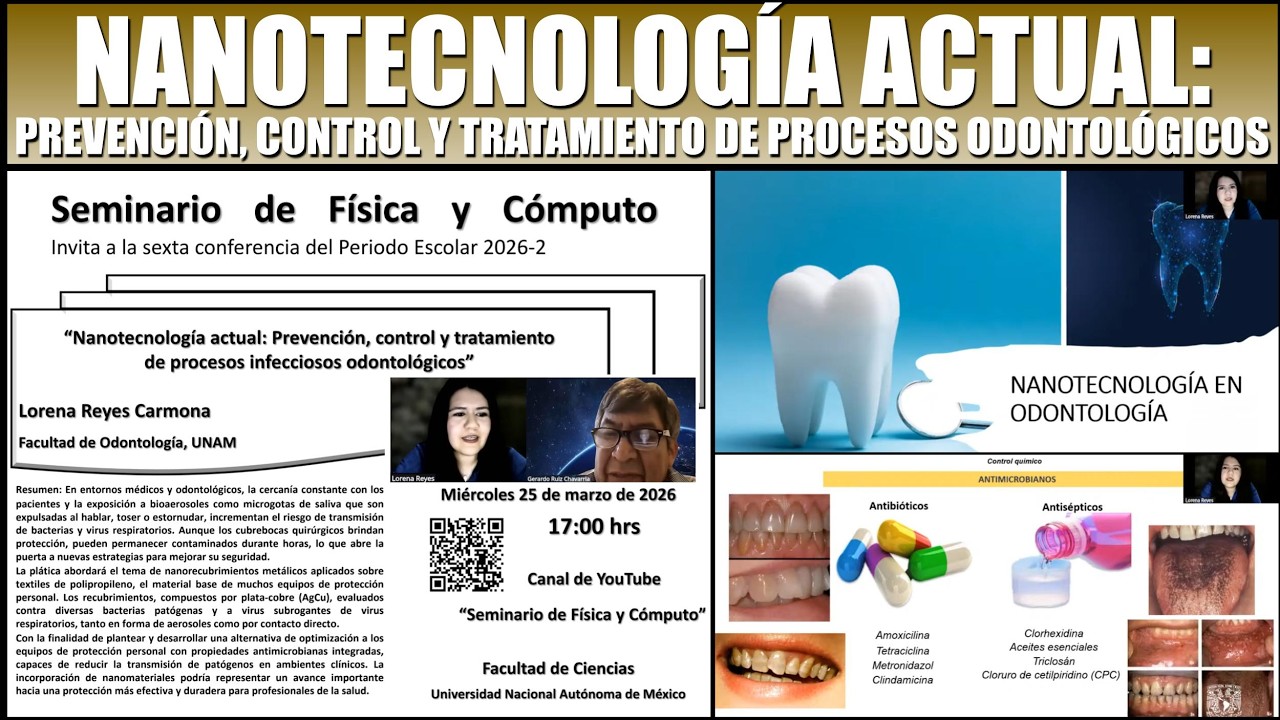
Nanotecnología actual: Prevención, control y tratamiento de procesos odontológicos (Lorena Reyes C)
Keywords
Summary
194 words
Critical Evaluation
Value of the Information & Strength of the Argument
The presentation offers valuable insights into the application of nanotechnology in dentistry, particularly in addressing antibiotic resistance and improving infection control. The speaker effectively argues for the advantages of nanoparticles, such as their multiple mechanisms of action against bacteria, which could mitigate the problem of resistance. She supports her points with examples from her own research, including the synthesis and testing of nanoparticles against oral pathogens, which adds credibility. However, the argumentation is largely qualitative, with limited quantitative data or comparative analysis. The talk is informative but could benefit from more detailed evidence, such as specific experimental results or clinical outcomes, to strengthen the scientific argument.
Scientific Rigor, Source Quality, Title Accuracy
The scientific rigor is moderate: the speaker references general concepts and her own research but does not provide specific citations or peer-reviewed sources during the talk. The quality of sources is not explicitly addressed, but her affiliation with UNAM and research collaborations lend some authority. The title accurately reflects the content, which is a broad overview of nanotechnology in dental infection management. The talk is well-structured and technically sound, though it lacks in-depth citations and detailed methodology, which would enhance its scientific robustness.
204 words
Title / Content Match
The title accurately reflects the content, which focuses on current nanotechnology applications in prevention, control, and treatment of dental infectious processes.
Quality & Reliability
7/10
The presentation is given by a qualified dental surgeon with postgraduate degrees and research experience, and it covers established scientific concepts in nanotechnology and microbiology. However, it is a seminar talk without peer-reviewed references or detailed experimental data, and some claims lack specific citations.
Key Moments
Markers derived by PSI from the transcript: the creator did not define chapters.
- Introduction to nanoscale and definition of nanomaterials.
- Classification of nanomaterials by dimensions and synthesis methods.
- Properties of nanomaterials and their applications in medicine.
- Applications in dentistry: composite resins and implants.
- Discussion on antibiotic resistance and mechanisms of nanoparticles.
- Research on zinc oxide nanoparticles via green synthesis.
- Research on bismuth subsalicylate nanoparticles via laser ablation.
- Testing nanoparticles against periodontal pathogens.
- Nanotechnology in infection prevention: aerosols and PPE.
- Conclusion and future directions.
Cited Sources
- Seminario de Física y Cómputo playlist — Referenced in the video description as related seminar videos.
Concurring Sources
- Nanoparticles in dentistry: A review — Supports the use of nanoparticles in dental applications.
Contribution & Novelties
The talk provides a comprehensive overview of nanotechnology applications in dentistry, emphasizing the potential of nanoparticles to combat antibiotic resistance through multiple mechanisms. It highlights specific research examples, such as green synthesis of zinc oxide nanoparticles and laser ablation of bismuth subsalicylate, offering insights into current experimental approaches. The discussion on infection prevention via improved PPE and antimicrobial coatings adds a practical dimension.
Pour aller plus loin :
- Nanoparticles in dentistry — Review of nanoparticle applications in dental materials and therapeutics.
- Antibiotic resistance mechanisms — WHO fact sheet on antimicrobial resistance.
- Green synthesis of nanoparticles — Overview of environmentally friendly nanoparticle synthesis methods.
103 words
Radar Profile
The radar profile shows balanced scores across information quantity, quality, technical level, and reliability, indicating a well-rounded but not exceptionally deep presentation. The moderate scores reflect the talk's broad scope and lack of detailed citations.