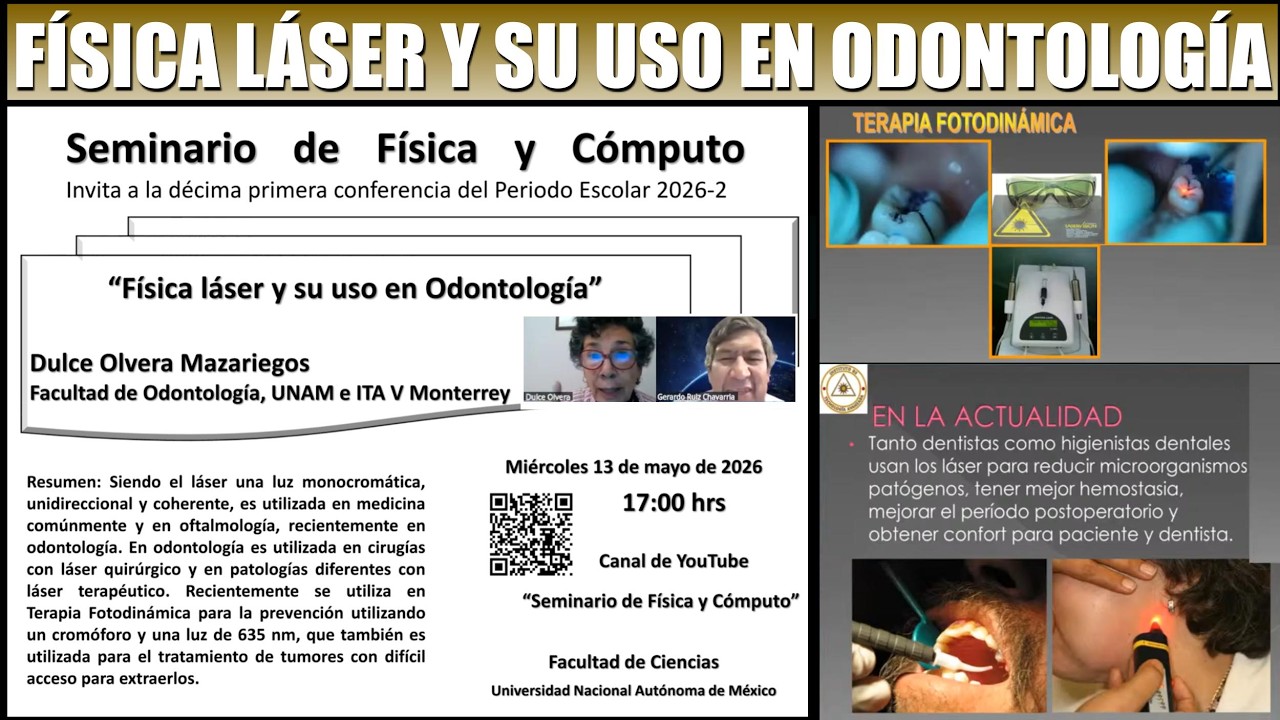
Física láser y su uso en Odontología
Keywords
Summary
162 words
Critical Evaluation
Value of the Information & Strength of the Argument
The video provides valuable insights into the practical applications of lasers in dentistry, drawing on the speaker’s extensive clinical experience. The argumentation is largely based on anecdotal evidence and personal case presentations, which, while compelling, lack the rigor of controlled clinical trials. The speaker explains fundamental physics concepts clearly, making the content accessible to a broad audience. However, the scientific evidence for some claims, such as the superiority of PDT over sealants, is presented without detailed methodology or statistical analysis, which weakens the overall argumentation.
Scientific Rigor, Source Quality, Title Accuracy
The presentation demonstrates a good understanding of laser physics and dental applications, but it lacks formal citations to scientific literature. The speaker mentions historical figures like Einstein and Maiman but does not provide specific references. The title accurately reflects the content. The video includes a promotional segment for the speaker’s own institute and master’s program, which is not penalized but noted. The absence of rigorous sourcing reduces the scientific rigor, but the speaker’s expertise and practical examples add credibility.
179 words
Title / Content Match
The title accurately reflects the content, which covers laser physics and its applications in dentistry.
Quality & Reliability
7/10
The presentation is based on the speaker's extensive clinical experience (45 years) and covers fundamental laser physics and dental applications. However, it lacks rigorous scientific citations, and some historical claims are anecdotal. The content is informative but not peer-reviewed.
Key Moments
Markers derived by PSI from the transcript: the creator did not define chapters.
- Introduction to the seminar and speaker's background.
- Discussion on the nature of light and historical models.
- Explanation of electromagnetic spectrum and laser properties.
- Introduction to laser components and types used in dentistry.
- Classification of lasers: high-power vs low-power and their effects.
- Clinical applications of surgical lasers in pediatric and special needs patients.
- Introduction to photodynamic therapy (PDT) and its mechanism.
- Case studies of PDT in treating oral infections and lesions.
- Comparative study of PDT vs fissure sealants using Diagnodent.
- Conclusion and emphasis on the benefits of laser dentistry.
Cited Sources
- Seminario de Física y Cómputo playlist — Referenced as related videos from the seminar series.
Concurring Sources
- Photodynamic therapy — Supports the mechanism and applications of PDT as described.
- Laser dentistry — Confirms the use of lasers in various dental procedures.
Dissenting Sources
- No discordant sources found — No sources contradicting the main claims were identified within the video.
Contribution & Novelties
The video offers a comprehensive overview of laser physics and its specific applications in dentistry, bridging fundamental concepts with practical clinical use. It highlights the importance of understanding parameters like fluence and irradiance for safe and effective treatment. The presentation of photodynamic therapy as an alternative to traditional sealants provides a novel perspective.
Pour aller plus loin :
- Photodynamic therapy — Overview of PDT mechanism and applications.
- Laser dentistry — General information on laser use in dental procedures.
- Erbium laser — Specifics on erbium lasers and their affinity for water.
- Neodymium-doped yttrium aluminum garnet laser — Details on Nd:YAG lasers used in dentistry.
103 words
Radar Profile
The radar profile shows high scores in information quantity and quality, moderate technical level, and lower reliability due to lack of citations. This indicates a content-rich presentation with practical insights but limited scientific rigor.
💬 Sur les 0 commentaires analysés, aucune tendance n'est disponible.