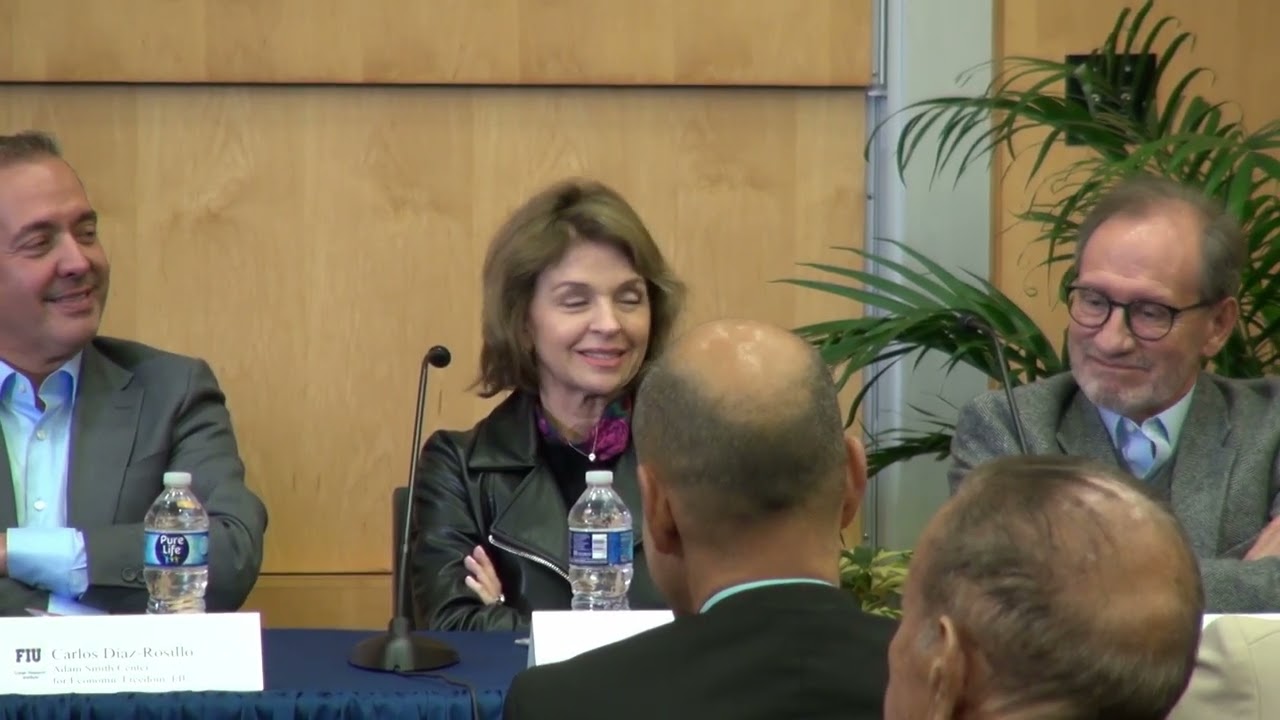
CRI panel discussion: "Consequences for Cuba of a Course Correction in Venezuela"
Keywords
Summary
172 words
Critical Evaluation
Value of the Information & Strength of the Argument
The panel provides valuable expert insights into the energy and political situation in Cuba, with specific data on oil supply and infrastructure. The argumentation is solid, drawing on professional experience and current events. However, much of the discussion is speculative, with scenarios presented without concrete evidence. The panelists acknowledge uncertainty, which adds credibility but also limits the definitiveness of their conclusions.
Scientific Rigor, Source Quality, Title Accuracy
The panelists cite their own expertise and mention specific reports (e.g., Reuters) and satellite imagery analysis, but no detailed sources are provided. The title accurately reflects the content, focusing on the consequences for Cuba of a course correction in Venezuela. The discussion is rigorous in its use of expert opinion but lacks verifiable citations.
130 words
Title / Content Match
The title accurately reflects the content, focusing on the consequences for Cuba of a course correction in Venezuela.
Quality & Reliability
7/10
Panel of experts with relevant academic and policy backgrounds, but discussion is largely speculative and based on current events with limited verifiable data.
Key Moments
Markers derived by PSI from the transcript: the creator did not define chapters.
- Introduction by Sebastian Arcos, interim director of the Cuban Research Institute, setting the context.
- Jorge Pinon presents a situational analysis of Cuba's electric power sector and oil supply.
- Dario Moreno outlines three possible scenarios for change in Cuba.
- Carlos Diaz Rosio discusses US interests and the likelihood of military intervention.
- Helena Fere highlights the Trump administration's stance on Cuba as a terrorist state.
- Panelists discuss the possibility of regime collapse from within due to lack of external support.
- Q&A session begins with audience questions.
Cited Sources
- Reuters report on Cuba's oil reserves — Mentioned by Jorge Pinon regarding Cuba's oil storage capacity.
Concurring Sources
- Cuba's energy crisis — Panelists agree on the severity of Cuba's energy collapse.
Dissenting Sources
- Potential for negotiated transition — Some panelists express hope for negotiation, while others see it as unlikely given the regime's history.
Contribution & Novelties
The panel provides a timely analysis of the geopolitical implications of the Venezuela situation for Cuba, combining energy expertise with political scenarios. It offers a nuanced view of US foreign policy motivations and the potential for regime change.
Pour aller plus loin :
- Cuba–United States relations — Overview of historical and current relations.
- Venezuela–United States relations — Context on the Venezuela situation.
- Cuban economic reforms — Background on Cuba’s economic challenges.
71 words
Radar Profile
The radar profile shows high scores in quantity and quality of information, with moderate technical level and reliability. This indicates a well-informed discussion with expert insights, but with some speculative elements.