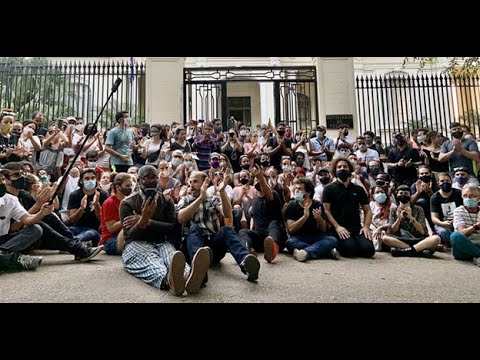
Art, Censorship, and Resistance in Cuba
Keywords
Summary
147 words
Critical Evaluation
Value of the Information & Strength of the Argument
The value of the information lies in the authentic, first-hand testimonies of artists and journalists who directly experienced state repression in Cuba. Their personal narratives provide unique insights into the mechanisms of censorship, the psychological impact of interrogation and exile, and the strategies of resistance employed by independent cultural actors. The argumentation is primarily anecdotal and emotional, grounded in lived experience rather than systematic analysis. While the speakers articulate their perspectives coherently, the discussion lacks empirical data or comparative context, which limits its scientific rigor. The strength of the argumentation rests on the credibility of the speakers as witnesses, but it does not engage with counterarguments or broader scholarly frameworks.
Scientific Rigor, Source Quality, Title Accuracy
The scientific rigor is moderate: the panel is a discussion of personal experiences, not a peer-reviewed study. The sources cited are primarily the speakers’ own works and the independent media outlet El Estornudo, which are not formally verified. The title accurately reflects the content, focusing on art, censorship, and resistance in Cuba. The discussion is well-structured and coherent, but it lacks external references or data to support claims. The adequacy between title and content is strong, as the panel directly addresses the themes of artistic censorship and resistance. No comments were provided for analysis.
219 words
Title / Content Match
The title accurately reflects the content, which focuses on artistic censorship and resistance in Cuba.
Quality & Reliability
7/10
The panel features first-hand accounts from Cuban artists and journalists who experienced state repression, providing authentic testimonies. However, the discussion is subjective and lacks external verification or data, limiting its scientific reliability.
Key Moments
Markers derived by PSI from the transcript: the creator did not define chapters.
- Introduction by Sebastian, interim director, presenting the four Mellon fellows.
- Carlos Manuel discusses the origins of the independent media outlet El Estornudo and the impact of Decree 349.
- Fabián Sacado talks about the challenges of creating art in exile and the process of reinvention.
- Carla Colomé reflects on the role of independent journalism as an act of resistance and the difficulties of covering Cuba from abroad.
- Celerina González shares her perspective as an artist and anthropologist, discussing the importance of memory and collective identity.
- Panelists discuss the emotional toll of exile and the importance of maintaining solidarity and community.
- Q&A session with the audience, addressing questions about the future of Cuban art and resistance.
- Panelists reflect on the role of international support and the Mellon Fellowship in enabling their work.
- Concluding remarks on the resilience of Cuban artists and the ongoing struggle for freedom of expression.
Cited Sources
- El Estornudo — Independent Cuban media outlet co-founded by Carlos Manuel and Carla Colomé, discussed as a platform for resistance.
- Decree 349 — Cuban law restricting artistic freedom, mentioned as a catalyst for the San Isidro Movement.
- San Isidro Movement — Collective of artists and intellectuals formed in 2018 to protest Decree 349.
Concurring Sources
- Cuban Research Institute (FIU) — The hosting institution, which organized the panel and supports Cuban scholars in exile.
Contribution & Novelties
The panel provides a unique, first-hand account of the intersection of art, censorship, and exile in Cuba, offering personal narratives that are often absent from academic literature. It highlights the role of independent media and artistic communities in sustaining resistance. The discussion also sheds light on the psychological and creative challenges of continuing artistic work in exile.
Pour aller plus loin :
- Cuban censorship and freedom of expression — Provides background on state control of media and arts in Cuba.
- San Isidro Movement — Overview of the protest movement against Decree 349.
- Mellon Foundation — The foundation that funded the fellowships enabling these artists to continue their work in exile.
110 words
Radar Profile
The radar profile shows high scores in qualitative information and reliability, reflecting the authenticity of personal testimonies, but lower scores in technical level and quantitative information, as the discussion is non-technical and lacks empirical data.