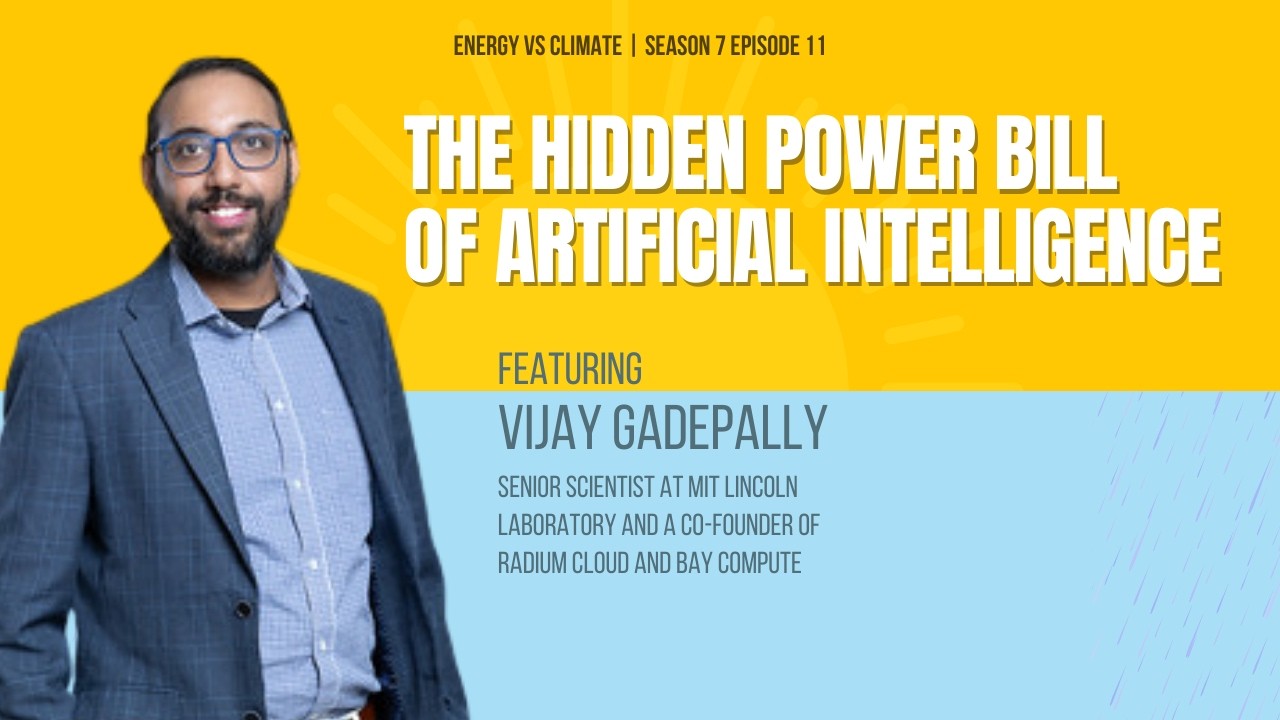
AI's Energy Crisis: Data Centers, Emissions & What You Need to Know | Energy vs Climate Podcast
Keywords
Summary
185 words
Critical Evaluation
Value of the Information & Strength of the Argument
The episode provides valuable insights into the often-overlooked energy costs of AI, particularly the shift from training to inference and the impact of agentic systems. The argumentation is solid, grounded in the guest’s expertise and practical examples, though some claims are based on estimates and lack precise citations. The discussion is balanced, acknowledging uncertainties and the need for more transparency.
Scientific Rigor, Source Quality, Title Accuracy
The scientific rigor is moderate; the guest is credible, but specific sources are not cited during the conversation. The description provides links to the show notes and social media, but no direct references to studies or reports. The title accurately reflects the content, focusing on AI’s energy crisis and its implications for climate.
128 words
Title / Content Match
The title accurately reflects the content, focusing on AI's energy consumption, data centers, and emissions, with a clear link to climate.
Quality & Reliability
8/10
The episode features a senior scientist from MIT Lincoln Laboratory with direct expertise in AI infrastructure and energy, providing credible insights. However, many claims are based on estimates and lack precise citations, and the discussion is largely qualitative.
Chapters
- Introduction & Cold Open
- Welcome & Guest Introduction
- A Brief History of AI: From Expert Systems to LLMs
- Agentic AI vs. LLMs vs. Reasoning Models Explained
- The Energy Reality: One AI Node = 10-15 Homes
- Why Energy Consumption is Unpredictable
- The Big Flip: Training vs. Inference Energy Use
- Should AI Be Regulated Like Pharmaceuticals?
- The Lemonade Stand Analogy: Power Grid Competition
- What Does "Efficient AI" Actually Mean?
- Are Tech Companies Optimizing for Energy or Market Share?
- 300 Terawatt Hours: Are These Projections Plausible?
- The Low-Hanging Fruit: Cutting AI Energy Use by 80%
- Alberta's 1.4 Gigawatt Data Center: A Case Study
- Why Data Centers Aren't Helping the Grid (Yet)
- The Path Forward: Flexibility, Incentives & Demand Response
- Closing Thoughts & Credits
Cited Sources
- Full Show Notes & Transcript — Referenced in the video description as the full show notes and transcript.
- Energy vs Climate website — Main website for the podcast, mentioned in the description.
- Energy vs Climate on LinkedIn — Social media link provided in the description.
- Energy vs Climate on Bluesky — Social media link provided in the description.
- Bespoke Podcasts — Production company mentioned in the description.
Concurring Sources
- Energy vs Climate website — The podcast's main website, which may contain related articles and resources.
External References
Contribution & Novelties
The episode offers a clear and accessible explanation of AI’s energy consumption, particularly the shift to inference and the role of agentic AI. It provides practical examples and analogies that make the topic understandable. The discussion on potential regulatory approaches and the need for efficiency incentives is thought-provoking.
Pour aller plus loin :
- AI and Energy Consumption — Overview of AI’s energy use.
- Data Center Energy Efficiency — U.S. Department of Energy resources on data center efficiency.
- Large Language Models and Energy — Research paper on the carbon footprint of large language models.
93 words
Radar Profile
The radar profile shows high scores in information quantity and quality, with slightly lower technical level and reliability, reflecting the expert-driven but estimate-based nature of the discussion.