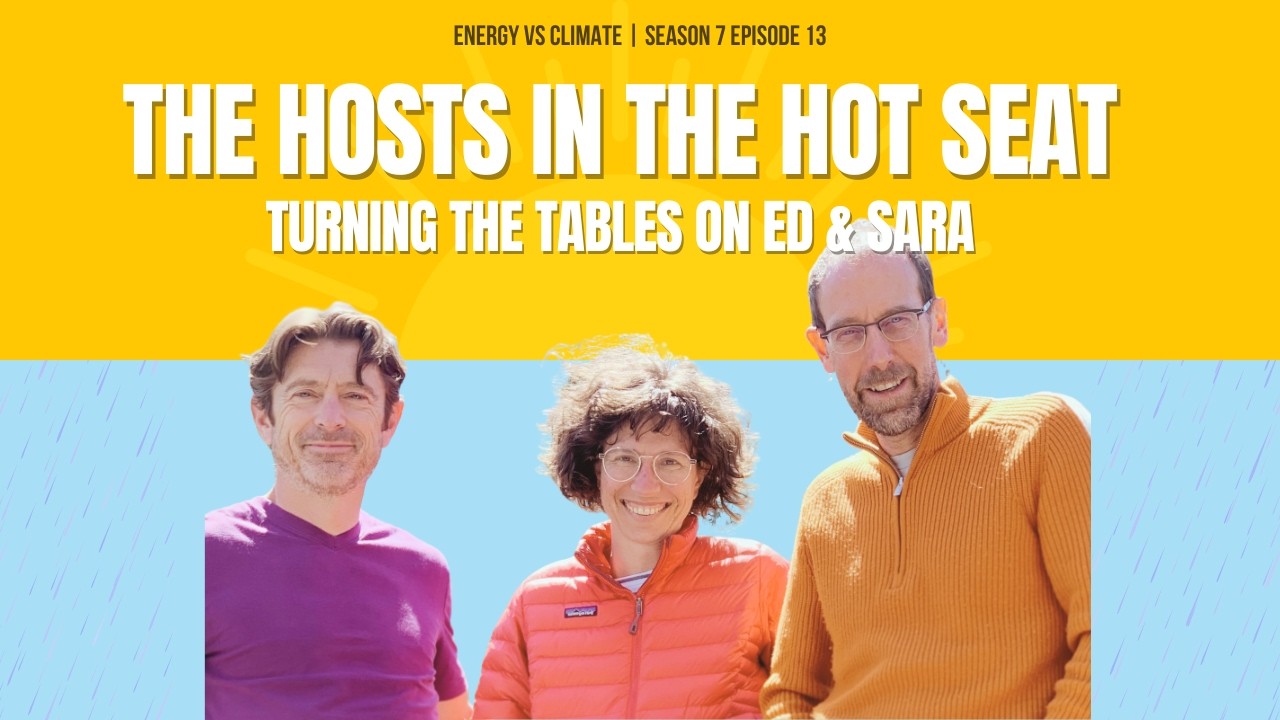
We Started a Climate Podcast in 2020 — Here's What We Got Right (and Wrong) #EnergyTransition
Keywords
Summary
194 words
Critical Evaluation
Value of the Information & Strength of the Argument
The value of the information lies in the hosts’ insider perspectives on the energy transition, backed by specific data points and personal anecdotes. The argumentation is generally solid, as the hosts draw on their extensive experience in policy and research. However, some claims are presented without rigorous evidence, and the discussion is largely retrospective and opinion-based. The hosts acknowledge uncertainties and complexities, which adds credibility, but the lack of formal citations or detailed analysis limits the depth of the argumentation.
Scientific Rigor, Source Quality, Title Accuracy
The scientific rigor is moderate: the hosts reference specific statistics (e.g., EV sales, solar generation) and mention academic concepts like Leah Stokes’ work on policy windows, but they do not provide formal citations. The sources cited in the description are primarily links to the podcast’s own website and social media, which are not primary scientific sources. The title accurately reflects the content, as the episode is a retrospective on the podcast’s predictions and the changes in the energy transition since 2020.
176 words
Title / Content Match
The title accurately reflects the content: a retrospective on the podcast's predictions and changes in the energy transition since 2020.
Quality & Reliability
7/10
The hosts are established experts in energy and climate policy, and the discussion is grounded in their professional experience and specific data points (e.g., EV sales, solar generation). However, the episode is largely retrospective and opinion-based, with limited formal citations or rigorous verification of claims.
Key Moments
Markers derived by PSI from the transcript: the creator did not define chapters.
- Intro: The more things change...
- Turning the Tables on the Hosts
- How Ed & Sara Got Into Energy & Climate
- The Dinner That Started It All
- What's Changed Since 2020: EVs & Solar
- What HASN'T Changed: Same Politics, Different Faces
- AI & Energy: The Wild Card
- Is 'Energy vs Climate' More Relevant Than Ever?
- Can Alberta Lead the Energy Transition?
- Climate Targets: Direction-Setting or Symbolic Politics?
- Rapid Fire: Nuclear in Canada, Mode Shift & Beyond EVs
- What We Got Wrong: Changed Minds on Energy & Climate
- Best Guest on the Podcast
Cited Sources
- Energy vs Climate website — Podcast's official website, mentioned as a resource for more information.
- Energy vs Climate on LinkedIn — Podcast's LinkedIn page, mentioned for following.
- Energy vs Climate on Bluesky — Podcast's Bluesky profile, mentioned for following.
- Bespoke Podcasts — Production company for the podcast, mentioned in the description.
Concurring Sources
- IEA Global EV Outlook — Supports the claim of rapid EV sales growth.
- Our World in Data: Solar Energy — Provides data on solar energy generation growth.
External References
Contribution & Novelties
This episode provides a unique retrospective on the energy transition from the perspective of two experienced policy experts, offering insights into the evolution of EV and solar adoption, the cyclical nature of climate policy, and the ongoing challenges of reconciling energy and climate goals. The hosts candidly discuss what they got wrong, adding a layer of intellectual honesty.
Pour aller plus loin :
- Leah Stokes’ work on climate policy — Relevant for understanding policy windows and incumbent industry dynamics.
- International Energy Agency (IEA) reports on EV and solar trends — Provides data on global EV sales and solar deployment.
- Net Zero by 2050 scenario — Discusses the role of net zero targets and their feasibility.
115 words
Radar Profile
The radar profile shows a balanced performance across all dimensions, with slightly higher scores in information quantity and quality, reflecting the hosts' expertise and the episode's informative nature. The lower score in technical level indicates that the content is accessible to a general audience, while the overall reliability is solid due to the hosts' credibility.
💬 No comments were provided for analysis.