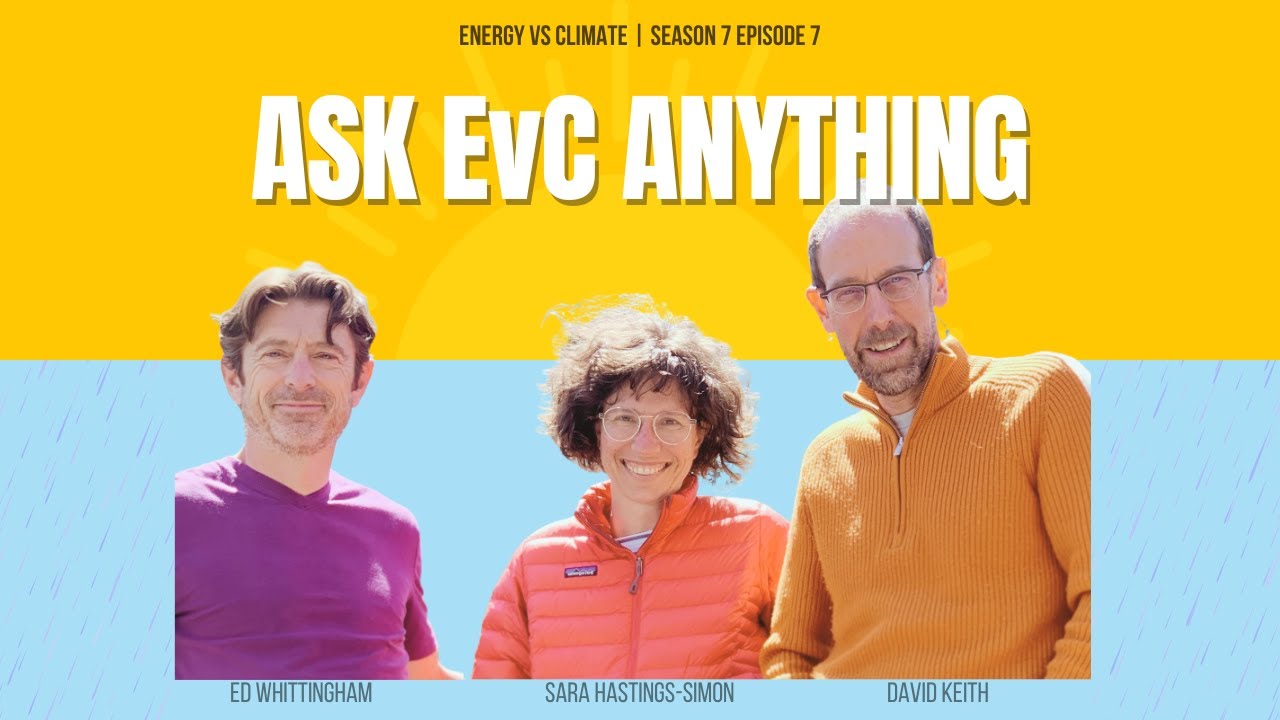
Carbon Capture, Climate Targets & The Future of Energy | 2025 Q&A | Energy vs Climate Podcast
Keywords
Summary
150 words
Critical Evaluation
Value of the Information & Strength of the Argument
The value of the information is high, as the hosts provide nuanced perspectives on complex topics, drawing on their expertise and referencing specific reports and studies. The argumentation is generally solid, with David Keith offering a clear rationale for prioritizing emission reductions over large-scale carbon removal until emissions are significantly lower. The discussion is balanced, acknowledging uncertainties and different viewpoints. However, some arguments are based on personal opinions and assumptions, and the conversational format sometimes lacks depth on technical details.
Scientific Rigor, Source Quality, Title Accuracy
The scientific rigor is moderate: while the hosts reference specific reports (e.g., Canada’s 2025 progress report, MIT study) and concepts, they do not provide detailed citations or data. The quality of sources is good, as they mention reputable institutions like the Canadian Climate Institute and MIT. The title accurately reflects the content, and the podcast’s overall credibility is enhanced by the hosts’ expertise. No comments were provided for analysis.
164 words
Title / Content Match
The title accurately reflects the content: a Q&A session covering carbon capture, climate targets, and energy future.
Quality & Reliability
8/10
The hosts are knowledgeable experts (David Keith is a prominent physicist and carbon removal researcher), and the discussion is nuanced, referencing specific reports and studies. However, the format is a conversational Q&A, not a peer-reviewed analysis, and some claims are opinion-based.
Key Moments
Markers derived by PSI from the transcript: the creator did not define chapters.
- Introduction and setup of the Q&A episode.
- Discussion on Canada's 2030 emissions reduction plan and progress report.
- David Keith's perspective on direct air capture and carbon removal.
- Debate on the scalability and governance of carbon removal technologies.
- Discussion on the potential for Canada to host carbon removal industries.
- Wrap-up and final thoughts on the future of energy and climate targets.
Cited Sources
- Energy vs Climate website — Main website for the podcast, containing show notes and additional resources.
- Energy vs Climate Bluesky profile — Social media profile for the podcast.
- Bespoke Podcasts — Production company for the podcast.
- Donate to Energy vs Climate — Support page for the podcast.
- Show notes for this episode — Show notes and references for this specific episode.
- Energy vs Climate LinkedIn — LinkedIn page for the podcast.
- Amit Tandon LinkedIn — Producer's LinkedIn profile.
Concurring Sources
- MIT study on direct air capture — Referenced in the episode as a reality check on DAC assumptions.
Contribution & Novelties
This episode provides an accessible yet expert discussion on the current state of carbon capture and climate targets, offering a balanced view on the role of direct air capture and other removal technologies. It highlights the political and economic challenges of implementing climate policies, particularly in Canada. The hosts’ nuanced perspectives, especially David Keith’s argument for prioritizing emission reductions over large-scale carbon removal, add value to the ongoing debate.
Pour aller plus loin :
- Direct air capture — Overview of the technology and its potential.
- Carbon dioxide removal — General concept and methods.
- Net zero emissions — Definition and context for climate targets.
- Canadian Climate Institute — Source of data and analysis on Canada’s emissions.
115 words
Radar Profile
The radar profile shows high scores in information quantity and quality, indicating a content-rich and reliable discussion. The technical level is moderate, making it accessible to a general audience while still providing depth. The overall reliability is strong, reflecting the hosts' expertise and balanced approach.