2025 12 18 Navigating Concurrent Care in Pediatric Hospice
Keywords
Summary
296 words
Critical Evaluation
Value of the Information & Strength of the Argument
The lecture provides valuable insights into the often-overlooked field of pediatric hospice, offering a practical framework for eligibility and care. Dr. Hemker’s argumentation is grounded in his extensive clinical experience and supported by national data, though he acknowledges the limitations of prognostication in pediatrics. He effectively argues for the importance of concurrent care, highlighting its benefits in allowing children to receive both curative and comfort care. The use of a patient case and personal anecdotes strengthens the practical relevance of the content. However, the argumentation could be strengthened by more explicit references to research studies and guidelines, as the reliance on anecdotal evidence may limit the generalizability of some claims.
Scientific Rigor, Source Quality, Title Accuracy
The lecture demonstrates a high level of scientific rigor in its use of national data from NHPCO and other sources, though specific citations are not provided. The speaker’s expertise and practical experience lend credibility to the content. The title accurately reflects the content, which focuses on the complexities of concurrent care in pediatric hospice. The lecture is well-structured and informative, but the lack of formal references may be a limitation for those seeking to verify specific claims. The speaker does not mention any public comments, so no analysis of audience feedback is possible.
218 words
Title / Content Match
The title accurately reflects the content, which focuses on the complexities and practical aspects of concurrent care in pediatric hospice.
Quality & Reliability
8/10
The lecture is delivered by a practicing pediatric palliative care physician with direct clinical experience. It references national data (NHPCO) and institutional experience, but lacks formal citations or peer-reviewed references. The content is practical and evidence-informed, but relies heavily on anecdotal experience.
Key Moments
Markers derived by PSI from the transcript: the creator did not define chapters.
- Introduction and overview of the lecture's goals.
- Presentation of a composite patient case to illustrate hospice eligibility challenges.
- Discussion of pediatric mortality data and leading causes of death.
- Analysis of where children die and the role of critical care transport in facilitating home deaths.
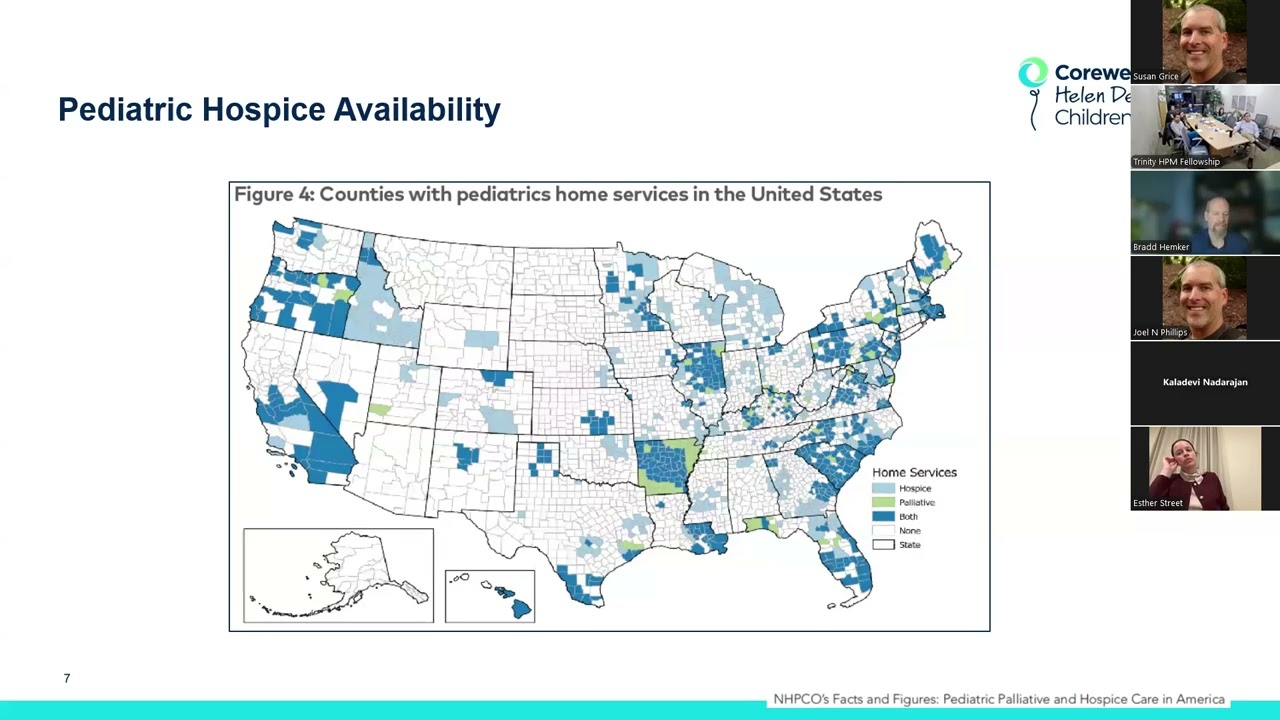
- Overview of the availability of pediatric hospice services across the US.
- Description of the patient population served, including non-oncology diagnoses.
- Discussion of the challenges in prognostication for pediatric patients.
- Explanation of the three criteria for hospice eligibility: terminal diagnosis, clinical decline, and family readiness.
- Introduction to concurrent care and its benefits under the Affordable Care Act.
- Practical guidance for adult providers on navigating pediatric hospice referrals.
Cited Sources
- NHPCO (National Hospice and Palliative Care Organization) — Referenced for data on hospice availability and patient demographics.
- Affordable Care Act (ACA) — Mentioned as the legislative basis for concurrent care.
Concurring Sources
- NHPCO Facts and Figures — Provides national statistics on hospice care, supporting the speaker's data on patient demographics.
Contribution & Novelties
This lecture provides a unique perspective on pediatric hospice, emphasizing the practical challenges and solutions for providers. It offers a clear framework for hospice eligibility in children, which is often lacking in the literature. The discussion of concurrent care is particularly valuable, as it clarifies a complex policy and its application in pediatric settings. The speaker’s experience with a critical care transport service for home deaths is an innovative example of improving end-of-life care.
Pour aller plus loin :
- Pediatric Palliative Care — Provides an overview of the field and its principles.
- Concurrent Care for Children — Official Medicaid information on concurrent care for children.
- National Hospice and Palliative Care Organization — Resource for hospice data and guidelines.
118 words
Radar Profile
The radar profile shows high scores in quantity and quality of information, reflecting the speaker's expertise and the depth of content. The technical level is moderate, suitable for a professional audience. The overall reliability is high, though the lack of formal citations slightly reduces the score.
💬 No comments were provided for analysis.