2026 01 22 Hospice Eligibility 2
Keywords
Summary
139 words
Critical Evaluation
Value of the Information & Strength of the Argument
The lecture provides valuable, detailed information on hospice regulations, particularly the role of the medical director and certification processes. The speaker uses clear examples and personal anecdotes to illustrate points, enhancing understanding. The argumentation is solid, grounded in CMS regulations and clinical experience, though some areas could benefit from more depth, such as the audit process. The interactive Q&A adds practical value, addressing real-world challenges.
Scientific Rigor, Source Quality, Title Accuracy
The lecture demonstrates scientific rigor by referencing CMS regulations and the Conditions of Participation. The speaker cites the source of the outline (Dr. Moulder and Dr. Rafflesen) and acknowledges input from her medical director. The title accurately reflects the content, which is a continuation of a lecture on hospice eligibility. The information is presented in a structured manner, with clear explanations of regulatory requirements. However, the lecture relies primarily on the speaker’s interpretation and does not provide external citations or references, which could be a limitation for those seeking further verification.
171 words
Title / Content Match
The title accurately reflects the content, which is the second part of a lecture on hospice eligibility.
Quality & Reliability
8/10
Lecture by a hospice physician, based on CMS regulations and clinical experience, with references to regulatory requirements and practical examples. The content is accurate and well-structured, though it relies on the speaker's interpretation and may not cover all nuances.
Key Moments
Markers derived by PSI from the transcript: the creator did not define chapters.
- Introduction and overview of the lecture topics
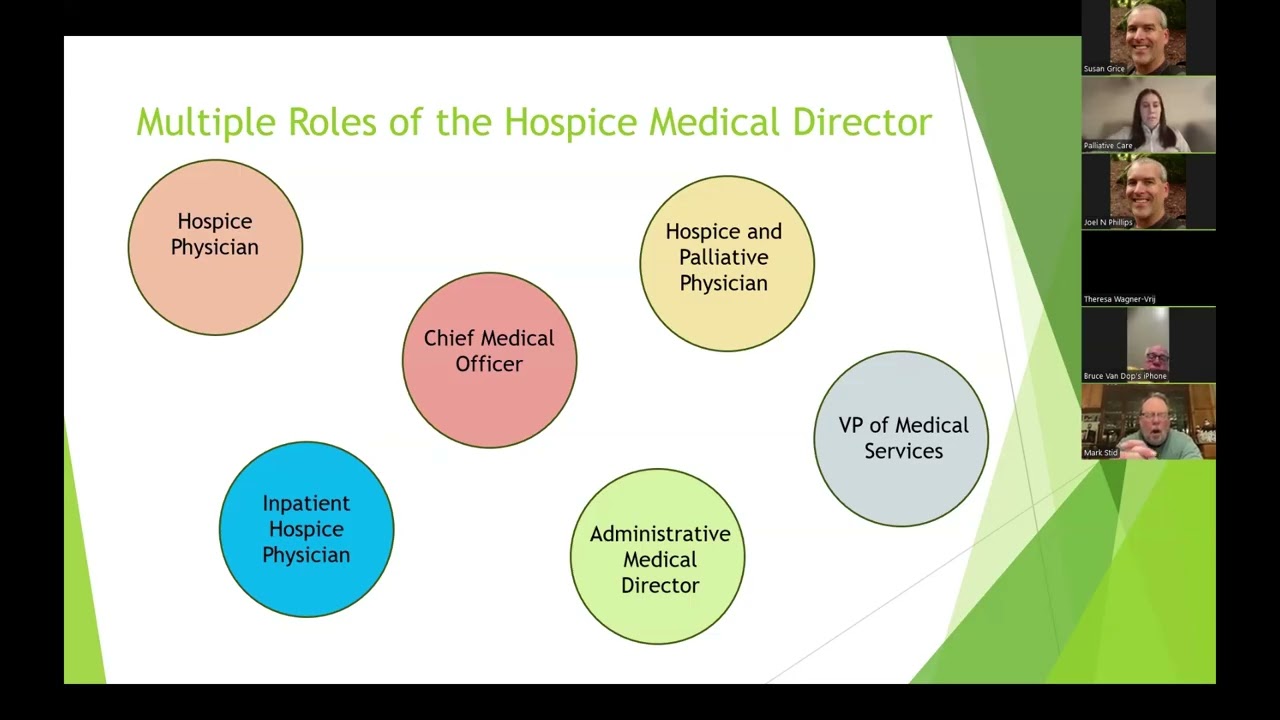
- Discussion on the role of the hospice medical director and certification pathways
- Explanation of attending physician choice and NP/PA scope of practice
- Certification of terminal illness: two physicians, narrative, and attestation
- Certification periods, reimbursement model, and face-to-face requirements
- Discharge and revocation processes, including reasons and documentation
- Relatedness of therapies and its impact on payment and care coordination
Cited Sources
- CMS Conditions of Participation — Referenced as the regulatory framework for hospice care.
- Medicare Hospice Benefit — Mentioned as the basis for hospice coverage and regulations.
Concurring Sources
- CMS Conditions of Participation — Aligns with the regulatory details discussed in the lecture.
- Medicare Hospice Benefits — Supports the explanation of hospice coverage and certification requirements.
Contribution & Novelties
The lecture provides a comprehensive update on hospice eligibility regulations, with practical insights from a practicing hospice physician. It clarifies the roles of the medical director, certification requirements, and the importance of documentation. The interactive format allows for addressing real-world questions, adding practical value.
Pour aller plus loin :
- CMS Hospice Center — Official CMS resource for hospice policies and payment.
- National Hospice and Palliative Care Organization — Professional organization with resources on hospice regulations and best practices.
- Medicare Hospice Benefits — Official Medicare page explaining hospice coverage and eligibility.
90 words
Radar Profile
The radar profile shows high scores in quantity and quality of information, with a moderate level of technical depth. The low score in fiabilite_globale relative to others suggests that while the information is reliable, it could benefit from more external verification. Overall, the lecture is well-rounded and informative.
💬 No comments were provided for analysis.