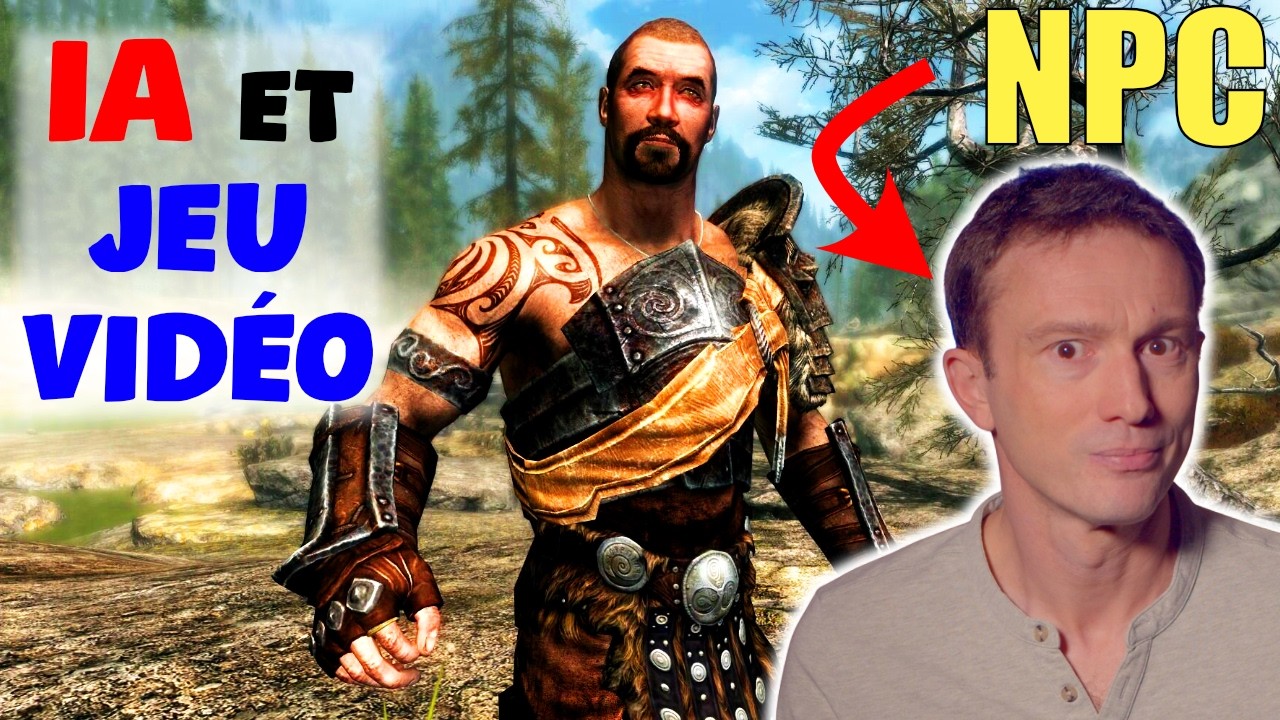
L'intelligence artificielle dans les jeux vidéo
Keywords
Summary
169 words
Critical Evaluation
The video provides a comprehensive and well-structured overview of AI techniques in video games, making it valuable for both enthusiasts and developers. David Louapre’s background as a physicist and former video game developer lends credibility to the content. The historical context is well-presented, distinguishing symbolic AI from machine learning and explaining why video games still rely on the former. The explanations of decision trees, finite state machines, and behavior trees are clear and accompanied by illustrative examples, such as Pac-Man and Half-Life 2. The video also touches on more advanced topics like utility-based AI and GOAP, and discusses the potential of deep learning in games, providing a balanced perspective. The argumentation is solid, with logical progression from simple to complex techniques, and the technical details are accurate, aside from a minor error about Half-Life 2’s release date, which is corrected in the description. The sources cited include the creator’s own book and a reference to Ubisoft’s Neo-NPC prototype, but the video does not heavily rely on external sources, which is acceptable for a general audience. The title accurately reflects the content, and the video successfully achieves its goal of educating viewers on the subject. The public comments are overwhelmingly positive, with viewers appreciating the clarity and depth of the content, and some offering corrections or additional insights. Overall, this is an excellent educational video that balances technical depth with accessibility.
230 words
Title / Content Match
The title accurately reflects the content, which focuses on AI techniques in video games, including decision trees, finite state machines, behavior trees, GOAP, and deep learning.
Quality & Reliability
9/10
The video is presented by David Louapre, a PhD physicist and former video game developer, who provides a well-structured historical and technical overview of AI techniques used in video games. The content is accurate, with a minor error about Half-Life 2 release date (corrected in the description). The video includes references to academic work (Geoff Dromey) and industry examples, and the creator's background adds credibility.
Chapters
Cited Sources
- Le Labo du Jeu Vidéo (book) — The author's book on the science of video games, mentioned at the end of the video.
- Le Labo du Jeu Vidéo (preview) — Preview of the book, linked in the description.
- Le Labo du Jeu Vidéo (Fnac) — Purchase link for the book.
- Ubisoft's Neo-NPC prototype — Referenced in the description as an example of future AI in games.
- Le Labo du Jeu Vidéo (Les Libraires) — Purchase link for the book.
- ScienceEtonnante YouTube channel — The channel where the video is published.
Concurring Sources
- Behavior trees in robotics — Behavior trees are widely used in robotics and game AI, as mentioned in the video.
- Finite-state machine — FSMs are a fundamental concept in computer science and are used in game AI.
- Goal Oriented Action Planning — GOAP is a technique used in games like F.E.A.R., as discussed in the video.
Dissenting Sources
- Half-Life 2 release date — The video incorrectly states Half-Life 2 was released in 1998, but it was actually released in 2004. The creator acknowledged this error in the description.
Contribution & Novelties
The video provides a clear and accessible explanation of the AI techniques used in video games, highlighting the distinction between symbolic AI and machine learning. It offers a historical perspective and practical examples, making it a valuable resource for understanding game AI. The presenter’s industry experience adds unique insights.
Pour aller plus loin :
- Behavior trees in robotics — Overview of behavior trees, a key concept discussed.
- Finite-state machine — Foundational concept for understanding FSM.
- Goal Oriented Action Planning — Detailed explanation of GOAP, a technique mentioned in the video.
- Deep learning in games — Background on deep learning, relevant to the discussion of its potential in games.
108 words
Radar Profile
The radar profile shows high scores in information quantity, quality, and technical level, indicating a well-researched and informative video. The reliability score is also high, reflecting the creator's expertise and the accuracy of the content.
💬 Très positif. Sur les 30 commentaires analysés, les spectateurs expriment une grande appréciation pour la clarté et la profondeur du contenu, certains partageant des anecdotes personnelles ou des corrections mineures, mais l'ensemble est très favorable.