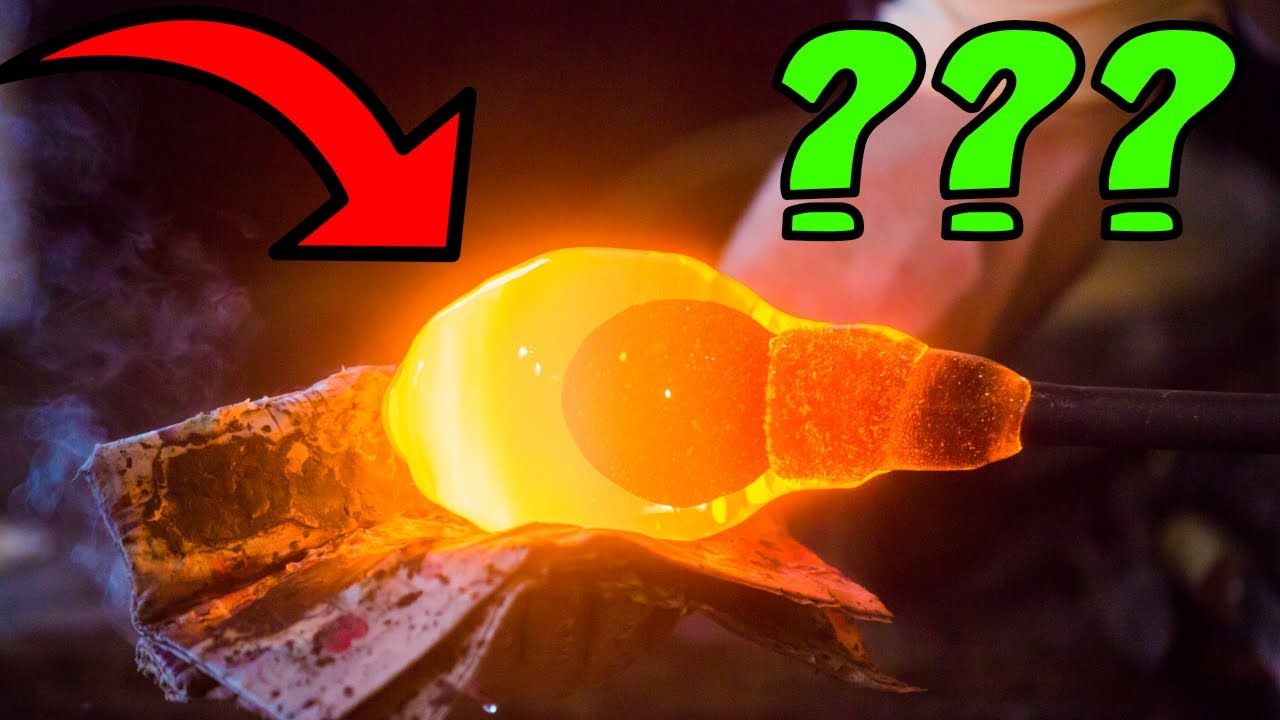
LE VERRE : Ce matériau étrange et méconnu réconcilie l'art et la technologie...
GLASS: This strange and little-known material reconciles art and technology...
Keywords
Summary
190 words
Critical Evaluation
Value of the Information & Strength of the Argument
The video provides substantial scientific value by clarifying common misconceptions and presenting a coherent physical picture of glass. The argumentation is solid: it builds from fundamental states of matter to the specific case of glass, using the concept of viscosity and supercooling. The debunking of the stained glass myth is particularly valuable, supported by a quantitative order-of-magnitude calculation. The explanation of vitroceramic technology is insightful, showing how materials science solves practical problems. The video is well-structured and the reasoning is clear, with appropriate use of diagrams and examples.
Scientific Rigor, Source Quality, Title Accuracy
The scientific rigor is high: the content is accurate and up-to-date, reflecting current understanding in condensed matter physics. The video cites a publication on the stained glass myth, and the companion blog post provides further details. The title accurately reflects the content, highlighting the dual artistic and technological relevance of glass. The video does not overstate claims and appropriately notes open questions in the field, such as the microscopic origin of the glass transition. The production quality and the author’s expertise contribute to the reliability.
188 words
Title / Content Match
The title accurately reflects the content: it presents glass as a material that bridges art (stained glass, crystal) and technology (telescope mirrors, vitroceramic cooktops).
Quality & Reliability
9/10
The video is produced by a physicist (David Louapre) known for rigorous science communication. It explains the physics of glass with accurate concepts (amorphous solid, supercooled liquid, viscosity, phase diagrams, thermal expansion) and debunks a common myth with a quantitative argument. The content aligns with established scientific knowledge and is supported by a companion blog post. Minor simplifications are appropriate for the format.
Key Moments
Markers derived by PSI from the transcript: the creator did not define chapters.
- Introduction: what is glass? States of matter and microscopic structure.
- Glass as an amorphous solid and supercooled liquid; viscosity and crystallization.
- Supercooled water analogy and the myth of flowing stained glass.
- Glass composition: fluxes, stabilizers, and the role of sodium and calcium oxides.
- Special glasses: lead crystal, borosilicate (Pyrex), and colored glasses.
- Vitroceramic cooktops: negative thermal expansion crystals and composite materials.
- Exotic glasses: metallic glasses, amorphous solid water, and biological glass (diatoms).
Cited Sources
- Billet de blog accompagnant la vidéo — Compléments et détails sur le contenu de la vidéo.
- Livres de David Louapre — Référence aux ouvrages de vulgarisation de l'auteur.
- Chaîne YouTube ScienceEtonnante — Chaîne de l'auteur, source de la vidéo.
Concurring Sources
- Billet de blog de ScienceEtonnante — Compléments et références supplémentaires sur le verre.
Contribution & Novelties
The video offers a clear and engaging synthesis of glass physics, correcting the common misconception that glass is a slow-flowing liquid and explaining the scientific basis of amorphous solids. It provides a valuable introduction to materials science concepts such as supercooling, viscosity, and thermal expansion, and highlights innovative applications like vitroceramic cooktops. The video also touches on cutting-edge research areas like metallic glasses and amorphous solid water.
Pour aller plus loin :
- Glass transition — Key concept for understanding the formation of glass.
- Amorphous solid — Definition and properties of amorphous materials.
- Vitroceramic — Material combining glass and crystalline phases.
- Diatom — Organisms that produce amorphous silica.
- Supercooling — Phenomenon relevant to the glassy state.
115 words
Radar Profile
The radar profile shows high scores in information quantity, quality, and reliability, with a slightly lower technical level, reflecting a well-balanced popular science video that is both informative and accessible.
💬 Très positif. Sur les 30 commentaires analysés, les spectateurs expriment un enthousiasme marqué pour la clarté et la pédagogie de la vidéo, et partagent des anecdotes personnelles et des compléments scientifiques.